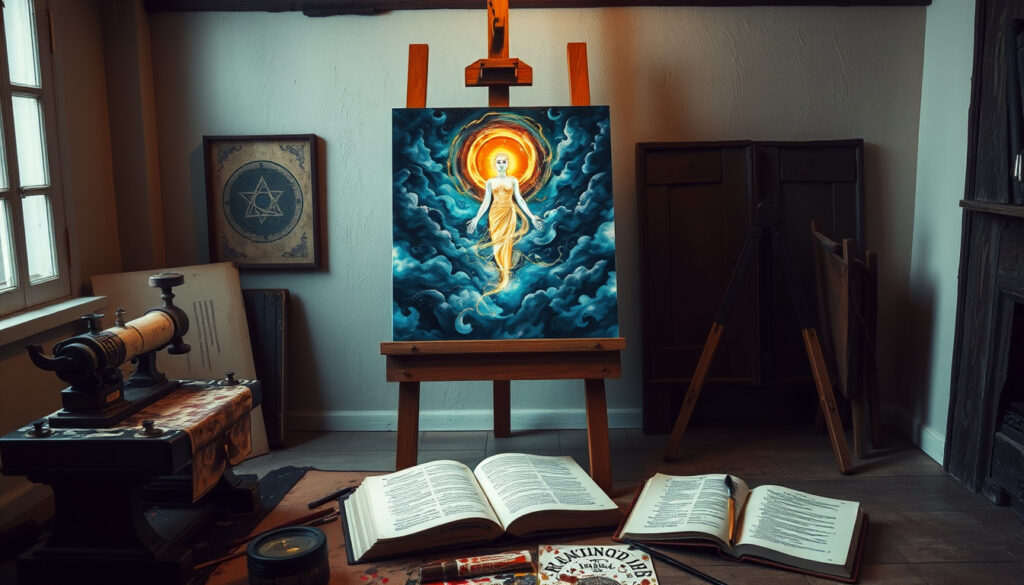
William Blake – Biography, Poems, Paintings and Famous Works
William Blake remains one of the most singular figures in English literary and artistic history. A poet, painter, engraver, and self-proclaimed visionary, he created works that blended text and image in ways that were virtually unknown in his time. Though he lived much of his life in obscurity and relative poverty, his reputation has grown enormously since his death, and he is now considered a central figure of the Romantic movement.
Blake was born in Soho, London, in 1757 and trained as an engraver. He spent most of his life in or near the capital. His childhood claims of seeing angels and supernatural visions set the tone for a career that consistently mixed spiritual themes with radical social critique. Today, his poems, paintings, and illuminated books are studied worldwide for their originality and depth.
Who Was William Blake? A Short Biography
Key Insights into Blake’s Life and Work
- William Blake was largely unrecognized in his lifetime but is now considered a seminal figure of the Romantic Age.
- His poetry often explores themes of innocence vs. experience, religion, and social criticism.
- Blake created illuminated printing, combining text and illustration on the same engraved plate.
- The hymn “Jerusalem” (from his preface to Milton: A Poem) is one of England’s most beloved national songs.
- Blake claimed to have visions from an early age, including seeing angels and conversing with historical figures.
- He produced illustrated works for authors such as Dante and Milton, creating unified visual-literary works.
- His criticism of industrialization, the Church, and monarchy remains relevant to modern social critique.
Snapshot Facts
| Field | Details |
|---|---|
| Full Name | William Blake |
| Born | 28 November 1757, London |
| Died | 12 August 1827, London |
| Nationality | English |
| Known For | Poetry, painting, printmaking |
| Notable Works | Songs of Innocence and of Experience, The Tyger, Jerusalem |
| Art Movement | Romanticism |
What Are William Blake’s Most Famous Poems and Books?
Blake’s literary output is defined by a small number of profoundly influential collections and epic poems. His major works include Songs of Innocence (1789), Songs of Experience (1794), The Marriage of Heaven and Hell, Milton, and Jerusalem. These books often exist as “illuminated” volumes, where poetry and hand-colored illustrations appear on the same page.
Among his individual poems, “The Lamb” and “The Tyger” are the most frequently read and analyzed. “The Tyger,” with its famous opening line “Tyger Tyger, burning bright,” is often interpreted as an inquiry into the nature of creation and the coexistence of good and evil. His poem “London”, which begins “I wander through each charter’d street,” reflects the city’s oppression and its spiritual significance in his imagination.
Britannica describes Jerusalem as his most richly decorated book and as an epic about the fall and redemption of humanity. The poem “And did those feet in ancient time,” which appears in the preface to Milton: A Poem, was set to music by Charles Parry in 1916 and became the beloved hymn “Jerusalem.”
William Blake Paintings and Artworks: What Did He Create?
Beyond his poetry, Blake was an important artist and printmaker. He is best known for developing illuminated printing, a technique that allowed him to combine poetry and image on the same copper plate. This method produced unified visual-literary works that were both original and technically innovative.
Blake produced illustrated works for authors such as Dante and Milton, creating entire series of watercolors and engravings. His own books, including Songs of Innocence and of Experience, The Marriage of Heaven and Hell, and The First Book of Urizen, were conceived as complete artistic objects where text and image are inseparable.
Original Blake paintings and prints are held in major collections including the Tate Museum in London and the British Museum. High-resolution facsimiles of his illuminated books are available through the William Blake Archive.
Famous William Blake Quotes and His Visionary Ideals
Blake’s writing is dense with quotable lines that have entered the wider culture. His most famous phrases include “Tyger Tyger, burning bright,” “And did those feet in ancient time,” and “Some are born to sweet delight / Some are born to endless night.” Beyond these well-known lines, his work is filled with radical and often mystical statements.
His poem Auguries of Innocence opens with the lines: “To see a World in a Grain of Sand / And a Heaven in a Wild Flower / Hold Infinity in the palm of your hand / And Eternity in an hour.” In Jerusalem: The Emanation of the Giant Albion, he writes: “I must create a system or be enslav’d by another man’s.” These lines reflect his belief in personal vision and his rejection of established systems of power, both religious and political.
Blake’s religious and political beliefs were unconventional. He was critical of the Church of England, organized religion, and monarchy. His visions, which he claimed to have from childhood, informed a worldview that was both deeply spiritual and radically egalitarian. This combination of visionary experience and social critique is why he is so often described as a prophetic figure.
When scholars call Blake a “visionary,” they refer both to his claims of seeing angels and historical figures and to his stylistic originality. These visionary claims are biographical in nature and are not externally verifiable, but they are central to understanding the themes in his work.
How to Access William Blake’s Works: Books, PDFs, and Archives
For readers looking to explore Blake’s work, several authoritative resources are available online. The Poetry Foundation hosts a comprehensive profile with biographies and full text of many poems. The William Blake Archive offers high-resolution scans of his original illuminated books, making it an invaluable scholarly resource. The Tate Museum provides information on his paintings and current exhibitions.
Complete collections of Blake’s poetry and prose are widely available in print. Digital versions, including PDFs of his biography, can be found through institutional sites and academic libraries. For those seeking a short biography, the Wikipedia entry and the BBC’s poetry season page remain reliable starting points.
Timeline of William Blake’s Life
- 1757 — Born in London to James and Catherine Blake.
- 1772 — Apprenticed to engraver James Basire.
- 1782 — Married Catherine Boucher.
- 1789 — Published Songs of Innocence.
- 1794 — Published Songs of Experience (combined edition).
- 1804 — Began work on Milton: A Poem (contains Jerusalem).
- 1827 — Died in London.
What Is Certain and What Remains Unclear About Blake’s Life?
| Established Information | Information That Remains Unclear |
|---|---|
| William Blake was born on 28 November 1757 and died on 12 August 1827. | Blake claimed to have had visions of angels and historical figures; this is a biographical claim, not externally verifiable. |
| He published Songs of Innocence in 1789 and Songs of Experience in 1794. | The exact number of copies printed of his illuminated books is unclear. |
| He created illuminated printing by combining text and illustration. | Some details of his early life and education are incomplete. |
| His works are held in major collections including the Tate and the British Museum. | — |
What Makes William Blake So Important Today?
Blake’s significance continues to grow because his work bridges poetry and visual art in a format that was unique for his time. He is now celebrated as a key figure of Romanticism, though he was largely ignored or dismissed during his life. The poem “Jerusalem” has become an unofficial English anthem, often sung in political and sporting contexts. His criticism of industrialization, the Church, and monarchy remains relevant to modern social critique. Unlike many historical figures, Blake’s work feels immediate to contemporary audiences because it addresses the tension between individual vision and institutional power.
Sources and Quotes from Blake’s Work
“To see a World in a Grain of Sand / And a Heaven in a Wild Flower / Hold Infinity in the palm of your hand / And Eternity in an hour.”
— Auguries of Innocence
“Tyger Tyger, burning bright / In the forests of the night”
— The Tyger (Songs of Experience)
“I must create a system or be enslav’d by another man’s.”
— Jerusalem: The Emanation of the Giant Albion
What Is the Best Way to Start Learning About William Blake?
For anyone new to Blake, start with his most accessible and famous works: Songs of Innocence and of Experience. Read “The Lamb” and “The Tyger” side by side to understand the contrast that defines his worldview. Then explore the poem “Jerusalem” and its later life as a hymn. For those interested in his visual art, the Tate Museum and the William Blake Archive offer the best entry points. You may also find value in reading about C.S. Lewis – Biography, Books, Religion and Legacy for a different perspective on religious themes in English literature, or explore Saturn Devouring His Son – Goya’s Darkest Masterpiece Explained for another take on dark Romantic imagery in art.
Frequently Asked Questions About William Blake
What is the symbolism of “The Tyger” by William Blake?
Often read as exploring the nature of creation, good and evil, and the existence of a divine creator capable of making both the lamb and the tiger.
Is “Jerusalem” a poem or a hymn?
It originated as a poem in Blake’s preface to Milton: A Poem. It was later set to music by Sir Hubert Parry and became a popular English hymn.
How many languages have Blake’s works been translated into?
Blake’s poetry has been translated into most major languages, though his visual art is primarily appreciated in original form.
What did William Blake believe about religion?
He was critical of organized religion and the Church of England, but his own beliefs were deeply spiritual and visionary, shaped by his claimed visions.
Was William Blake successful during his lifetime?
No. He spent much of his life in relative poverty and obscurity. His reputation grew significantly only after his death.
What is illuminated printing?
A method Blake developed that allowed him to combine text and illustration on the same engraved copper plate, producing unified visual-literary works.
Where is William Blake buried?
He was buried in an unmarked grave in Bunhill Fields, London. A commemorative stone was later erected at Westminster Abbey.
More related posts
 Charlie Chaplin – Biography, Cause of Death, and Legacy
 Stephen Traitors – Winner Biography, Age, Job and Partner
 Emeli Sandé – Biography, Age, Husband, Net Worth and Songs
 Shipping Container – Complete UK Buying Guide 2025
 Oxlade Chamberlain – Net Worth, Wife, Career & Stats 2025
 9 Stone in Pounds – Exact 126 lb Conversion Explained
 Teddy Sheringham – Career, Net Worth, Wife and Trophies in 2026
 Taylor Sheridan – Biography, Net Worth, and Yellowstone Creator
