Ernest Shackleton – Endurance Expedition, Death and Legacy
Sir Ernest Shackleton (1874–1922) was an Anglo-Irish polar explorer whose name became synonymous with survival against overwhelming odds. He led the 1914–1917 Imperial Trans-Antarctic Expedition, a mission that failed to cross Antarctica but succeeded in bringing every single member of the 28-man crew home alive. That feat turned Shackleton into a lasting icon of crisis leadership and resilience.
Shackleton’s story extends far beyond the Endurance disaster. Before that fateful voyage, he had already pushed closer to the South Pole than anyone before him and had been knighted for his achievements. His death in 1922 at the age of 47, while on his final expedition, cut short a career that had already reshaped the Heroic Age of Antarctic Exploration.
Today, interest in Shackleton remains high. The discovery of the Endurance wreck in 2022, new books and documentaries, and persistent questions about his death and family mean that a clear, comprehensive overview is more useful than ever.
Who Was Ernest Shackleton?
Who
Sir Ernest Shackleton (1874–1922), an Anglo-Irish explorer best known for Antarctic expeditions.
Why famous
He led the Endurance expedition; after the ship was crushed by ice, all 28 crew members survived.
Died
He died on 5 January 1922 in South Georgia during the Quest expedition, of a heart attack.
Popular topics
Books, the Endurance expedition story, quotes, movie info, and death/facts.
Key Insights
- Shackleton’s fame is based on survival leadership, not reaching the South Pole. All 28 Endurance crew members survived after their ship was lost.
- The Endurance expedition is officially known as the Imperial Trans-Antarctic Expedition – the name matters for accurate research.
- His death in South Georgia is a frequently searched standalone fact; a clear timeline answers it quickly.
- Books and movies are major content entry points for new audiences discovering Shackleton.
- The wreck of the Endurance was only discovered in March 2022, sparking a fresh wave of public and scholarly interest.
- Shackleton’s early career as a merchant-marine officer gave him the seamanship and resourcefulness that later kept his men alive.
- Surviving the Endurance disaster involved multiple stages of improvisation over nearly two years, from ice camps to open-boat journeys.
Ernest Shackleton Snapshot
| Field | Details |
|---|---|
| Born | 15 February 1874, Kilkea, County Kildare, Ireland |
| Died | 5 January 1922, South Georgia |
| Occupation | Merchant navy officer / Antarctic explorer |
| Expeditions | Discovery (1901–1904), Nimrod (1907–1909), Endurance/Imperial Trans-Antarctic (1914–1917), Quest (1921–1922) |
| Known for | Survival of the Endurance expedition; all 28 crew survived |
| Notable book | South (1919) |
| Knighted | 1909 |
| Endurance wreck located | 2022 |
What Was the Endurance Expedition?
The Imperial Trans-Antarctic Expedition
The expedition that made Shackleton famous was the Imperial Trans-Antarctic Expedition (1914–1917). Its goal was to make the first crossing of the Antarctic continent via the South Pole. The ship chosen for the main party was the Endurance, a stout wooden vessel designed for polar ice. A second party, the Ross Sea party, was to lay supply depots on the opposite side of the continent. The plan never got that far.
The Loss of Endurance
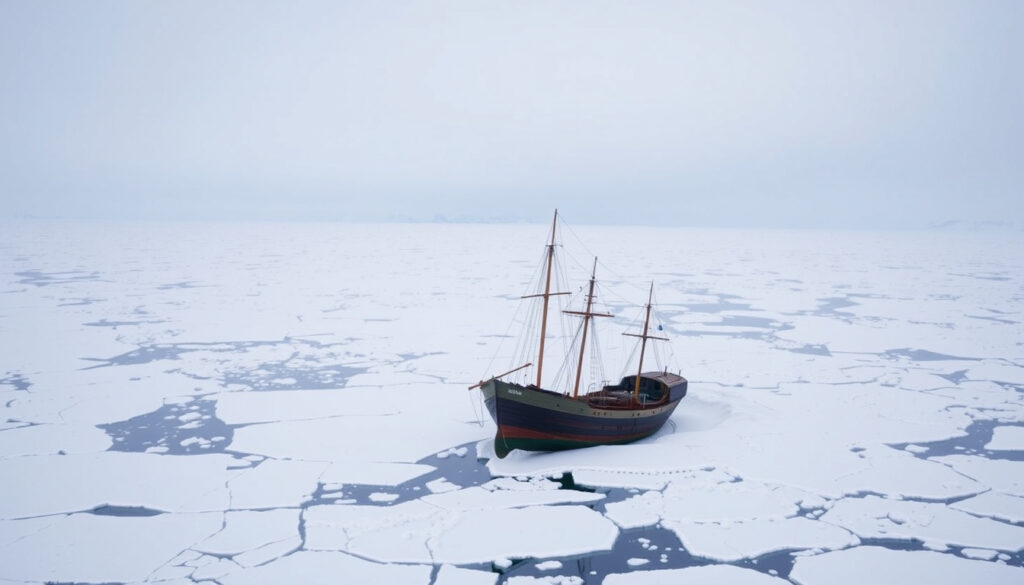
Endurance left England in August 1914 and reached South Georgia in November. From there it sailed into the Weddell Sea, where by mid-January 1915 it became trapped in dense pack ice. The crew lived aboard for months while the ice drifted north. On 21 November 1915, pressure from the ice crushed and sank the vessel. The men salvaged three lifeboats and all available supplies.
The Survival March
After the sinking, the party camped on drifting ice and then launched the lifeboats in April 1916, reaching Elephant Island. From there Shackleton, Frank Worsley and four others sailed the 22.5-foot James Caird approximately 800 miles (1,300 km) to South Georgia. After landing, Shackleton, Worsley and Tom Crean crossed the island’s mountainous interior to reach the Stromness whaling station. In August 1916, Shackleton finally rescued the 22 men left on Elephant Island. Every member of the Endurance party survived.
The crew’s survival depended on more than Shackleton’s leadership. Frank Worsley’s exceptional navigation, strict rationing, adaptable camps, and multiple rescue attempts all played essential roles.
Shackleton’s Other Expeditions
The Endurance story overshadows Shackleton’s earlier work. On the Discovery Expedition (1901–1904) under Robert Falcon Scott, he helped reach the farthest south at that time but was sent home due to health problems. During the Nimrod Expedition (1907–1909), Shackleton led his own team to within 97 geographical miles of the South Pole – the closest approach until Amundsen and Scott. He also climbed Mount Erebus. For that achievement he was knighted in 1909. His final journey, the Quest Expedition (1921–1922), aimed to survey and circumnavigate parts of Antarctica, but Shackleton died shortly after reaching South Georgia.
How Did Ernest Shackleton Die and Why Is He Remembered?
Death in South Georgia
Shackleton died of a heart attack on 5 January 1922 aboard the Quest at Grytviken, South Georgia, at age 47. At his wife’s request, he was buried there rather than returned to Britain. His grave overlooks the whaling station that had become a familiar landmark.
Leadership and Survival Legacy
Shackleton is celebrated not for geographic firsts but for how he handled catastrophic failure. Once the crossing became impossible, he shifted the mission from exploration to rescue. He maintained morale through routine, work, humour and carefully managed optimism. Many modern leadership programmes cite him as a model of crisis management, though some popular claims – especially the wording of the “Men wanted” recruitment advertisement – are not firmly authenticated.
The famous recruitment notice that begins “Men wanted: For hazardous journey…” is widely associated with Shackleton, but no authenticated original advertisement has been found. The wording may be a later reconstruction or embellishment. Treat it accordingly.
What Are the Best Ernest Shackleton Books, Movies, and Quotes?
Books by Shackleton
Shackleton wrote three books himself. The Heart of the Antarctic (1909) covers the Nimrod expedition. South: The Story of Shackleton’s Last Expedition, 1914–1917 (1919) is his first-hand account of the Endurance ordeal and the rescue. A posthumous volume, Shackleton’s Last Voyage (1923), was compiled from expedition material connected to the Quest journey.
Major Biographies and Histories
Roland Huntford’s Shackleton is a detailed, often-recommended biography. Other strong works include Endurance: Shackleton’s Incredible Voyage by Alfred Lansing and The Endurance: Shackleton’s Legendary Antarctic Expedition by Caroline Alexander. These books provide thorough narratives and are frequently cited by readers seeking a deeper understanding.
Movies and Documentaries
Several films and documentaries cover the Endurance story. The 2002 television miniseries Shackleton, starring Kenneth Branagh, is widely praised. In 2024, a National Geographic documentary titled Endurance accompanied the discovery of the wreck. Multiple in-the-works film projects have been announced, but their status can change without notice.
Famous Quotes and Their Origins
Shackleton is often quoted in leadership contexts, but many attributed sayings lack verified primary sources. Frequently seen lines include:
- “A man must shape himself to a new mark directly the old one goes to ground.”
- “Difficulties are just things to overcome, after all.”
- “Optimism is the true moral courage.”
- “By endurance we conquer.”
These phrases appear in books and online, but attribution and exact wording should be checked against published editions or institutional archives before being treated as verbatim quotations.
Not all Shackleton quotes circulating online are accurate. The “Men wanted” notice is the most famous example of likely embellishment. Always verify through the Royal Geographical Society or similar archives.
Ernest Shackleton: Key Dates
- 1874 – Born in Kilkea, County Kildare, Ireland.
- 1901–1904 – Served on the Discovery expedition.
- 1907–1909 – Led the Nimrod expedition; reached farthest south; later knighted.
- 1914–1917 – Led the Endurance expedition, also known as the Imperial Trans-Antarctic Expedition; ship lost; all crew survived.
- 1919 – Published South.
- 1921–1922 – Led the Quest expedition.
- 1922 – Died in South Georgia.
- 2022 – Endurance shipwreck located by the Endurance22 expedition.
What Is Known for Certain About Shackleton?
| Established Information | Information That Remains Unclear |
|---|---|
| Shackleton was born in 1874 and died in 1922. | The exact wording of the “Men wanted” recruitment advertisement is often repeated but not definitively verified in contemporary sources. |
| He led the Endurance expedition, which was the Imperial Trans-Antarctic Expedition. | Proposed or in-development Shackleton film projects may change without notice. |
| All 28 Endurance crew members survived after the ship was crushed. | Some user questions use “Endurance” to mean the ship, the expedition, the book, or the film – disambiguation is needed. |
| Shackleton died of a heart attack in South Georgia. | Short quotes attributed to him online often lack reliable primary sources. |
Why Does Shackleton’s Story Still Matter?
Shackleton belongs to the Heroic Age of Antarctic Exploration, alongside Scott, Amundsen, and others. But his story stands apart because his expedition became a survival narrative rather than a geographic first. The discovery of the Endurance wreck in 2022 – more than a century after it sank – has reignited public fascination. Museums such as the Royal Museums Greenwich and the Scott Polar Research Institute hold extensive collections that continue to be studied and exhibited.
There is also an ongoing need to disambiguate Shackleton from other “Ernest” names people search for – Ernest Borgnine, Ernest Bevin, Ernest Doe – and from family members such as his brother Frank Shackleton and his son Edward Shackleton. A clear summary helps readers find exactly what they need.
The 2022 discovery of the Endurance shipwreck, remarkably well preserved at a depth of 3,008 metres and now designated a protected historic site under the Antarctic Treaty, ensures the story will stay in the public eye for years to come. For more on a different kind of endurance, you may also be interested in Ansel Adams – Complete Guide to His Life, Photos, and Legacy.
Which Sources and Quotes About Shackleton Are Reliable?
For factual biography, the most reliable sources include the Wikipedia article on Shackleton, the Encyclopaedia Britannica entry, and the BBC history profile. The Shackleton.com blog provides expedition details and the story of the wreck discovery. Institutional archives such as the National Portrait Gallery and the UK Antarctic Heritage Trust also hold verified materials.
Below is a frequently cited quotation attributed to Shackleton. Note the caution about its origin:
“Men wanted: For hazardous journey. Small wages, bitter cold, long months of complete darkness, constant danger, safe return doubtful. Honour and recognition in case of success.”
Widely attributed to Shackleton’s recruitment advertisement – no authenticated original found.
What Is the Lasting Impact of Ernest Shackleton?
Shackleton’s legacy is that of a leader who put his crew’s survival above all else. His story continues to inspire books, films, academic studies, and leadership training around the world. The 2022 discovery of the Endurance wreck ensures that new generations will encounter his example. For those interested in a different kind of breed, there is also Alaskan Malamute – Complete Breed Guide for Owners.
Frequently Asked Questions
Where can I find Ernest Shackleton images?
Institutional image libraries such as the Royal Geographical Society, Scott Polar Research Institute, and National Portrait Gallery hold authenticated photographs. Always caption with source and date.
What is the Ernest Shackleton Wikipedia overview?
Wikipedia provides a comprehensive cited biography. It summarises key milestones; for deeper verification, consult official archives like the Royal Geographical Society.
What was the Nimrod Expedition?
The Nimrod Expedition (1907–1909) was Shackleton’s first command. It reached a then-record farthest south of 97 miles from the pole and included the first ascent of Mount Erebus.
Who were Edward Shackleton and Frank Shackleton?
Edward Shackleton was Shackleton’s youngest son, later a politician. Frank was his younger brother, who faced financial scandal and was not involved in polar exploration.
Where is Elephant Island?
Elephant Island is a desolate, uninhabited island off the Antarctic Peninsula, where 22 of the Endurance crew waited for rescue in 1916.
What is the James Caird?
The James Caird was a 22.5-foot lifeboat in which Shackleton and five others sailed 800 miles from Elephant Island to South Georgia in 1916.
How long did the Endurance crew survive after the ship sank?
After the Endurance sank in November 1915, the crew survived on ice and at Elephant Island for almost 20 months until final rescue in August 1916.
Did Shackleton have children?
Yes. He married Emily Mary Dorman in 1904, and they had three children: Raymond, Cecily, and Edward.
What does ‘by endurance we conquer’ mean?
It is Shackleton’s family motto and the name of his father’s ship. It encapsulates the perseverance that defined his leadership during the Endurance expedition.
Is the Endurance wreck visible to tourists?
No. The wreck is protected under the Antarctic Treaty System and lies at 3,008 metres depth. It cannot be visited or disturbed.
More related posts
 Alaskan Malamute – Complete Breed Guide for Owners
 Rory McPhee – Biography, Age, Career and Wedding to Mel B
 Happy Gilmore – Guide to the Original and 2025 Sequel
 Lady Sarah Chatto – Biography, Family, Paintings and Net Worth
 World Club Cup 2025 – Complete Guide to Teams, Format, Winner
 Mary Anning – Biography, Discoveries, and Lasting Legacy
 Patrick Troughton – The Second Doctor’s Life and Legacy
 Paul Klee – Biography, Art Style, and Famous Works
