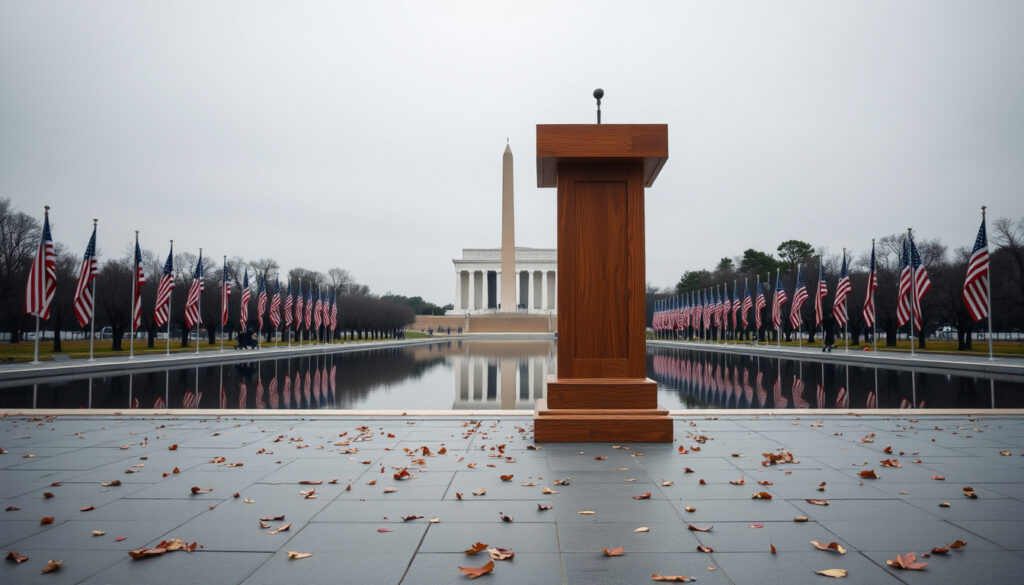
Martin Luther King – Biography, Speeches, and Legacy
Martin Luther King Jr. remains one of the most influential figures in American history. As a Baptist minister and the most prominent leader of the civil rights movement, he advanced equality through nonviolent resistance. His life, from his birth in Atlanta to his assassination in Memphis, was dedicated to the pursuit of justice.
The power of his words, particularly the “I Have a Dream” speech, and his unwavering commitment to peaceful protest transformed a nation. Understanding his biography, his major campaigns, and his lasting legacy provides essential context for his enduring impact on the United States and the world.
When and Where Was Martin Luther King Jr. Born?
Martin Luther King Jr. was born on January 15, 1929, in Atlanta, Georgia. His original name was Michael King Jr., after his father. In 1934, after visiting Germany and learning about the Protestant reformer Martin Luther, his father changed both their names to Martin Luther.
Who Is Martin Luther King Jr.?
- Born Michael King Jr., January 15, 1929 in Atlanta, GA
- Baptist minister and leader of the American civil rights movement
- Advocate of nonviolent resistance; organizer of marches and boycotts
- Awarded Nobel Peace Prize in 1964; assassinated April 4, 1968
Key Insights into His Life and Work
- King’s philosophy of nonviolence was inspired by Mahatma Gandhi and Christian theology.
- His ‘I Have a Dream’ speech during the March on Washington (1963) remains one of the most iconic speeches in history.
- King’s leadership led to the Civil Rights Act of 1964 and the Voting Rights Act of 1965.
- Martin Luther King Jr. Day, a federal holiday, is observed on the third Monday of January each year.
- In 1957, he was elected the first president of the Southern Christian Leadership Conference (SCLC), which he helped found to coordinate nonviolent protests.
- In 1964, at age 35, King became the youngest person to win the Nobel Peace Prize, donating the prize money of $54,123 to further the civil rights movement.
- He is the only non-president with a national holiday dedicated to his honor and the only non-president memorialized on the National Mall in Washington, D.C.
Martin Luther King Jr. – Quick Facts
| Field | Value |
|---|---|
| Full name | Martin Luther King Jr. (born Michael King Jr.) |
| Born | January 15, 1929, Atlanta, Georgia, USA |
| Died | April 4, 1968, Memphis, Tennessee, USA (assassinated) |
| Spouse | Coretta Scott King |
| Children | Yolanda, Martin III, Dexter, Bernice |
| Education | Morehouse College (BA), Crozer Theological Seminary (BD), Boston University (PhD) |
| Major awards | Nobel Peace Prize (1964), Presidential Medal of Freedom (posthumous, 1977) |
What Are the Most Famous Speeches of Martin Luther King Jr.?
King delivered a number of powerful addresses, but two stand out as defining moments of the civil rights era. His speeches were carefully crafted, drawing on his training as a minister and his deep knowledge of theology and philosophy.
The “I Have a Dream” Speech
Delivered on August 28, 1963, from the steps of the Lincoln Memorial during the March on Washington for Jobs and Freedom, this speech is widely considered one of the most revered orations in English history. Addressing a crowd of 250,000, King articulated his vision of a United States void of segregation and racism. While the speech followed a prepared text, historians agree that the famous “I have a dream” refrain was largely improvisational, inspired by the crowd’s energy.
“Letter from Birmingham Jail”
Written on April 16, 1963, after his arrest for leading nonviolent protests against segregation in Birmingham, Alabama, this open letter is among his most revered writings. In it, King defends the strategy of nonviolent civil disobedience against critics who called for patience, stating, “Injustice anywhere is a threat to justice everywhere.”
His Final Speech
On April 3, 1968, in Memphis, Tennessee, King delivered his final speech, “I’ve Been to the Mountaintop.” He was there to support a strike by sanitation workers. The speech foreshadowed his own death, as he told the audience, “I’ve seen the Promised Land. I may not get there with you.” He was assassinated the following day.
Most Inspiring Martin Luther King Jr. Quotes
King’s words continue to resonate, often cited in discussions about justice, equality, and nonviolence. Here are some of his most famous quotes and their sources.
“I have a dream that my four little children will one day live in a nation where they will not be judged by the color of their skin but by the content of their character.”
— “I Have a Dream” speech, March on Washington, August 28, 1963
“Injustice anywhere is a threat to justice everywhere.”
— “Letter from Birmingham Jail,” April 16, 1963
“Darkness cannot drive out darkness; only light can do that. Hate cannot drive out hate; only love can do that.”
— “Strength to Love” (sermon, 1963)
“The time is always right to do what is right.”
— Oberlin College commencement speech, 1965
What Is Martin Luther King Jr. Day and How Is It Celebrated?
Martin Luther King Jr. Day is a federal holiday celebrated on the third Monday of January every year. It was signed into law by President Ronald Reagan in 1983 and first observed as a federal holiday in 1986. The holiday honors King’s life and legacy.
The holiday is often observed as the MLK Day of Service, encouraging Americans to volunteer in their communities. This “day on, not a day off” approach reflects King’s commitment to community action. King is the only non-president with a national holiday dedicated to his honor and the only non-president memorialized on the National Mall in Washington, D.C.
Books Written by Martin Luther King Jr.
While King is best known for his speeches and sermons, he also produced a body of written work that articulates his philosophy and strategy. His writings are studied by scholars and activists worldwide.
- Stride Toward Freedom (1958): His account of the Montgomery Bus Boycott, outlining his philosophy of nonviolent resistance.
- Strength to Love (1963): A collection of sermons that explores the relationship between religion and social activism.
- Why We Can’t Wait (1964): A book that contextualizes the Birmingham campaign and the need for immediate civil rights legislation.
- Where Do We Go from Here: Chaos or Community? (1967): A later work in which King broadened his critique to include poverty and the Vietnam War.
His other works include his Nobel Peace Prize lecture and various sermons at Ebenezer Baptist Church.
King’s life is often introduced to children through books focusing on his dream for equality and his use of peaceful protest. His accomplishments are taught to American children of all races, ensuring his message is passed to the next generation.
How to Teach Martin Luther King Jr. to Kids
Teaching King’s legacy to children involves focusing on core concepts of fairness, nonviolence, and courage. Lessons should center on his peaceful methods and his dream for a fairer world.
Key Concepts for Children
His life is often introduced to children through books focusing on his dream for equality and his use of peaceful protest. His accomplishments are taught to American children of all races, and his teachings are studied by scholars worldwide.
King’s philosophy of nonviolence was inspired by his Christian faith and Mahatma Gandhi. This combination is a key lesson for children about how ideas from different cultures can work together to create change.
Key Events in the Life of Martin Luther King Jr.
- : Born in Atlanta, Georgia
- : Leads Montgomery Bus Boycott after Rosa Parks’ arrest
- : Founds the Southern Christian Leadership Conference (SCLC)
- : Delivers ‘I Have a Dream’ speech at March on Washington
- : Awarded Nobel Peace Prize
- : Leads Selma to Montgomery marches for voting rights
- : Assassinated at the Lorraine Motel in Memphis, Tennessee
- : Martin Luther King Jr. Day first observed as federal holiday
Known Facts and Clarifications
| Established Information | Information That Remains Unclear |
|---|---|
| Original name was Michael King Jr.; his father changed both their names to Martin Luther in honor of the Protestant reformer. (Confirmed by birth records and family accounts.) | The exact details of the naming decision and whether the father’s trip to Germany was the sole catalyst are not fully documented. |
| King earned a PhD in systematic theology from Boston University in 1955. (Well-documented university records.) | Allegations from the 1990s about plagiarism in his doctoral dissertation were investigated, but Boston University found no reason to revoke his degree. |
| The exact words of his ‘I Have a Dream’ speech varied slightly between drafts; the famous refrain was improvisational. (Historians agree on the improvisational nature of the ‘I have a dream’ repetition.) | The full extent of the improvisation (which sections were spontaneous vs. planned) is not known with final certainty. |
| Assassination was by James Earl Ray, who was convicted in 1969. (The official conviction stands.) | Some conspiracy theories persist, but alternative theories lack conclusive evidence. |
Martin Luther King Jr. was assassinated on April 4, 1968, while standing on the balcony of the Lorraine Motel in Memphis, Tennessee. He was shot by James Earl Ray and died an hour later at St. Joseph’s Hospital. The event sparked riots across the United States.
Historical Context and Impact
The civil rights movement emerged in the mid-20th century to end racial segregation and discrimination against African Americans. Martin Luther King Jr. became the most visible spokesperson for nonviolent protest, building on earlier efforts by figures like A. Philip Randolph.
His strategy of civil disobedience — inspired by Henry David Thoreau and Mahatma Gandhi — aimed to expose the injustice of Jim Crow laws through peaceful actions like sit-ins, boycotts, and marches.
King’s work directly contributed to landmark legislation: the Civil Rights Act of 1964 (outlawing segregation) and the Voting Rights Act of 1965 (protecting voting rights). His legacy continues to influence modern social justice movements.
Important Quotations and Where They Come From
The following quotes are among King’s most famous, each drawn from a specific and significant moment in his public life.
“I have a dream that my four little children will one day live in a nation where they will not be judged by the color of their skin but by the content of their character.”
— “I Have a Dream” speech, March on Washington, August 28, 1963
“Injustice anywhere is a threat to justice everywhere.”
— “Letter from Birmingham Jail,” April 16, 1963
“Darkness cannot drive out darkness; only light can do that. Hate cannot drive out hate; only love can do that.”
— “Strength to Love” (sermon, 1963)
“The time is always right to do what is right.”
— Oberlin College commencement speech, 1965
Continuing Relevance and Resources
Martin Luther King Jr.’s teachings remain central to discussions on racial equality, nonviolence, and justice. The King Center in Atlanta preserves his archives and promotes his philosophy. MLK Day is a national day of service. To learn more, readers can explore his full books, watch recorded speeches, or visit civil rights museums.
Frequently Asked Questions
How tall was Martin Luther King Jr.?
He was approximately 5 feet 7 inches (170 cm) tall.
Who assassinated Martin Luther King Jr.?
James Earl Ray was convicted of the assassination in 1969.
What were Martin Luther King Jr.’s last words?
His last words, spoken to musician Ben Branch shortly before his death, were: ‘Ben, make sure you play ‘Take My Hand, Precious Lord’ in the meeting tonight. Play it real pretty.’
Was Martin Luther King Jr. married?
Yes, he married Coretta Scott in 1953; they had four children.
What is the ‘I Have a Dream’ speech about?
It calls for an end to racism and for civil and economic rights for African Americans. The speech’s most famous refrain envisions a future of racial harmony.
How old was Martin Luther King Jr. when he died?
He was 39 years old at the time of his assassination in April 1968.
What movement did Martin Luther King Jr. lead?
He was the most prominent leader of the American civil rights movement, which sought to end racial segregation and discrimination.
Where can I find the full text of the ‘I Have a Dream’ speech?
The full text is available through the National Archives.
More related posts
 Trey Parker – Full Biography, Net Worth, and South Park Facts
 East Croydon Train Station – Complete Guide with Live Info
 French President – Age, Wife, Instagram & Predecessor
 Nicole Da Silva – Age, Partner, Career and Personal Life
 Viktor Gyökeres – Full Player Profile And Career Facts
 Danny Trejo – Full Biography, Net Worth and Untold Story
 Luke O’Nien – Biography, Career Stats and Personal Life
 Ishaan Khatter – Biography, Age, Movies, TV Shows & Family
