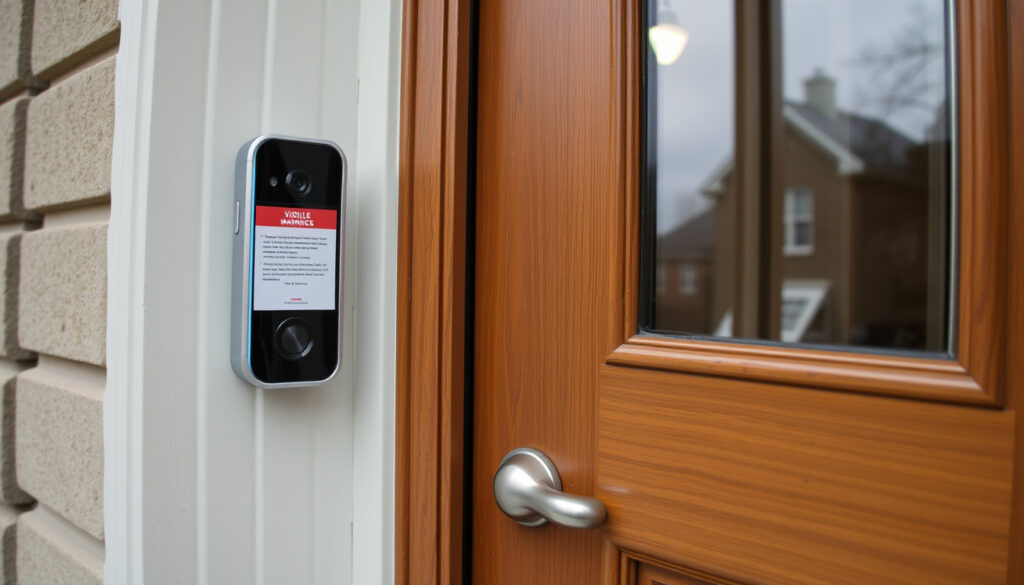
Video Doorbell Rules Fines – UK Laws, ICO Guidance & Penalties
Video doorbells have become a common sight on UK doorsteps, but headlines about £100,000 fines and privacy disputes have left many owners uncertain about the law. The rules are not as simple as a single penalty figure, and the reality depends heavily on where your camera points and how you use it.
The Information Commissioner’s Office (ICO), the UK’s data protection regulator, has issued clear guidance for domestic CCTV and smart doorbells. The overarching principle is that recording only your own property falls within a household exemption, but the moment your device captures a neighbour’s garden, a shared hallway, or a public pavement, data protection law begins to apply.
This article explains the current legal framework, the real risk of fines, what to do about neighbour complaints, and how to stay on the right side of the rules.
What Are the Laws and Rules for Video Doorbells in the UK?
| Aspect | Key Detail |
|---|---|
| Legal Basis | Video doorbells fall under the UK Data Protection Act 2018 and ICO guidance on CCTV. |
| Maximum Fine | Up to £100,000 for serious breaches of privacy laws, though ICO rarely fines individuals. |
| Neighbour Rules | Cameras must not intrude on neighbours’ private property; repositioning may be required. |
| Flats & Shared Spaces | Installation in flats often needs landlord permission and careful placement to avoid common areas. |
Several key insights emerge from the ICO’s guidance and recent media coverage:
- The £100,000 fine is a GDPR/DPA penalty that applies to organisations; individuals are unlikely to face that amount unless running a business from home.
- The ICO expects users to justify recording beyond their own property and to inform neighbours if filming their property.
- Neighbour disputes are the most common driver of complaints to the ICO about video doorbells.
- Flats and rented properties add an extra layer of complexity due to shared spaces and landlord consent requirements.
- The four rules often cited from a WalesOnline article are: inform neighbours, position the camera not to record beyond your boundary, delete footage that is not needed, and respond to ICO complaints promptly.
| Aspect | Key Fact | Source |
|---|---|---|
| Primary Law | Data Protection Act 2018 / UK GDPR | ICO |
| Maximum Penalty | £100,000 (for serious breaches by organisations) | ICO, reported by Mirror/Birmingham Mail |
| Common Complaint | Camera pointing into neighbour’s garden or windows | ICO complaints data |
| Flats Requirement | Landlord permission needed in most tenancy agreements | Which? legal analysis |
| ICO Guidance Updated | Latest guidance on domestic CCTV issued 2024 | ICO website |
Can You Be Fined £100,000 for Using a Ring Doorbell?
Headlines in the Mirror and Birmingham Mail in February 2025 warned that Ring doorbell owners could face fines up to £100,000 under a “little-known rule”. The figure is not imaginary — it is the maximum penalty the ICO can impose for serious breaches of data protection law. But context is critical.
Who actually faces the maximum fine?
The largest UK GDPR penalties are designed for organisations, not ordinary household users. The ICO itself notes that domestic users are unlikely to receive the headline-grabbing fines often mentioned in media reports. However, if a video doorbell is used for a commercial purpose — for example, a home-based business recording customers — the risk increases significantly. In such cases, the ICO expects a Data Protection Impact Assessment (DPIA) to be completed.
The ICO’s home CCTV guidance focuses on proportionate recording, signage, secure storage, regular deletion, and responding to requests. Enforcement against individuals typically begins with a warning and a request to reposition the device, not an immediate fine.
What triggers enforcement?
Complaints from neighbours are the most common trigger. If a camera is capturing a shared entrance, a neighbour’s front door, or a garden, the ICO may investigate. The guidance says that if a person objects to being recorded and there is no legitimate reason to continue, you may be told to stop recording that person. Ignoring an ICO warning can lead to an enforcement notice and potentially a fine, but the amount is rarely the £100,000 maximum for a first-time household breach.
Are Ring Doorbells Legal in Flats and Shared Accommodation?
Flats and apartment buildings present a higher legal risk because cameras almost always capture communal spaces outside the flat’s boundary — a corridor, stairwell, or shared entrance. The ICO treats these areas as potentially subject to data protection law, meaning the household exemption may not apply.
Do you need landlord permission?
Most tenancy agreements require landlord consent for installing fixtures or recording devices. Which? legal analysis confirms that landlord permission is typically required in flats and rented accommodation. Even if permission is granted, the camera must be positioned carefully to avoid recording neighbouring doors or common areas.
If you live in a block of flats, consider placing the doorbell so that it only captures your own front door. Use privacy zones or motion-limiting settings to avoid recording shared hallways. Inform your landlord and neighbours in advance.
What if you record a shared space unintentionally?
The ICO’s guidance says you should capture only the minimum footage necessary, display a sign, store recordings securely, delete them regularly, and be ready to respond to requests from people who appear in the footage. These steps help demonstrate compliance even if some incidental recording of a communal area occurs.
What Should You Do If Your Neighbour’s Ring Doorbell Points at Your Home?
If a neighbour’s video doorbell is capturing your garden, windows, or front door, the ICO says you have the right to complain. The first step is a polite conversation — many disputes are resolved simply by explaining the issue and asking for the camera to be repositioned.
How to escalate a complaint
If the neighbour does not cooperate, you can raise a formal complaint with the ICO. The regulator can require the owner to adjust the camera’s field of view or, in persistent cases, issue an enforcement notice. Civil action is also possible: a person unlawfully filmed may seek an interdict in Scotland, prevent further transmission of video, and claim compensation if they suffer harm, according to a summary of Scottish law from Austin Lafferty Solicitors.
The legal status of recording audio as well as video can add to the intrusiveness. The ICO considers both image and sound when assessing compliance. Disputes often become more complex when audio is captured from a neighbour’s private space.
Can you request the footage?
If you appear in someone else’s doorbell footage, you may make a subject access request for a copy of that personal data. The ICO says such requests should usually be handled within one calendar month. There is no general rule that forces you to hand over footage to the police, though you may choose to cooperate.
Key Events in Video Doorbell Regulation: A Timeline
- – UK Data Protection Act 2018 comes into force, applying to domestic CCTV systems.
- – Rise in video doorbell sales; ICO receives increasing complaints from neighbours.
- – ICO publishes updated guidance on domestic CCTV and smart doorbells, clarifying recording boundaries.
- – Major UK news outlets (Mirror, Birmingham Mail) report £100,000 fine warnings for Ring doorbell owners.
- – Which? publishes detailed article on legality of home security cameras, referencing ICO guidance.
- – Further legal clarifications from ICO and courts expected as smart doorbell usage continues.
What Is Certain and What Remains Unclear About Video Doorbell Laws?
| Established information | Information that remains unclear |
|---|---|
| Video doorbells that record beyond your property boundary are subject to data protection law. | The exact threshold for a ‘serious breach’ that triggers a £100k fine is not publicly defined. |
| The ICO can issue fines up to £100,000 for serious data breaches, though this is rare for individuals. | Whether a stay-at-home parent using a doorbell could be considered ‘processing personal data’ for a domestic purpose is ambiguous. |
| Neighbours have a right to complain to the ICO if they feel their privacy is being invaded. | The legal status of publicly shared footage (e.g., social media) from a doorbell is still evolving. |
| Landlord permission is typically required in flats and rented accommodation. | Enforcement by ICO against individuals vs organisations differs, but no recent high-profile individual fine has been issued. |
Why Has the £100,000 Fine Become a Talking Point?
The surge in attention around video doorbell fines stems from a combination of increasing device adoption, neighbour disputes, and media coverage that has sometimes sensationalised ICO guidance. The legal reality is that most homeowners can use doorbells responsibly without penalty, provided they respect privacy boundaries. The £100,000 figure is a statutory maximum that likely applies only to egregious, systematic breaches by companies or landlords. Individuals are more likely to receive a warning and instruction to reposition their device.
Under the UK GDPR, domestic CCTV is exempt if used for personal/household purposes, but this exemption is lost if the camera records beyond the owner’s property — for example, capturing a neighbour’s garden or street. The ICO recommends informing neighbours, minimising recording zones, and deleting unnecessary footage.
What Do Official Sources Say About Video Doorbell Rules?
“If your camera captures images of people outside your own property, you must comply with data protection law.”
ICO Guidance on Domestic CCTV
“You must consider privacy laws when installing outdoor security cameras and video doorbells.”
Which? October 2025 article
These statements underline the core message: the law is not about banning doorbells but about using them in a way that respects others’ privacy. The ICO’s home CCTV guidance remains the most authoritative source for UK domestic users.
What Are the Main Takeaways for Video Doorbell Owners?
The rules for video doorbells in the UK are clear in principle but nuanced in application. If your device records only your own property, the household exemption applies and you are unlikely to face problems. If it captures beyond your boundary, you must follow ICO guidance: limit what you record, put up a sign, store footage securely, delete it regularly, and respond to requests. The headline £100,000 fine is a statutory maximum that is rarely applied to ordinary householders. The greatest risk comes from neighbour disputes, which can be avoided by careful positioning and open communication. For more on how regulatory changes affect household finances, read the article 2 Child Benefit Cap – Scrapped How Much Extra You Get.
Frequently Asked Questions
Do I need to tell my neighbours I have a Ring doorbell?
The ICO advises you to inform neighbours if your doorbell records areas beyond your property. While not a legal requirement, it is good practice and can reduce disputes.
Can my neighbour take me to court over my Ring doorbell?
They can complain to the ICO, which may issue enforcement action. They can also pursue a civil claim for harassment or breach of privacy, though this is less common.
What happens if I ignore an ICO warning about my doorbell?
You could face an enforcement notice and potentially a fine. Ignoring warnings escalates the situation.
Are there specific rules for video doorbells in Scotland or Wales?
Data protection law is UK-wide, but local housing and tenancy laws may vary. The ICO guidance applies across all UK nations.
Can I use a Ring doorbell if I live in a block of flats?
Yes, but you likely need landlord permission and must ensure the camera does not record common areas or other flats’ entrances.
What is a subject access request for doorbell footage?
If someone appears in your footage, they can ask for a copy. The ICO says you should usually respond within one calendar month.
More related posts
 Oliver Farnworth – British Actor, TV Roles, and Relationship
 Pandora Rings – Complete UK Buying Guide 2025
 Gail Porter – From TV Presenter to Mental Health Advocate
 Jordan Belfort – Biography, Crimes, and Where He Is Now
 Andre Silva – Clarifying the Death Rumors and Confusion
 Shani Wallis – Still Alive, BGT 2025, and Her Net Worth
 Bin Laden – The Life, Death, and Legacy of al-Qaeda’s Founder
 Ric Flair – Net Worth 2025 Age Daughter and Life Story
