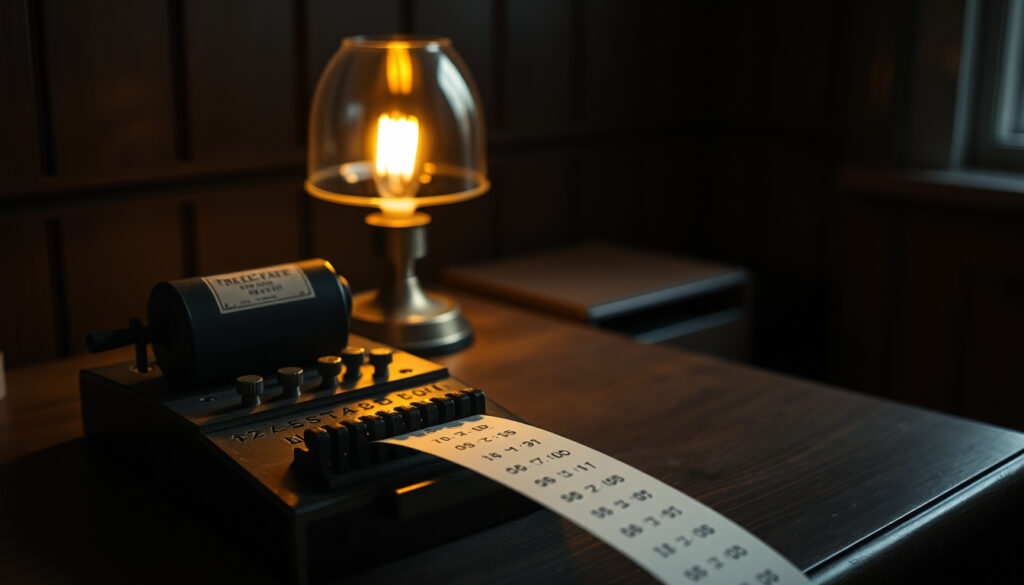
Morse Code – Complete Guide to Alphabet, Translator, and Learning
Morse code is a dot-and-dash alphabet that encodes letters, numbers, and punctuation using short and long signals. Developed in the 1830s and 1840s for telegraph systems, it became one of the first digital communication methods. Today, it remains relevant in amateur radio, aviation, and assistive technology, even though its everyday use has declined.
The system emerged from the need to send messages faster than letters carried by horse or ship. Samuel Morse and Alfred Vail created a code that assigned unique patterns to each character. Over time, the international version became the global standard, replacing earlier variants.
Modern tools allow anyone to translate text into Morse code instantly. Online translators, mobile apps, and reference charts make the code accessible. Understanding the alphabet, numbers, and common signals like SOS opens the door to learning and using Morse code today.
What is Morse code and how do you translate text into it?
Alphabet & Numbers
Complete A–Z and 0–9 codes.
Translator Tools
Online & app translators available.
How to Learn
Methods like Koch and Farnsworth.
Distress Signal
SOS is … — …
Key insights about Morse code
- Morse code remains relevant in amateur radio, aviation, and assistive technology.
- International Morse code is the standard; American Morse is obsolete.
- Learning can take 4–6 weeks with daily practice using apps or audio drills.
- The SOS signal is the most recognized Morse sequence worldwide.
| Inventor | Year | First Message | Modern Standard |
|---|---|---|---|
| Samuel Morse & Alfred Vail | 1836 (first demonstration) | “What hath God wrought” (1844) | International Morse Code (ITU-R M.1677-1) |
A Morse code translator converts text into sequences of dots and dashes (dits and dahs). Each letter or number maps to a unique pattern. Many online tools also offer audio playback, flashing light output, and copy/share features. For example, the Morse Code Translator on morsecode.world allows you to type text and hear or see the code instantly.
What are the Morse code alphabet and numbers?
Complete Morse code alphabet chart (A–Z)
Each letter of the English alphabet has a unique combination of dots and dashes. International Morse code assigns these patterns uniformly. A is .- (dot-dash), B is -… (dash-dot-dot-dot), and so on. The full chart is available on reference sites like Wikipedia: Morse Code and the RSGB reference sheet.
Morse code numbers 0–9
Numbers follow a pattern: 1 is .—- (dash-dot-dot-dot-dot), 2 is ..— (dot-dot-dash-dash-dash), up to 9, which is —-.. (dash-dash-dash-dash-dot). Zero is —– (five dashes). The patterns are longer but still easy to memorize with practice.
Punctuation and prosigns in Morse code
Morse code also covers punctuation marks such as period (.-.-.-), comma (–..–), question mark (..–..), and slash (-..-.). Prosigns are special two-letter codes sent without a gap, like AR (.-.-.) meaning “end of message” or SK (…-.-) meaning “silent key.” These are used primarily in amateur radio operations.
According to the ITU specification (ITU-R M.1677-1), International Morse code is the official version used worldwide. It differs from the original American Morse code in timing and spacing. All modern learning resources and translators follow this international standard.
How to learn Morse code effectively?
Best methods: Koch and Farnsworth
The Koch method is one of the most recommended approaches. You start with just two characters—traditionally K and M—practicing at a high character speed (15–20 WPM) until you reach about 90% accuracy. Then you add one new character at a time until you know all letters, digits, and common punctuation.
If you need more processing time, Farnsworth timing increases the gaps between characters without slowing the character speed itself. This helps beginners build speed gradually without losing rhythm.
Practice tools and mobile apps
Several mobile apps offer interactive lessons, listening exercises, and writing drills. One popular app includes modes for listening, viewing, and writing; another provides flashcards and daily challenges. Online translators like dCode Morse Code also include learning aids and audio playback.
Timeframe and milestones
With 15–20 minutes of daily practice, most learners achieve basic proficiency (5–10 WPM) in 4–8 weeks. The ARRL Morse Code Learning Resources offer structured courses and practice schedules to track progress.
Many beginners try to memorize visual dot-dash patterns instead of learning by sound. Morse code is best learned by ear—listen to the rhythm of dits and dahs. Using audio drills from the start builds faster recognition and prevents the need to unlearn visual habits later.
How do you use Morse code for help (SOS) and everyday sentences?
The SOS distress signal
SOS is the most famous Morse sequence: three dots, three dashes, three dots (… — …). It was formally adopted as an international distress signal in 1904 and became widely known after the Titanic disaster in 1912. The sequence is easy to remember and transmit even under stress.
Writing a complete sentence step by step
To write “hello world” in Morse code, you convert each letter: hello = …. . .-.. .-.. —, world = .– — .-. .-.. -.. . Each word is separated by a short gap (typically the length of a dash). Online translators handle this automatically; you can type the sentence and receive the dot-dash string with proper spacing.
Common Morse code phrases and abbreviations
Amateur radio operators often use abbreviations to save time: CQ (calling any station), QRZ? (who is calling me?), 73 (best regards), 88 (love and kisses). These prosigns and abbreviations form a shorthand that speeds up communication on the air.
Send yourself short messages using a flashlight or tapping on a table. Start with simple words like “cat” or “dog.” Over time, build up to short sentences. The RSGB Morse Code Sheet (PDF) provides a printable reference for all characters.
How was Morse code developed over time?
- 1836 – Samuel Morse and Alfred Vail develop the first Morse code system.
- 1844 – First public telegraph message sent between Washington and Baltimore.
- 1865 – International Morse code adopted at the International Telegraph Conference.
- 1904 – SOS formally adopted as international distress signal.
- 1990s – Commercial telegraphy declines; Morse code remains in amateur radio.
- 2025 – Morse code still used in amateur radio, aviation (VOR), and assistive communication.
What is well-established about Morse code and what remains unclear?
| Established Information | Information That Remains Unclear |
|---|---|
| Morse code encodes letters and numbers using dots and dashes (dits and dahs). | The exact original code sequence created by Morse differed slightly from modern International Morse. |
| International Morse code is the standard version used globally today. | Whether Morse code will remain in active use outside amateur radio in the future is debated. |
| SOS is … — … (three dots, three dashes, three dots). | Learning speed varies by individual; no single “best” method is proven universally faster. |
Why does Morse code still matter today?
Morse code holds historical significance as the first digital communication method. It paved the way for modern telecommunications. Today, its niche uses include amateur radio, aviation navigation aids (VOR stations identify themselves via Morse), and assistive technology for people with disabilities. For example, individuals with limited mobility can use a single switch to send Morse code. For those interested in the broader field of signal encoding, Understanding Communication Codes provides additional context.
Morse code is a character encoding system, not a language. It resembles Braille or semaphore in that it maps symbols to signals. Understanding this distinction helps clarify why it remains a useful tool for low-bandwidth communication in emergencies and for hobbyists who enjoy its simplicity.
What do authoritative sources say about Morse code?
“Morse code was invented by Samuel Morse and Alfred Vail in the 1830s and 1840s for use with the telegraph. It became the first widespread electronic communication system.”
“International Morse code is the modern standard and is defined by the International Telecommunication Union (ITU) in Recommendation ITU-R M.1677-1.”
“Morse code is still used in amateur radio, aviation, and by some people with disabilities as a communication aid.”
Key takeaways about Morse code
Morse code is a simple yet powerful encoding system that has survived for nearly two centuries. It remains useful for emergency signaling, amateur radio, and assistive technology. Learning it takes consistent practice—4 to 8 weeks with daily sessions—and is best approached by ear rather than by sight. The Telegraph History and Impact article explores how Morse code changed the world.
Frequently asked questions about Morse code
Is Morse code still used today?
Yes, primarily in amateur radio, aviation (VOR stations), and assistive technology for people with disabilities.
What is the difference between American Morse and International Morse?
American Morse (old) had different timing and spacing; International Morse (modern) is the global standard with uniform dot/dash length.
Can I use Morse code without a device?
Yes, using sound (whistle, tapping) or light (flashes). The code can be sent by any binary signal.
How long does it take to learn Morse code?
With daily practice (15–20 minutes), basic proficiency (5–10 wpm) can be achieved in 4–8 weeks.
Are there Morse code translators for Google?
Google itself does not have a built-in translator, but many websites and apps offer translation; search “Morse code translator” to find them.
What does SOS stand for in Morse code?
SOS does not stand for anything; it is simply the easiest sequence to remember and send: three dots, three dashes, three dots.
Is Morse code a language?
No, it is a character encoding system that represents letters and numbers, similar to Braille or semaphore.
More related posts
 Taylor Sheridan – Biography, Net Worth, and Yellowstone Creator
 Ishaan Khatter – Biography, Age, Movies, TV Shows & Family
 Roman Abramovich – Net Worth, Sanctions, and Chelsea Sale Explained
 Women’s Jacket – Best Winter Coats and Sale Tips 2025
 Ronnie Corbett – Biography, Height, and Cause of Death
 Joe Hendry – WWE, TNA Career, Age, Height & Catchphrase
 Jackson Pollock – Biography, Art Style and Record Prices
