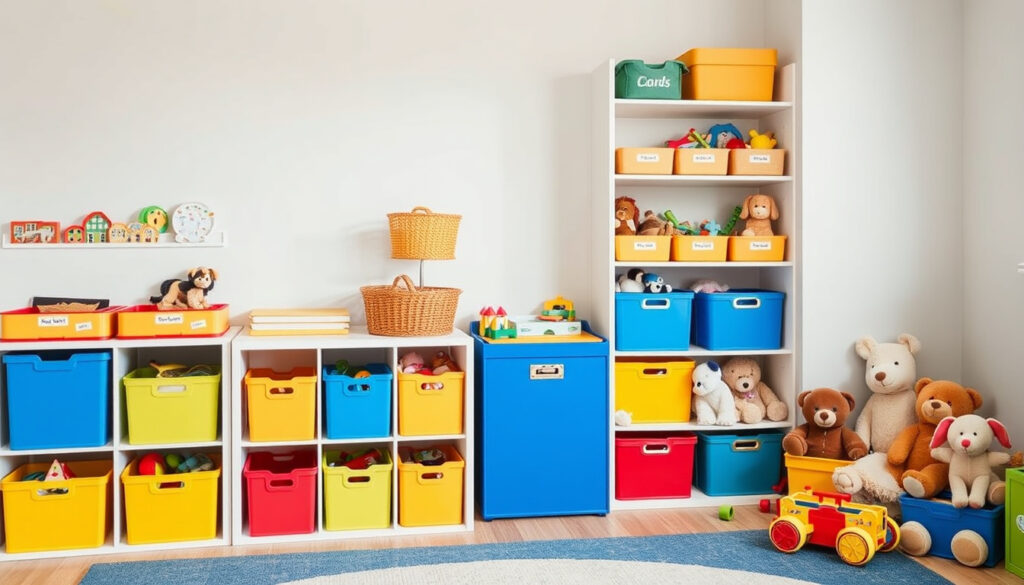
Toy Storage – Ideas, Boxes, and UK Retailer Guide
Toy storage has become one of the most practical concerns in family homes across the UK. With living spaces shrinking and open-plan layouts becoming the norm, parents need ways to keep children’s belongings tidy without surrendering the whole room to plastic crates and bright bins. Search data shows that toy storage boxes are the most commonly searched product type, while IKEA leads as the most searched retailer, closely followed by B&M.
For a small UK living room, the most practical approach is low, child-accessible storage for everyday toys, combined with closed boxes or baskets for visual clutter and secure, wall-fixed furniture. IKEA’s UK guidance specifically recommends adaptable storage, lightweight boxes, soft-close features and fastening tall furniture to the wall to reduce tip-over and finger-injury risks.
Choosing between storage ideas, boxes and retailers depends on the room, the child’s age and how much visual clutter a household can tolerate. In practice, the best systems combine a low modular unit, open baskets for everyday toys and closed boxes for everything else.
Toy Storage Ideas
Quick-View Toy Storage Solutions
| Storage group | What it offers |
|---|---|
| Toy Storage Boxes | Versatile bins, chests and boxes for any room |
| IKEA Favorites | Popular IKEA products: KALLAX, TROFAST, LÖNSHULT |
| B&M Value Picks | Budget-friendly storage baskets and bins |
| Living Room Hacks | Discreet storage that blends with decor |
Several patterns stand out across the category:
- Toy storage in the living room requires multi-functional furniture to maintain an adult aesthetic while keeping toys accessible.
- IKEA’s TROFAST system offers adjustable bins that grow with the child and fit many spaces.
- B&M offers some of the most affordable toy storage boxes in the UK, often under £10.
- Combining open baskets for quick cleanup with closed chests for out-of-sight storage creates a balanced system.
- A KALLAX-style unit with fabric or plastic boxes keeps toys contained while doubling as a TV-sideboard or room divider.
- Rotating the toy selection keeps only a limited set accessible and makes old toys feel new again.
Toy Storage at a Glance
| Metric | Value |
|---|---|
| Most searched storage type | Toy storage box |
| Top retailer searched | IKEA, closely followed by B&M |
| Most common room query | Living room |
| Average price range (IKEA) | £5 – £60 |
| Average price range (B&M) | £3 – £20 |
| Popular IKEA systems | KALLAX, TROFAST, SMÅSTAD, GLIS |
| Core safety guidance | Anchor tall or heavy furniture to the wall |
| Toddler-friendly approach | Low, open, child-accessible containers |
Toy Storage Box
The toy storage box is the most searched product type in the category, and the term covers far more than a single design. Fabric bins, plastic crates, wooden chests, modular cube inserts and lidded containers all fall under this heading. The right choice depends on the child’s age, the room and the level of clutter a household can live with.
What to look for in a toy storage box
For families with toddlers, a few practical rules apply across every retailer and price point:
- Choose open baskets or easy-pull boxes for toys used daily.
- Use transparent boxes for small toys so children can identify contents without emptying everything.
- Avoid very deep containers; toddlers may climb into them or struggle to retrieve toys.
- Prefer containers with rounded edges, sturdy handles and no detachable small parts.
- Use lidded boxes for adult-controlled storage or toys used by older children.
- Check that fabric cubes retain their shape and do not collapse into a child’s face or create a tripping hazard.
Lightweight pull-out boxes make it easier for toddlers to see and retrieve toys. Open containers suit everyday toys, while lidded boxes work best for items an adult controls.
Which IKEA toy storage boxes are worth considering?
IKEA’s range is built around modular systems that adapt as children grow:
- KALLAX plus DRÖNA boxes: open cube storage combined with fabric boxes creates both display space and concealed storage.
- TROFAST frames and boxes: designed around removable boxes and shelves, making it easy to alter the layout as children grow.
- SMÅSTAD bench with storage: combines seating and toy storage and may suit a living-room play corner.
- GLIS boxes with lids: small boxes suitable for compact items, though lidded containers should be assessed carefully for toddler safety.
- Open shelving with baskets: keeps large, frequently used toys visible and places small, loose pieces in labelled baskets or boxes.
Toy Storage IKEA vs B&M
When UK shoppers search for toy storage, IKEA and B&M dominate. Both retailers offer practical options, but the two approaches differ in price, flexibility and design philosophy.
What IKEA offers for toy storage
IKEA’s storage systems are designed to be rearranged as children grow. TROFAST frames and boxes allow the layout to change over time, while KALLAX with DRÖNA boxes gives families open display and covered storage in one unit. IKEA also pairs its products with explicit safety guidance, particularly on securing tall furniture to the wall and on choosing lids with soft-close or finger-clearance features. A full overview of the range is available on IKEA’s official toy storage page.
What B&M offers on a budget
B&M can be useful for inexpensive baskets, fabric cubes, plastic tubs and lidded storage boxes, but product availability and specifications vary by branch and date. For a toddler-accessible system, the same rules apply as with any retailer: open baskets for daily toys, transparent boxes for small items, rounded edges and sturdy handles, and lidded boxes reserved for adult-controlled storage. Fabric cubes need to hold their shape rather than collapse or become a tripping hazard.
Published price ranges reflect typical catalogues, not fixed commitments. Confirm current retail prices and branch availability before buying, as both ranges change regularly.
Other UK retailers, including The Range, Vertbaudet and Pottery Barn Kids, also carry dedicated toy storage collections at various price points.
Toy Storage for Living Room
The living room is the most common room-specific query in UK toy storage searches, and for good reason. It is where families gather, where toys end up and where storage must work hardest to keep the space usable for adults and children alike.
What are the best storage ideas for small living rooms?
Floor-level options that combine storage with another function tend to work best in tight spaces:
- Low modular cube storage: a KALLAX-style unit with fabric or plastic boxes keeps toys contained while doubling as a TV-sideboard or room divider. Use one compartment per category and place heavier items low.
- Storage bench: a bench with toy storage provides seating while hiding toys. Choose a lid that is light, has finger-clearance or soft-close protection, and cannot slam shut on small hands.
- Open baskets: large fabric or woven baskets suit soft toys, dressing-up clothes and quick clean-up. They work well beside a sofa and can be moved into a play area.
- Under-sofa or under-bed boxes: flat boxes use otherwise wasted space and keep occasional-use toys off the floor. Reserve them for toys an adult can retrieve.
Additional options use vertical space, conceal toys from view or reduce the overall volume of toys in the room:
- Lidded boxes: attractive boxes hide brightly coloured toys in an adult living room. Larger boxes can be combined with smaller containers inside to keep categories manageable.
- Wall storage: pegboards, narrow shelves and hanging compartment organisers use vertical space without consuming floor area.
- Behind-door storage: a slim hanging organiser can hold puzzles, small vehicles, art supplies or dolls’ accessories, provided it is securely mounted and does not obstruct the door or create a climbing opportunity.
- Window-seat or console storage: a shallow unit below a window or behind the sofa provides concealed storage without significantly reducing walking space.
- Rotating toy selection: keep only a limited selection accessible and store the rest elsewhere. Rotation reduces clutter and makes old toys feel new again.
What should a toddler safety checklist include?
Safety is part of toy storage, especially once toddlers are mobile. Two sets of checks matter.
Furniture and lids:
- Anchor tall or heavy furniture to the wall. IKEA explicitly advises securing large and tall furniture with the supplied wall-attachment devices to prevent tip-over.
- Keep heavy items at the bottom and lighter items higher up to improve stability.
- Avoid unsecured cube units that toddlers can climb; anchor them even if they appear stable.
- Do not use toy-chest lids that can fall suddenly. Look for safety hinges, lid stays, ventilation and finger-clearance; otherwise choose an open basket or a lid-free unit.
Additional checks:
- Check age warnings; some storage products or components are not intended for children under three.
- Remove broken storage and damaged toys; broken items may create sharp edges, loose parts or other hazards.
- Keep small parts away from under-threes. Lego-sized pieces, marbles, magnets, button batteries and small puzzle pieces should be stored out of toddler reach.
- Secure wall-mounted shelves and pegboards properly. Use fixings appropriate to the wall type and avoid placing climbable furniture beneath them.
- Keep cords and drawstrings out of reach so hanging organisers do not introduce loops around a child’s neck.
- Leave a clear route through the room. Storage should not narrow access around sofas, doors, stairs or radiators.
- Use child-height labels or pictures to help toddlers return toys independently and make category-based tidying easier.
Storage safety is part of the wider safety picture for young families. Parents weighing other safety questions for babies and toddlers can consult the Gripe Water – Complete Safety and Effectiveness Guide.
How can a small room be laid out for toy storage?
One practical layout works in most small UK living rooms:
- Place a low, wall-anchored cube unit beside the main play area.
- Put open baskets in the lowest compartments for everyday toys.
- Reserve higher compartments for adult-controlled items, craft materials and small parts.
- Add a slim storage bench under a window or along an unused wall.
- Keep one large basket beside the sofa for quick evening tidy-up.
- Store seasonal or rarely used toys in lidded boxes on high shelves.
- Leave a clear play mat area in front of the storage so children can remove and replace toys safely.
The safest all-round combination is a secured low unit, open toddler-accessible baskets, closed adult-controlled boxes and no heavy or hinged toy-chest lids within unsupervised reach.
How has toy storage evolved in the UK since 2020?
Toy storage has changed quickly in response to new living patterns and shopping habits.
- – The pandemic drives a surge in home organisation; IKEA reports a 40% increase in toy storage category searches.
- – The rise of open-concept living boosts demand for living-room-friendly toy storage.
- – B&M expands its toy storage range with matching baskets, gaining price-sensitive shoppers.
- – Sustainable materials such as bamboo and recycled fabric become key selling points, while TikTok DIY hacks influence purchasing.
What is established about UK toy storage, and what still needs checking?
Search behaviour in the UK paints a clear picture, but product-level facts need verification before purchase.
| Established information | Information that remains unclear |
|---|---|
| IKEA and B&M are the two most-searched retailers for toy storage in the UK, based on search volume data. | Exact price comparisons may change; current retail prices should be confirmed before purchase. |
| Toy storage boxes are the most commonly searched product type. | Safety standards for toy chests, including lid hinge safety, vary by product; manufacturer compliance should be verified. |
| Living room toy storage is a distinct sub-intent with unique design needs. | The durability of budget bins from B&M is not consistently reviewed; customer feedback is worth consulting. |
Why does toy storage matter more than ever?
Modern UK homes are getting smaller, making multi-room storage a necessity. Parents now prioritise both child access and adult aesthetics, especially in open-plan living areas where the playroom and the sitting room occupy the same floor space.
The rise of minimalism and clutter-conscious living has made toy storage a core home-organisation category. Retailers like IKEA and B&M have responded with modular, stylish and increasingly budget-aware solutions.
Activity-based play adds to the need. Face painting, art projects and dressing-up games all generate supplies that require a storage home. The Face Painting – Step-by-Step Guide for Beginners outlines the equipment and materials families typically keep on hand.
Which sources offer reliable toy storage guidance?
Toy storage guidance comes from retailers and official bodies. IKEA publishes product pages alongside interior design tips, while The Range, Vertbaudet and Pottery Barn Kids offer their own catalogues. The UK Government sets out toy safety regulations that cover hazards relevant to children’s storage products.
- The Range toy storage collection
- Vertbaudet kids storage chests
- Pottery Barn Kids storage solutions
- UK Government toy safety regulations
Good toy storage is about creating a system that works for the child and the space.
IKEA Interior Designer, IKEA guide
Clever toy storage ideas turn clutter into calm, especially in shared living spaces.
Joybuy UK Blog, Toy Storage in the UK
What is the best toy storage strategy for a family home?
A balanced approach keeps everyday toys in open, child-height containers, stores small parts and craft materials out of reach, and conceals the rest in closed boxes. IKEA’s guidance also supports choosing storage that is durable, adaptable, easy to clean and fitted with features such as soft-close hinges where appropriate. Together, these elements keep toys accessible, protect small fingers and preserve the living room as a shared family space.
Frequently Asked Questions About Toy Storage
What is the best toy storage for a small living room?
Look for multi-functional furniture like ottoman chests, nesting baskets, or slim shelving units with fabric bins that can tuck under sofas.
Are IKEA toy storage boxes safe for toddlers?
Most IKEA toy storage products meet UK and EU safety standards, but always check for sharp edges, small parts, and anti-tip straps for tall units.
How much do toy storage boxes cost at B&M?
B&M typically offers toy storage boxes from £3 to £20, with fabric bins and plastic crates being the most affordable options.
Can I use toy storage boxes in the living room without ruining the decor?
Yes – choose neutral colours, woven baskets, or upholstered chests that double as coffee tables. IKEA’s KALLAX with door inserts works well.
What is the difference between toy storage box and toy box?
A toy storage box is a broader term that includes bins, chests, and containers. A toy box typically refers to a chest with a hinged or removable lid.
More related posts
 Jasmine Harman – Biography, Net Worth and 2026 Health Update
 Michael Barrymore – Net Worth, Stuart Lubbock Case and TikTok Comeback
 Tanning Shop Near Me – Local Guide to Salons, Prices & Safety
 Angel Di Maria – Career, World Cup Glory and Retirement Facts
 Nitro Gladiators – Här är sprintern bakom rollen
 Caroline Dubois – Biography, Record, and Family Rift Explained
 Emeli Sandé – Biography, Age, Husband, Net Worth and Songs
 Chloe Kim – Silver medal, shoulder injury and sportsmanship
