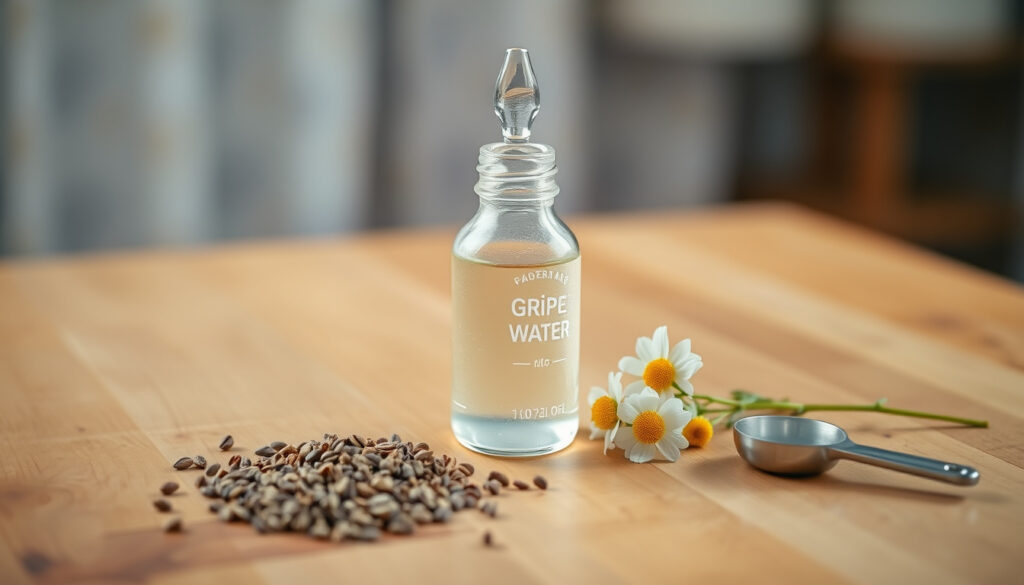
Gripe Water – Complete Safety and Effectiveness Guide
Gripe Water: A Complete Guide for Parents
Gripe water is a popular over-the-counter liquid marketed to parents for infant colic, trapped wind, hiccups, and general fussiness. Despite its widespread use, particularly in the UK and Commonwealth countries, the evidence supporting its effectiveness remains weak, and formulations can vary significantly from one brand to the next. NetDoctor notes that in the UK, evidence that it works is weak, and it should not be treated as a proven or necessary colic remedy.
Many parents turn to gripe water when faced with a crying baby who seems uncomfortable. UK health authorities and pediatric experts emphasize that it should not be treated as a proven or necessary remedy for colic. Understanding what it contains, how it works, and the risks involved is essential before offering it to an infant. Mother&Baby reports that the NHS does not recommend it as a reliably effective colic treatment because evidence is limited.
What Is Gripe Water and How Does It Work?
What it is: Non-prescription remedy for infant colic and gas.
Common brand: Woodward’s Gripe Water (UK).
Key ingredients: Dill oil, sodium hydrogen carbonate (older versions may have alcohol/sugar).
Safety note: Not FDA regulated; consult pediatrician for infants under 1 month.
- Gripe water has been used for over 150 years but lacks robust scientific evidence.
- Many modern formulations have removed alcohol and sucrose, but variations exist between brands and countries.
- Dosage guidelines vary by brand and the baby’s age; parents must always follow the specific product label.
- Parent reviews on forums show mixed results, with some reporting symptom relief and others seeing no effect.
- The NHS does not recommend gripe water for colic due to a lack of reliable evidence supporting its efficacy.
- Ingredients are not standardized, so safety and dosing differ between products.
| Attribute | Details |
|---|---|
| Active ingredients | Dill oil, sodium hydrogen carbonate (varies by brand) |
| Age range | Typically for infants 1 month and older (check label) |
| Maximum daily dose | Usually 3-6 doses per 24 hours, depending on brand |
| Regulation | Not FDA approved (US); sold as a dietary supplement or homeopathic remedy |
| Common side effects | Rare: allergic reactions, vomiting, diarrhea |
| UK availability | Boots, Tesco, Asda, Superdrug, online pharmacies |
| Historical alcohol content | Original Woodward’s formula contained alcohol; removed from modern versions |
What Are the Ingredients in Gripe Water?
Common Active Ingredients
Ingredients differ by brand and country. Common components include purified water, sodium bicarbonate (also called sodium hydrogen carbonate or baking soda), dill or fennel seed oil/extract, ginger, chamomile or lemon balm. Some products contain sweeteners like sugar or agave. Historically, Woodward’s original formulation contained alcohol, sugar, dill oil and sodium bicarbonate. GPnotebook notes that alcohol and sucrose were later removed from many UK formulations.
Alcohol and Sugar Content
Parents should read the entire label rather than assume that all gripe water is equivalent. Avoid products containing alcohol, added sugar or sucrose, and check for ingredients that could cause allergy or digestive problems. The Australian Pharmacist highlights that formulations vary substantially, and what is safe for one baby may not be suitable for another.
Not all gripe water is the same. Modern UK brands like Woodward’s are alcohol-free and low in sugar, but imported or specialist products may not be. Always verify the ingredient list against your baby’s dietary and health needs.
Is Gripe Water Safe for Newborns and Infants?
Regulatory Status and Oversight
Gripe water is not FDA approved (in the US) and is generally sold as a food/herbal product or homeopathic remedy rather than a rigorously tested medicine. In the UK, it is a non-prescription product. This means quality control and ingredient standardization are less strict than for licensed medicines. The Cleveland Clinic states it is not backed by scientific research and is not regulated as a medicine.
Potential Side Effects and Risks
Modern alcohol-free products may be tolerated by some infants, but safety is not guaranteed. Variable formulations mean safety and dosing differ between products. Herbal ingredients may cause hives, vomiting, bowel changes or other allergic reactions. Excessive or repeated use of sodium bicarbonate may disturb sodium and acid–base balance. There is also a risk of feeding displacement, as babies under six months generally need breast milk or formula. Felix Hospital notes that ingredients and concentrations are not standardized.
When to Avoid Gripe Water
Do not give gripe water to a newborn unless a clinician specifically advises it. One UK-facing medical source advises against use below one month, while product labels may set different minimum ages. The safest practical approach is to follow the exact label and ask a pharmacist or GP before using it, especially in a premature baby or a child with kidney, feeding or gastrointestinal problems.
Any product containing alcohol is unsuitable for babies. Always check the label for alcohol or ethanol, especially if purchasing a brand you haven’t used before. Older or traditional formulations are more likely to contain it.
If your baby develops a rash, difficulty breathing, swelling, vomiting, or changes in bowel habits after taking gripe water, discontinue use immediately and seek medical help.
What Is the Recommended Gripe Water Dosage by Age?
There is no universal safe dose. The correct amount depends on the brand, ingredients, concentration and minimum-age instructions. Some products advertise doses such as 2.5–5 mL, but these figures must not be transferred between brands. A reported example gives 2.5 mL for babies under one month and 5 mL for babies under six months, but this is product-specific and should not be used as general guidance.
If a clinician or pharmacist agrees that a particular product is appropriate: use only the supplied syringe or a properly marked medicine measure. Follow the label’s age and maximum-frequency limits. Do not exceed the stated dose or combine it with other sodium-containing or herbal products. Stop and seek advice if vomiting, diarrhoea, rash, breathing difficulty, unusual sleepiness or worsening symptoms develop.
Does Gripe Water Actually Work for Colic and Gas?
What the Evidence Says
There is no compelling clinical evidence that commercial gripe water treats infant colic, gas, reflux, constipation or hiccups. The NHS notes that colic commonly improves with time and that gripe water has little supporting evidence. UK-oriented sources consistently report that it is not recommended as a reliably effective treatment.
Mixed Results from Studies
Some small trials have found potential benefits from particular preparations containing fennel, chamomile or lemon balm, but those studies tested standardized extracts or emulsions, not necessarily the commercial gripe-water products sold in shops. A 2015 study published in PubMed involving 335 infants in India found that gripe water did not prevent crying, adding to uncertainty about its effectiveness. Results therefore cannot be generalized to every brand.
How Has Gripe Water Changed Over Time?
- 1850s: Original formula developed, often contained alcohol and sugar.
- 1900s: Widespread use in UK and Commonwealth countries.
- 1980s-1990s: Shift toward alcohol-free and low-sugar formulations due to safety concerns.
- 2015: PubMed study shows gripe water is the most common non-nutritive substance given to infants in India.
- 2020s: Ongoing debate on efficacy; Cleveland Clinic and NHS advise caution.
What Is Known and What Remains Unclear About Gripe Water?
| Established Information | Information That Remains Unclear |
|---|---|
| Contains ingredients like dill oil and sodium bicarbonate. | Whether it is more effective than placebo for colic relief. |
| Some formulations no longer contain alcohol (e.g., Woodward’s Modern formula). | Whether long-term safety data is sufficient for very young infants (under 1 month). |
| It is not FDA approved and is not regulated as a medicine in the US. | Whether all brands adhere to consistent quality standards. |
How Does Gripe Water Compare to Other Colic Remedies?
Colic is a diagnosis of exclusion, and many parents seek over-the-counter remedies for relief. Gripe water’s active ingredients have mild carminative properties (gas relief) but lack strong clinical trials. Alternative remedies include simethicone drops (a regulated anti-gas medication) and probiotics, which have mixed evidence. The Mayo Clinic recommends practical measures like paced feeding and gentle rocking before turning to supplements.
The NHS recommends against gripe water due to lack of evidence, while some pediatricians may tolerate it in older infants as a low-risk option if parents insist on trying something. Prompt medical assessment is needed for inconsolable crying with fever, breathing difficulty, or poor feeding.
For persistent gas issues, parents can explore other gentler approaches. Our guide to Newborn Gas Relief: Tips and Remedies covers feeding techniques and positioning that may help reduce discomfort without the need for supplements.
What Do Experts and Studies Say About Gripe Water?
Gripe water is sold as a remedy for colic, fussiness and gas. But it’s not FDA regulated or backed by scientific research.
Cleveland Clinic, November 2025
Gripe water (GW) administration to young infants. GW helps in digestion and prevents stomach ache. gripe water was the commonest (55%) non nutritive substance given to infants.
PubMed, Jain et al., 2015
Gripe water is a non-prescription product sold in many countries around the world to relieve colic and other gastrointestinal ailments.
Wikipedia
What Is the Bottom Line for Parents Considering Gripe Water?
Gripe water has not been convincingly shown to relieve colic, and there is no standard dose. In the UK, it is generally safer to avoid routine use, especially in newborns, and consult a pharmacist, GP or health visitor if considering a specific alcohol-free, sugar-free product. For persistent or severe crying, prompt medical assessment is needed to rule out underlying conditions. For a broader overview of colic, read our Colic Symptoms and Treatment Guide.
Frequently Asked Questions
Can I give gripe water before or after feeding?
Most products recommend giving it between feeds, not with feed, to maximize effect on gas.
Does gripe water contain alcohol?
Traditional recipes contained alcohol, but modern brands like Woodward’s are alcohol-free. Always check the label.
Is gripe water available in the USA?
Yes, sold under various homeopathic brands (e.g., Mommy’s Bliss, Little Remedies). It is not FDA approved.
Can gripe water be used for older babies?
It is generally considered for infants up to 6 months, but some brands allow up to 1 year. Consult a doctor.
What are the signs of an allergic reaction to gripe water?
Rash, difficulty breathing, swelling. Discontinue use and seek medical help.
How often can I give gripe water to my baby?
This depends on the brand, but most recommend no more than 3-6 doses in 24 hours. Never exceed the label instructions.
Is gripe water the same as colic drops?
No. Colic drops usually contain simethicone, which is a regulated anti-gas medication. Gripe water is a herbal supplement with less consistent evidence.
More related posts
 Chris Tucker – Biography, Net Worth, Movies and 2025 Update
 When Calls the Heart – Seasons, Cast, Episodes and Where to Watch
 Ryan Eggold – Biography, Net Worth, Wife and Career Facts
 Sean O’Malley – UFC Record, Next Fight & Net Worth
 Ric Flair – Net Worth 2025 Age Daughter and Life Story
 Robin Van Persie – Sacked by Feyenoord After One Season
 Liza Koshy – Net Worth, Age, Movies, and David Dobrik
 Millennials Generation – Age Range, Traits and Comparisons
