Football Kits – Complete Guide to Prices, Suppliers and Design
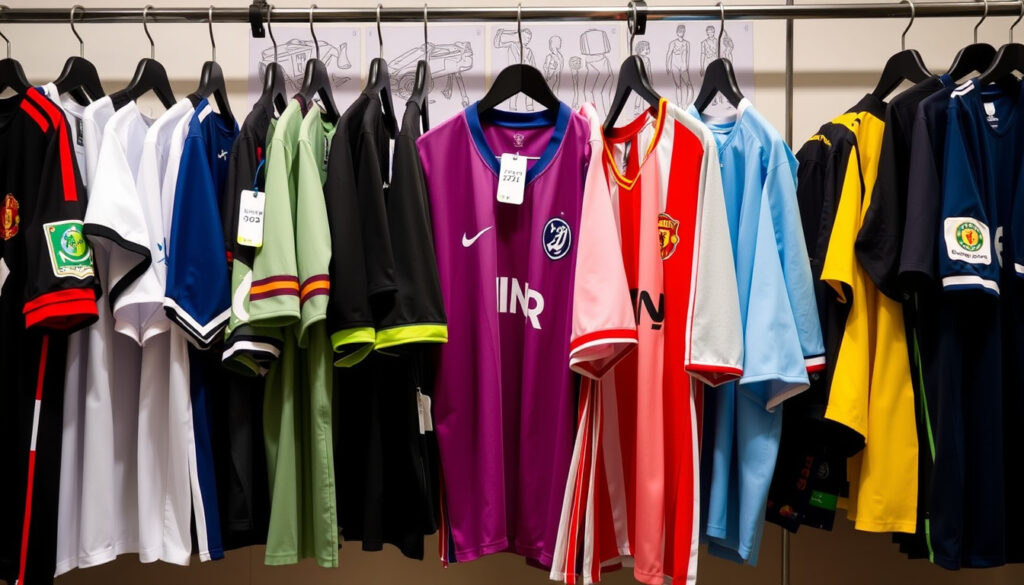
“Football kit” is the usual British term for a team’s complete playing outfit: shirt, shorts and socks. In practice, people also say “football shirt” when referring to the top alone, while “jersey” is more common in American English. The same phrase covers official club merchandise, custom team kit, retro shirts and historically inspired reproductions.
The UK market reflects that range. Official brand stores sell current-season club jerseys, specialist suppliers produce custom kits for teams and schools, and retro-focused companies sell shirts inspired by earlier eras. Long-running reference sites document the designs that sit behind those reproductions.
Buying decisions often come down to cost, quality, sizing, printing and lead times. A low headline price can rise once names, numbers and badges are added, so the practical details of a purchase matter as much as the look of the shirt itself.
Where can I buy custom football kits in the UK?
Football kits at a glance
The complete team outfit: shirt or jersey, shorts and socks. UK and US terminology differ.
Official club kits, custom team kits, retro/vintage shirts and historical kits.
Colours, badges, names, numbers, fabric options and order minimums.
Official brand stores, specialist team-kit suppliers, retro specialists and historical references.
Key insights
- Football kits span official branded jerseys, custom team kits, retro/vintage shirts and historical references.
- UK searches are strongly focused on custom designs, cheap options and official jerseys.
- Official retail, team-kit suppliers, retro specialists and historical sites usually appear as separate options in search results.
- Most buyers need practical guidance on cost, quality, design, printing, fit and care.
- Team-specific queries such as Dutch teams, Cape Verde, Egypt and Santos show interest in national and club-specific designs.
| Metric / fact | Detail |
|---|---|
| Common product terms | Football kit, shirt, jersey and strip; retro and vintage also used. |
| Customisation options | Colours, badges, names, numbers, shorts, socks and sometimes goalkeeper kit. |
| Main cost drivers | Number of players, print complexity, fabric quality, order volume and branding. |
| Typical lead times | Vary by supplier and customisation workload; confirm before ordering. |
| Key supplier roles | Official brand retail, team-kit suppliers, retro specialists and historical references. |
| Small-batch retro shirts | Around £30 each, with a six-shirt minimum at one UK supplier. |
| Fully personalised team kits | Roughly £40–£50 per player once names and numbers are added. |
| Early replica milestone | Admiral’s 1973 Leeds United away-kit deal, reported at £10,000. |
| Retro-market emergence | TOFFS and Arkwright Sportswear began producing retro shirts around 1990. |
UK buyers choosing between these options start with the distinction between official retail and custom production. Official brand stores sell current-season shirts from manufacturers such as Adidas. Specialist team-kit suppliers such as Kitlocker focus on clubs, schools and small teams. Retro specialists such as Classic Football Shirts and historical reference sites such as Historical Football Kits cover the vintage side.
The Football Association publishes the rules that govern kit requirements in English competition, from shirt numbers to sponsor restrictions. The FA is the relevant authority for clubs and schools playing organised football in England.
For grassroots clubs and schools, Sport England supports community sport and can act as a useful starting point for guidance on funding and equipment. It does not sell kits, but its remit covers the grassroots game where most custom team orders come from.
Small-batch retro-inspired shirts give another option. One UK supplier produces custom retro shirts at about £30 each with a six-shirt minimum, which suits tiny sides or groups of friends who want a bespoke kit without committing to a full team order. Stash Company is one example.
What is the best football kit supplier for clubs and schools?
A dedicated team-kit supplier is usually the most practical route for clubs and schools. These providers handle design tools, bulk pricing, printing and delivery in one package. Sport England supports the grassroots game in England, making it a relevant reference for clubs planning kit budgets. The FA sets the rules under which those teams play, including what must appear on shirts.
What are the best football kit brands in the UK?
Official brands such as Adidas dominate the retail side of football jerseys, while specialist suppliers cover team orders and retro companies cover the nostalgia market. Historical Football Kits maintains a long-running archive of club designs and is often used as a reference when identifying or recreating older shirts.
Do football kit manufacturers offer team discounts?
Volume affects price more than any other variable. Basic custom team kits are often advertised from roughly £25–£35 per player, and per-player costs rise to about £40–£50 when names, numbers and badges are added separately. Suppliers quote per player or per shirt, so larger orders usually bring the unit price down.
How much do custom football kits cost?
UK prices vary by supplier, product type and order size. Current examples give a practical range:
- Small-batch retro-inspired shirts: around £30 each, with a reported six-shirt minimum at one supplier.
- Basic custom team kit: often advertised from roughly £25–£35 per player.
- Fully personalised team kit: can reach about £40–£50 per player once names and numbers are charged separately.
- Custom configurator products: price varies by garment and configuration; some providers include printing regardless of design complexity.
- Event or stag-party shirts: priced per shirt, with optional shorts, socks, hats or referee accessories.
These are guide prices rather than a universal market tariff. Epic Kits advertises basic custom team kits from roughly £25–£35 per player and notes that fully personalised kits can reach £40–£50 per player once names and numbers are added. Spized, which runs a custom configurator, ties its pricing to garment type and configuration.
Are cheap custom football kits good quality?
Quality depends on the production method and the supplier. Sublimation prints the design into the fabric itself, which suits complex all-over patterns and avoids separate layers. DTF printing transfers graphics onto the shirt and is the common UK method for names, numbers and logos. Embroidery adds a stitched patch, usually with a more textured, premium finish; one UK supplier advertises an embroidered patch for an additional £3.
A low headline price can rise substantially once personalisation is added. The safest approach is to compare what is actually included in the quote.
Check whether the price covers VAT, delivery, artwork, setup, names, numbers, badges, shorts and socks. Personalisation is often charged separately, and the true cost per player can climb well above the advertised starting price.
What drives the price of a football kit?
- Number of players: per-player pricing makes squad size the first cost factor.
- Print complexity: sublimation, DTF and embroidery carry different production costs.
- Fabric and garment type: match-fit and replica-fit shirts are made to different specifications.
- Order volume: larger orders reduce the unit price.
- Branding and extras: badges, sponsor-style graphics, patches, tracksuits and accessories add to the total.
How do I design my own football kit?
Designing a kit starts with era and silhouette, then moves to colours, collar, cuffs and decoration. UK suppliers give teams, schools and events access to the same printing technology used for professional shirts.
What is included in a football kit?
A full kit usually means shirt, shorts and socks. Some providers also offer goalkeeper shirts, tracksuits, snoods and accessories as part of a package. Once the base garments are chosen, names, numbers, badges and sponsor graphics are added during production.
Can I get names and numbers printed on a football kit?
Yes. UK suppliers use DTF printing for names, numbers, logos and other personalisation. The decoration is applied as a transfer rather than sewn in, which keeps production fast. Embroidery is an alternative for badges or patches: one UK supplier advertises an embroidered patch for an additional £3.
How do I design a convincing retro kit?
Design choices fall into two groups: visual references and production details.
Visual references
- Choose an era. Common UK inspirations include the late 1960s and 1970s, the colourful 1980s, and the oversized, heavily patterned 1990s.
- Select the right silhouette. A looser body, longer sleeves, a broad collar and generous shorts evoke older football clothing more effectively than a modern slim performance cut.
- Use period-appropriate colours. Strong primary colours, contrasting cuffs, colour blocks, pinstripes and tonal geometric patterns are recognisably retro.
- Design the collar and cuffs carefully. V-necks, polo collars, buttoned collars, contrast tipping and ribbed cuffs are the strongest signals of a specific era.
Production details
- Limit modern details. Contemporary technical textures, oversized sponsor placement or minimalist heat-transfer badges can undermine a historical look.
- Choose the decoration method. Use sublimation for all-over patterns, DTF or heat transfer for names and numbers, embroidery for raised badges, and stitched or woven badges for a more traditional finish.
- Decide whether the shirt is historical or fictional. An exact historical recreation requires careful research; a fictional “inspired by” design gives more freedom.
- Create a production-ready specification. Supply vector artwork where possible, specify colour references, list every player’s name and number, and request a digital proof before production.
An exact historical recreation requires research into the original collar, manufacturer mark, sponsor, badge, sleeve trim and fabric. A fictional “inspired by” design gives more freedom and usually reduces legal and licensing complications.
Jersey, shirt or kit: what should you call it?
Terminology matters because the same garment gets different names in different markets. “Kit” is the full outfit in British English. “Shirt” refers to the top. “Jersey” is the standard term in American English. “Strip” is another British term for the complete playing outfit.
What is the difference between a football jersey, shirt and kit?
In the UK, a football kit is the entire uniform: shirt, shorts and socks. A football shirt is the upper garment, and a jersey is the same garment under its more common American name. Retro and vintage labels add another layer: a retro kit is a modern garment designed to evoke an earlier era, while a retro replica is a reproduction of a genuine historical club or national-team design. Academic work on English football shirt design draws that distinction clearly.
What are retro and vintage football kits?
Retro and vintage are used loosely in the market. A throwback shirt is an informal term for a shirt based on a past season, era or visual style. A reissue is a manufacturer’s officially licensed recreation of an older shirt. A remake usually means a reproduction of a particular historic design, though retailers may use the term loosely. Sports history research dates the commercial start of the retro-replica wave to around 1990.
Which football teams have the most iconic kits?
Some designs anchor the retro market more than others. Retro suppliers commonly offer colour palettes associated with England, West Germany, Brazil, Scotland, France, Italy and Ireland. The specific national palette a customer chooses is one of the first decisions in a custom retro design.
Retailers use “reissue” and “remake” loosely. A reissue should be an officially licensed recreation of an older shirt, while a remake can mean any reproduction of a historic design, depending on the seller.
How have football kits changed over time?
- Late 19th century: Clubs began using distinct colours and kit designs. Early football kits were heavy cotton or wool-based.
- Mid-20th century: Kit design became more standardised; numbers and club crests became more common.
- 1970s–1980s: Sponsor logos appeared and replica shirts entered the consumer market. In 1973, Admiral and Leeds United manager Don Revie agreed to redesign and copyright Leeds’ away kit for a reported £10,000 fee. Historical research on replica-kit development describes the deal and the rise of the child replica-kit industry.
- 1990s: Branded kits and technological fabrics became the norm, and retro culture began to grow. Companies including TOFFS and Arkwright Sportswear began producing shirts based on club and international designs from the 1950s through the 1970s. English and Scottish kits of the decade used bold colours, oversized shapes and elaborate patterns; some later became collectible. Kit history sources link this period to the rapid expansion of adult replica-shirt sales.
- 2000s–2010s: Custom team-kit services expanded and the retro/vintage market matured.
- 2020s: Sustainable materials, customisation tools and nostalgia-driven reissues define the market.
Many of the designs retro suppliers now reproduce date from the era of 1960s players such as Jimmy Greaves – Career, Death and Enduring Legacy.
What is certain and what varies between suppliers?
| Established | Still varies by supplier |
|---|---|
| Football kit and football shirt are commonly used interchangeably in the UK. | Exact “cheap” kit prices and quality thresholds vary by supplier and order volume. |
| Custom football kits can include shirt, shorts, socks, names, numbers and club or team badges. | Sizing and fit are not standardised across all brands and suppliers. |
| Retro and vintage football kit markets exist alongside official current-season kits. | Delivery times vary with supplier workload and custom printing requirements. |
| Search results separate official brand retail, team-kit suppliers, retro specialists and historical references. | Check individual supplier size guides and lead times before ordering. |
UK consumer law also applies to kit purchases. When buying online from UK suppliers, the same rules govern returns, refunds and delivery as for other goods. GOV.UK sets out the consumer protections that apply to online orders.
Why is the football kit market structured this way?
The current market separates into four content roles: official retail, team-kit supply, retro specialists and historical reference. Adidas occupies the official retail space, Kitlocker serves team buyers, Classic Football Shirts covers the vintage side, and Historical Football Kits provides the reference layer. Each serves a different buyer: the fan, the club, the collector and the researcher.
Governing bodies shape the rules of that market. FIFA sets the Laws of the Game, which include requirements for players’ equipment, while UEFA applies those standards in European competitions.
UK search behaviour adds another layer. Phrases such as “custom football kits”, “cheap custom football kits” and “football jersey UK” dominate the demand side, which is why UK suppliers, British English terminology and local delivery considerations feature so prominently in buying guides.
Where can buyers find reliable football kit information?
Official manufacturer and retail pages provide care guides, fabric technology and delivery or returns information. Football governing bodies such as FIFA, UEFA and the FA publish kit-related rules and equipment requirements. UK government guidance covers consumer rights for online purchases. Pricing pages for small-batch retro production give concrete examples of what a custom order can cost.
“A low headline price can rise substantially when personalisation is added separately.”
Epic Kits – personalised football kits
“Small-batch retro shirts are available at about £30 each, with a six-piece minimum.”
Stash Company – custom retro football kits
What should you consider when choosing a football kit?
The first decision is the category: official current-season shirt, custom team kit, retro-inspired design or historical replica. From there, the details that matter are what the price includes, how the supplier’s sizes fit, how long printing takes and how the shirt should be washed. For many buyers, the player behind the shirt adds meaning too; Chloe Kelly – England Star, Euro Winner and Arsenal Forward is one example of how an England kit carries a wider football story.
What else should buyers know about football kits?
How long does it take to receive custom football kits?
Lead times vary by supplier, printing method, order volume and shipping destination. Custom shirts need production time on top of printing. Check the supplier’s confirmation for an estimated date and contact the supplier for current timelines before ordering.
How do football kit sizes fit?
Fit is not standardised across brands. Consult each supplier’s size chart, measure an existing shirt for comparison, and check the supplier’s adult or child size recommendations. Match-fit shirts tend to be tighter and lighter; replica-fit shirts are looser for casual wear.
How should I wash and care for a football kit?
Follow the manufacturer’s care label. Wash printed names and numbers inside out, use cold or cool water, and avoid high-heat drying or ironing directly on the print. This helps printed lettering and badges last longer.
What does MOQ mean in football kit manufacturing?
MOQ stands for minimum order quantity, the smallest number of garments a supplier will produce. Some small-batch providers accept six shirts, while traditional team suppliers often expect larger orders.
What is the difference between sublimation and DTF printing?
Sublimation prints the design into the fabric, which suits complex all-over patterns and avoids separate applied layers. DTF printing transfers graphics onto the shirt and is commonly used for names, numbers and logos.
What should I check before ordering a custom football kit?
Confirm whether the quote includes VAT, delivery, artwork, setup, names, numbers, badges, shorts and socks. Ask about the production timeline and request a digital proof before production when ordering custom shirts.
More related posts
 Matt Willis – Biography, Net Worth, and Sobriety Journey
 Patrick Christys – Biography, Age, Wife, Career and Net Worth
 Joan Sims – Her Life, Career, and Cause of Death
 Denzel Washington – Full Biography and Net Worth 2025
 Lucy Connolly – 31-Month Sentence, Appeal and Release
 Ethan Nwaneri – Complete Biography, Stats, and Family Guide
 Anne Cleves – The German Princess Who Survived Henry VIII
 5 Foot 6 in CM – Exact 167.64 cm Conversion
