Are Apples Good for You – Nutrition, Benefits and Daily Limits
Apples represent one of the most accessible fruits globally, yet their specific physiological impacts continue to generate scientific inquiry. Evidence from the Harvard School of Public Health and major medical institutions confirms that regular consumption delivers measurable benefits for cardiovascular function, metabolic health, and digestive wellness.
The nutritional density of apples varies significantly based on preparation methods. Maximum benefits occur when consuming whole, unpeeled fruit, as the skin concentrates antioxidant compounds and insoluble fiber that processing methods largely eliminate.
This examination analyzes peer-reviewed data regarding caloric content, glycemic impact, variety comparisons, and evidence-based consumption limits to determine optimal integration into dietary patterns.
What Are the Health Benefits of Apples?
- One medium apple provides 4 to 4.37 grams of dietary fiber, representing approximately 16% of the recommended daily value.
- The glycemic index of 42-44 ensures gradual glucose absorption rather than rapid spikes.
- Phytonutrients including quercetin, catechin, phloridzin, and chlorogenic acid provide cellular antioxidant protection.
- The Women’s Health Study, tracking 38,000 women for nearly nine years, associated apple consumption with reduced type 2 diabetes risk.
- Malic and tartaric acids inhibit intestinal fermentation, supporting digestive comfort.
- Pectin fermentation in the colon produces short-chain fatty acids linked to reduced chronic disease risk.
| Nutrient | Amount (Medium Apple) | % Daily Value |
|---|---|---|
| Calories | 95 kcal | – |
| Fiber | 4-4.37 g | ~16% |
| Vitamin C | 8% (large apple) | 8% |
| Potassium | 7% (large apple) | 7% |
| Sugar | 18.9-19 g | – |
| Carbohydrates | 25 g | – |
| Protein | 0.5 g | – |
| Fat | 0-0.3 g | – |
Sources indicate that Harvard Nutrition Source emphasizes the combination of fiber and phytonutrients in cardiovascular protection, while Healthline confirms the standard nutritional breakdown per 182-gram serving.
Apple Nutrition Facts
Macronutrients and Fiber Composition
Apples deliver substantial carbohydrate content (25 grams) primarily through naturally occurring sugars and fiber, with negligible fat and protein. The fiber composition includes both soluble pectin, which forms a gel-like substance in the digestive tract, and insoluble fiber concentrated in the skin that adds bulk to stool.
The vitamin and mineral profile includes significant quantities of vitamin C, potassium, calcium, and various B vitamins. However, the most nutritionally significant compounds are the polyphenols found in the skin, including flavonoids and phenolic acids that demonstrate antioxidant capacity.
The highest concentrations of quercetin and insoluble fiber reside in the apple skin, with additional nutrients concentrated immediately beneath the surface. Processing methods including juicing, cooking, or peeling eliminate these beneficial compounds and reduce the fiber content substantially.
According to the Cleveland Clinic, consuming apples in their whole, raw, and unpeeled state provides optimal nutritional density compared to processed alternatives.
Antioxidant Profiles and Bioavailability
The antioxidant compounds in apples—particularly quercetin, catechin, and chlorogenic acid—function to reduce cellular oxidative damage and inflammation. These phytonutrients work synergistically with fiber to protect pancreatic cells and support vascular function. Red Delicious varieties may contain higher concentrations due to their darker pigmentation, though specific comparative data remains limited.
How Many Apples Should You Eat a Day?
Evidence-Based Consumption Guidelines
Research does not specify a strict optimal daily quantity. One large apple provides 20% of the recommended daily fiber value, 8% of vitamin C, and 7% of potassium for 130 calories, suggesting that single-apple consumption delivers significant nutritional contributions. The traditional recommendation of one apple daily aligns with epidemiological evidence showing health benefits, though individual tolerance varies based on digestive sensitivity and caloric requirements.
For individuals managing specific health conditions, integrating apples requires consideration of carbohydrate content and fiber tolerance. Those monitoring blood sugar may benefit from pairing apple consumption with protein sources to further modulate glucose absorption, despite the fruit’s naturally low glycemic index.
The Mayo Clinic Health System notes that fiber content promotes satiety, supporting How to Inject Mounjaro weight management protocols by reducing overall caloric intake through prolonged fullness.
Diabetes and Metabolic Considerations
The low glycemic index of 42-44 makes apples suitable for blood sugar management strategies. The soluble fiber pectin slows glucose absorption, while quercetin demonstrates protective effects for pancreatic beta cells. The Women’s Health Study findings suggest that regular consumption correlates with reduced type 2 diabetes incidence over multi-year periods.
Washington Apple Commission data confirms that one large apple contains zero cholesterol and no sodium, contributing to heart-healthy dietary patterns recommended for diabetic patients.
Which Apple Variety Is Healthiest?
Color Variations and Nutritional Differences
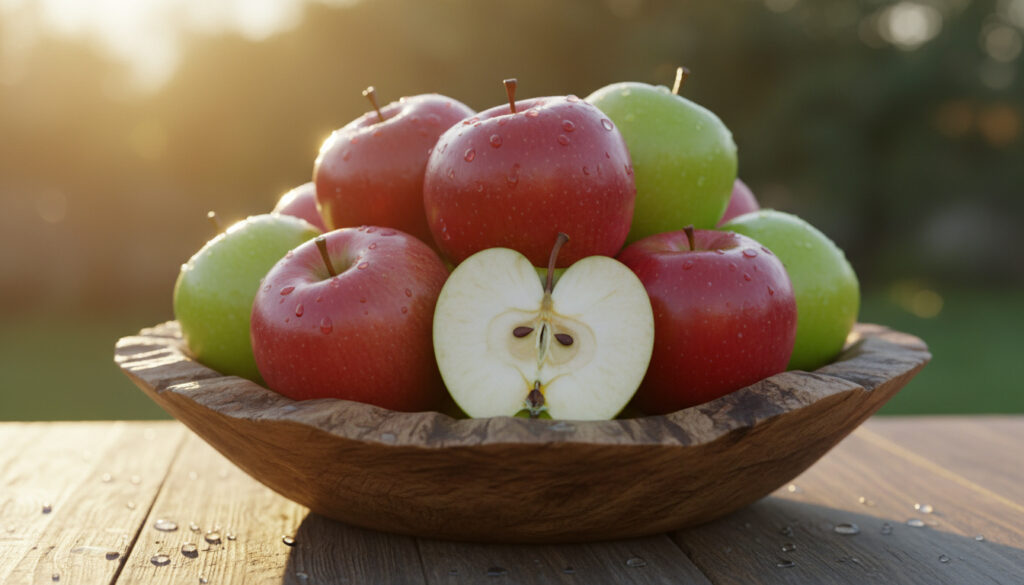
Direct comparative analyses between red and green apple varieties remain limited in current literature. Available evidence indicates that green apples contain identical core nutritional components—fiber, vitamin C, and carbohydrate levels—as red varieties. The primary determinant of antioxidant concentration appears to be skin color intensity rather than cultivar category, with darker red skins potentially offering higher phytonutrient density.
Research has not established significant nutritional disparities between red and green apple cultivars. Both varieties provide equivalent fiber content and vitamin concentrations when consumed with intact skin.
The New Hampshire Fruit Growers association confirms that nutritional density depends more on consumption method (whole versus processed) than on specific color variety.
Processing Impact on Health Benefits
Apple juice, cider, applesauce, and dried apple products undergo processing that removes insoluble fiber and degrades heat-sensitive antioxidants. These forms produce higher glycemic responses and fail to provide the satiety signals triggered by chewing whole fruit and digesting intact cellular structures.
Juice and sauce forms lack the fiber and concentrated antioxidants found in whole, unpeeled fruit. Cooking and mechanical processing remove valuable nutrients while concentrating sugars, substantially reducing health benefits.
Clinical nutrition analysis indicates that phytonutrient availability decreases significantly when apples are peeled or cooked prior to consumption.
How Long Does It Take to See Health Benefits?
-
Immediate Glycemic Response: Consumption triggers minimal blood sugar elevation due to the low glycemic index of 42-44 and fiber-mediated glucose absorption.
Source: Healthline nutritional analysis -
Digestive Adaptation: Pectin begins feeding beneficial gut bacteria within days of regular consumption, supporting microbiome diversity and short-chain fatty acid production.
Source: NH Fruit Growers nutritional data -
Long-term Disease Risk Reduction: Epidemiological evidence spanning nine years demonstrates quantifiable reductions in type 2 diabetes incidence among populations consuming apples regularly.
Source: Harvard School of Public Health Women’s Health Study analysis
What Do We Know for Certain About Apples?
| Established Evidence | Requiring Further Research |
|---|---|
| Fiber content of 4-4.37g per medium apple (16% DV) | Optimal daily consumption quantities for specific populations |
| Glycemic index of 42-44 confirmed across studies | Direct comparative benefits between red and green varieties |
| Presence of quercetin, catechin, and chlorogenic acid | Specific cancer prevention mechanisms (colorectal, lung, breast) |
| Cardiovascular benefits from pectin-mediated cholesterol reduction | Long-term dermatological effects from antioxidant consumption |
| Nine-year cohort data showing reduced diabetes risk | Seasonal nutritional variations between harvest periods |
Why Do Apples Remain a Dietary Staple?
Apples maintain global dietary prominence due to year-round availability, extended storage capability, and cultural integration through the “apple a day” maxim. The fruit delivers rare nutrient density relative to caloric cost, providing substantial fiber and vitamins for under 100 calories per serving. This efficiency supports Loddon Valley Leisure Centre nutritional guidelines emphasizing whole-food sources of dietary fiber.
Unlike many nutrient-dense foods requiring preparation or refrigeration, apples offer immediate consumption convenience without sacrificing the phytonutrient benefits typically associated with more fragile berry crops or leafy vegetables.
What Do Health Experts Say About Apples?
The combination of phytonutrients and fiber in apples may lower serum cholesterol and reduce free radical damage in the cardiovascular system.
Harvard School of Public Health, Nutrition Source
Fiber reduces both cholesterol levels and blood pressure, further contributing to heart disease prevention.
Mayo Clinic Health System, Speaking of Health
Maximum health benefits occur when apples are eaten whole, raw, and unpeeled. The skin contains the highest concentration of antioxidants.
Cleveland Clinic, Health Essentials
Should You Make Apples a Daily Habit?
Integration of one to two medium apples into daily dietary patterns provides evidence-based support for cardiovascular health, digestive function, and glycemic control without caloric excess. The combination of soluble fiber, antioxidants, and low glycemic impact positions apples as a high-value component of preventive health strategies, provided they are consumed whole and unpeeled rather than processed.
Common Questions About Apple Consumption
Can you eat too many apples?
Excessive consumption may cause digestive discomfort from high fiber intake. The natural sugar content (19g per apple) requires consideration within daily carbohydrate limits. Most adults tolerate one to two apples daily without adverse effects.
Are organic apples nutritionally superior?
Research does not indicate nutritional differences between organic and conventional cultivation methods. Both provide identical fiber and vitamin profiles, though the analysis focuses on preparation methods rather than agricultural techniques.
Do apples specifically improve skin health?
While apples contain vitamin C and antioxidants supporting cellular health, research does not isolate dermatological effects specifically attributable to apple consumption versus general dietary patterns.
Are cooked apples as healthy as raw apples?
Cooking reduces heat-sensitive nutrients and eliminates structural fiber integrity. Raw, unpeeled apples maintain higher antioxidant concentrations and provide greater satiety.
Can apples replace vegetables in your diet?
No. Apples lack vitamin K, folate, and diverse phytonutrients found in leafy vegetables. They complement rather than replace vegetable consumption.
Which apple variety contains the least sugar?
Research indicates all medium apples contain approximately 19 grams of naturally occurring sugars regardless of color variety.
More related posts
 James Brolin – Biography, Age, Family and Net Worth 2025
 Lainey Wilson – Age, Husband, Yellowstone Role and Songs
 Jacqueline Fernandez – Age, Movies, Net Worth and Facts in 2025
 Amy Macdonald – Biography, Net Worth, Songs and 2025 Tour
 Santa Claus the Movie – Cast, Plot, Reviews and Where to Watch
 Harrison Sullivan – Biography, Social Media and Legal Troubles
 Angel Reese – Record-Breaking WNBA Rookie Season
 Joe Alwyn – Biography, Movies, and Relationship with Taylor Swift
