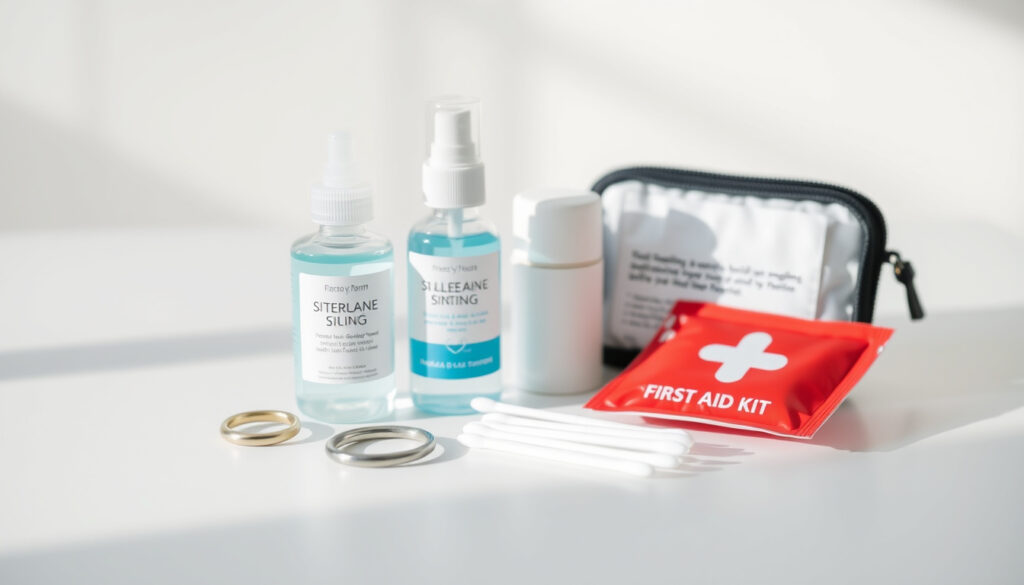
Belly Button Piercing – Guide to Healing, Costs & Aftercare
A belly-button piercing, also known as a navel piercing, passes through the skin above or around the navel rather than through the navel itself. While it remains a popular form of body modification, it is a relatively slow-healing piercing that is especially vulnerable to friction, pressure, migration, and rejection. Understanding the healing timeline, types, costs, and aftercare is essential for anyone considering this piercing.
Belly button piercings have been widely popular since the 1990s, but they carry a higher complication rate than earlobe piercings due to their location and constant movement. The rise of social media has increased interest in decorative jewelry, but it has also spread misinformation about proper aftercare. Professional piercing associations, such as the Association of Professional Piercers, provide the most reliable aftercare guidelines.
How Long Does a Belly Button Piercing Take to Heal?
- Belly button piercings take longer to heal than most other piercings due to movement and moisture in the area.
- The most common complication is rejection, where the body pushes the jewelry out, especially for surface navel piercings.
- Outie belly buttons can be pierced but require careful anatomy assessment — not all outies are suitable.
- Initial jewelry should be surgical steel, titanium, or niobium to reduce allergic reactions.
- Healing time varies based on aftercare, anatomy, and jewelry quality; do not change jewelry before 3 months.
| Fact | Value |
|---|---|
| Minimum age | Varies by state/country (often 16+ with parental consent, 18+ without) |
| Common gauge | 14G (1.6 mm) |
| Typical jewelry length | 10 mm (initial), 8–9 mm (after healing) |
| Healing stages | Week 1-2: Swelling and redness; Month 1-3: Scabbing and light crust; Month 3-6: Deeper healing; 6-12 months: Fully matured |
| Rejection rate | Estimated 5–10% for navel piercings |
| Can you sleep on your stomach? | Avoid for at least 2–3 months |
Expect approximately 6–12 months for complete healing, and sometimes longer. The outside may look settled well before the internal channel is fully mature. A piercing that becomes increasingly painful, swollen, hot, or reddened is not following a normal healing pattern.
Typical progression: During the first days to several weeks, mild swelling, tenderness, redness, and small amounts of clear or pale yellow crust can be normal. In the first 1–2 months, irritation and discharge are often most noticeable, and saline care remains important. During months 2–6, symptoms should gradually decrease, but the piercing can still be fragile internally. After 6 months, jewelry changes may be considered only if the piercing is symptom-free and a qualified piercer confirms that it is mature.
What Are the Different Types of Belly Button Piercings?
Standard and inverse placements
The standard or top navel piercing is the traditional placement through the upper rim or fold of skin, and it requires a clearly defined upper shelf or lip. An inverse or bottom navel piercing enters through the lower rim and may suit anatomy with more usable tissue below the navel.
Floating and double navel piercings
A floating navel piercing uses a small or flat bottom end that sits inside the navel rather than a prominent lower ball, and it is often considered for anatomy with limited space. A double navel piercing combines upper and lower placements, but requires sufficient tissue and careful professional assessment.
Horizontal and outie-compatible options
A horizontal navel piercing runs across the navel area and is more surface-oriented, so it may have greater migration and rejection risks. For those with an outie, an outie can make a standard piercing unsuitable because the protruding tissue may be compressed, irritated, or pierced incorrectly. A reputable piercer should assess the anatomy in person; some outies may accommodate a modified or floating placement, while others may not be suitable at all. Traditional navel piercings are reported to be more frequently rejected with outie anatomy.
For an outie, do not rely on an online diagram or assume a standard placement will work. The piercer should examine how the navel folds when sitting and standing. Some outies can be pierced with a floating navel style, but a thorough in-person assessment is essential before any needle touches the skin.
How Much Does a Belly Button Piercing Cost and Where to Get One?
Price breakdown
Typical prices vary by location, studio standards, jewelry, and piercer experience. The piercing service alone ranges from about $30 to $100 or more. A common total with basic jewelry is about $40 to $100. A professional titanium setup may cost about $40 to $80 in some markets. Premium jewelry or a specialist anatomy assessment can run from $100 to $200 or more. A jewelry change or new fitted jewelry is often about $20 to $50.
A very low price can indicate inferior jewelry, inadequate hygiene, or inexperienced service. Choose a professional studio that uses a sterile single-use needle, not a piercing gun, and provides clear aftercare instructions.
Choosing a safe studio
Look for a piercer who performs an anatomy assessment before taking payment, uses a sterile single-use needle and properly sterilized equipment, offers implant-grade initial jewelry with documented material specifications, and provides written aftercare instructions. A clean studio with an autoclave and appropriate hygiene practices is non-negotiable. A reputable piercer should also be willing to decline the piercing if the anatomy is unsuitable.
The cheapest option is rarely the safest. Investing in a professional piercer and high-quality implant-grade titanium jewelry can reduce the risk of complications like rejection, infection, and metal sensitivity. Always prioritize safety over price.
What Jewelry Is Used for Belly Button Piercings?
Initial jewelry
The usual initial jewelry is a curved barbell, sometimes called a banana bar, rather than a ring. Implant-grade titanium is commonly recommended because it is lightweight and reduces the likelihood of metal sensitivity. The gauge is typically around 14G or 1.6 mm, and jewelry that is too thin can increase the risk of migration or rejection. Initial jewelry should allow room for swelling, with approximately 7/16 inch being a typical length, though anatomy varies.
Material and style considerations
Prefer implant-grade titanium, verified implant-grade steel where appropriate, solid gold of suitable purity, or other materials selected by a professional piercer. Avoid heavy charms, dangling pieces, plated metals, and rough or externally threaded jewelry during healing. Hoops and dangling jewelry move more, catch on clothing, and can prolong irritation, so they are generally better reserved for a fully healed piercing.
When to change jewelry
Do not change jewelry simply because the outside looks healed. Premature changes can damage the channel, and professional assistance is advisable, especially before six months. Jewelry changes should only happen if the piercing is symptom-free and a qualified piercer confirms that it is mature.
Changing belly button piercing jewelry too early is one of the most common mistakes. The channel remains fragile for months after the outside appears healed. Premature removal or insertion can cause irritation, set back healing, or even force the piercing to close partially. Always wait until a piercer gives the green light.
What Does the Belly Button Piercing Healing Timeline Look Like?
- Day 1–7: Initial swelling, redness, and tenderness. Keep clean with saline solution.
- Week 2–4: Swelling subsides; crust may form. Do not twist jewelry.
- Month 1–3: Appears healed externally but still healing inside. Avoid swimming and tight clothing.
- Month 4–6: Internal healing continues. Can gradually return to stomach sleeping if comfortable.
- Month 6–12: Fully healed for most people. Jewelry can be changed. Monitor for any signs of rejection.
Normal early healing can include mild tenderness and light clear or pale crust. But increasing pain, spreading redness, marked swelling, heat, pus-like yellow or green discharge, fever, or red streaking warrants prompt medical evaluation.
What We Know vs. What’s Unclear About Belly Button Piercings
| Established Information | Remains Unclear |
|---|---|
| Healing time is typically 3–6 months for initial healing, up to 1 year for full maturation. | Exact rejection rates vary widely depending on anatomy, aftercare, and jewelry quality. |
| Saline solution is the recommended cleaning method. | Whether outie belly buttons can be pierced depends on individual anatomy — no universal rule. |
| Rejection is a common risk, especially for surface navel piercings. | Long-term effects of belly button piercings, such as scarring or nerve damage, are not well studied. |
| 14G initial jewelry is standard. |
How Did Belly Button Piercing Become So Popular?
Belly button piercing has been popular since the 1990s and remains a common body modification. However, it has a higher complication rate than earlobe piercings due to its location and movement. The rise of social media has increased interest in decorative jewelry, but also contributed to misinformation about aftercare. Many online sources lack medical credentials, which is why cross-referencing advice with reputable piercing studios and professional associations is important.
What Do Experts Say About Belly Button Piercing?
Saline solution (non-iodized sea salt mixed with distilled water) is the safest aftercare for new piercings.
— Association of Professional Piercers (APP)
Clean the area with saline solution twice a day. Avoid alcohol, hydrogen peroxide, and over-cleaning.
— Mayo Clinic
Navel piercings have a 10–15% complication rate including infection and rejection.
What Is the Bottom Line on Belly Button Piercings?
A belly button piercing requires patience, consistent aftercare, and a professional approach to jewelry selection and studio choice. Healing takes months, rejection is a real possibility, and anatomy plays a significant role in success. For those considering this piercing, the most important step is choosing a reputable piercer who will assess suitability honestly. For more on keeping your piercing healthy, see the Complete Guide to Body Piercing Aftercare and learn about Best Jewelry Materials for New Piercings.
Frequently Asked Questions About Belly Button Piercings
Does belly button piercing hurt?
Most people describe the pain as a sharp pinch lasting a few seconds. Pain level is typically 4–6 out of 10.
Can you get a belly button piercing with an outie?
It depends on anatomy. Some outies can be pierced if enough skin is available; a professional piercer should assess. Floating navel piercings may be an option.
What are the signs of infection after belly button piercing?
Redness spreading beyond the piercing site, warm to touch, green or yellow discharge, swelling, pain, and fever. Seek medical attention if these occur.
When can I change my belly button piercing jewelry?
Wait at least 3–6 months until the piercing is fully healed. Changing too early can cause irritation or closure.
Is belly button piercing safe during pregnancy?
Many women choose to remove or replace jewelry with a flexible retainer. The piercing may stretch or become irritated due to belly expansion. Consult your doctor and piercer.
More related posts
 Shazad Latif – Ethnicity, TV Roles and Personal Life
 Women’s Jacket – Best Winter Coats and Sale Tips 2025
 Michael Crawford – Still Alive in 2025 Biography & Net Worth
 Devin Booker – Stats, Contract, and Full NBA Career Bio
 Maureen O’Hara – Her Most Famous Role and Legacy
 Ricky Gervais – Biography, Net Worth, and Career
 Scarlette Douglas – Biography, Relationship Status and News
 Marc Warren: From Hustle to Van der Valk – Biography, Wife & Net Worth
