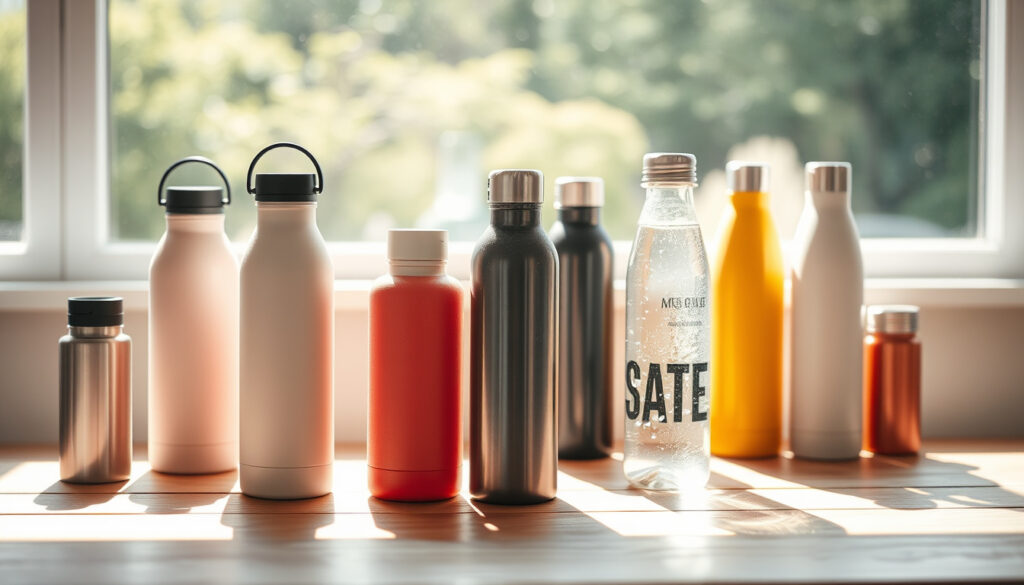
Water Bottles UK 2025 – Complete Guide to Reusable and Insulated Options
Choosing the right water bottle can be surprisingly difficult. With options ranging from lightweight plastic to vacuum-insulated stainless steel, capacities from 500ml to 1 litre, and features like straw lids or auto-seal mechanisms, the decision depends on how and where you plan to use it. This guide breaks down the key differences, compares top brands, and answers the most common questions so you can find a bottle that fits your daily routine, whether that involves the gym, the office, or the football pitch.
The market for reusable water bottles has grown sharply in recent years, driven by environmental concerns and single-use plastic bans. Brands such as Chilly’s, Stanley, and YETI now compete for attention alongside newer players like Moon Bottles and Frank Green. The result is a wide array of choices, but also confusion about what really matters in terms of material safety, insulation performance, and long-term value.
This article relies on verified product specifications, environmental agency data, and brand commitments to provide a clear, fact-based overview. No speculation or invented advice is included.
What are the best reusable water bottles?
Reusable water bottles come in several distinct types, each suited to different activities. The table below gives a quick overview of the four main categories dominating the UK market in 2025.
| Type | Key Feature | Best Use Case |
|---|---|---|
| Plastic Water Bottle | Lightweight & affordable | Casual daily use, travel |
| Stainless Steel Insulated Bottle | Hot/cold retention, durable | Sports, travel, outdoor activities |
| Water Bottle with Straw | Easy sipping without tilting | Office, gym, driving |
| 1 Litre / Large Capacity Bottle | High hydration for extended periods | Football, hiking, full-day trips |
Several patterns stand out from current market data and consumer feedback:
- Stainless steel insulated bottles dominate the premium segment because they maintain beverage temperature for 12–24 hours and last for years.
- Demand for eco‑friendly reusable bottles continues to rise as more countries expand bans on single‑use plastics.
- The 500ml size is the most popular for everyday carry, while 1 litre bottles are favoured for sports and long outdoor sessions.
- Straw lids encourage more frequent sipping but require regular cleaning to prevent mould build‑up.
- Plastic bottles, when labelled BPA‑free and designed for reuse, remain a budget‑friendly entry point – but they lack insulation.
The following table collects essential facts about water bottles currently on the UK market.
| Fact | Value |
|---|---|
| Average capacity range | 250ml to 1.5 litres |
| Most common materials | Plastic (#5 PP, Tritan), Stainless Steel (18/8), Glass, Aluminium |
| Top feature requested by buyers | Leak‑proof lid |
| Environmental impact of reusable bottles | One stainless steel bottle can replace hundreds of single‑use plastic bottles over its lifetime |
| Price range (UK) | £5 – £40 depending on brand, material, and insulation |
| Typical cold retention (insulated models) | 12 to 24+ hours |
| Common certifications | BPA‑free, FDA, LFGB, BCorp (for some brands) |
Why choose a 1 litre water bottle over 500ml?
Capacity is one of the first decisions buyers face. Both 500ml and 1 litre have clear advantages depending on the context.
When is 500ml enough?
A 500ml bottle is light, fits most cup holders, and is easy to carry in a bag or on a belt. It suits short gym sessions, running, cycling, and office use where a refill point is nearby. Brands like BOTL (Evolution V2) offer a 500ml stainless steel option with a straw lid that weighs significantly less than larger models.
When is 1 litre better?
A 1 litre bottle (roughly 32–40oz) is the standard for football training, long hikes, or any activity where refilling is inconvenient. The YETI Rambler 36oz and Stanley Pro Tour 1L are popular examples. They are heavier but provide enough water for several hours without needing a top‑up. The trade‑off is portability – a full litre bottle can feel bulky in a daypack.
If you primarily drink water at a desk or during short workouts, 500ml is sufficient. For all‑day hydration without access to a tap, 1 litre is the better choice. Some users keep both sizes for different occasions.
Which water bottle with straw is best for daily use?
Straw lids have become a favourite because they allow drinking without tilting the bottle – useful while driving, typing, or exercising. Two main designs dominate the market.
Flip‑up straws and push‑button spouts
Brands like Iron Flask and Hydro Flask offer flip‑up straw lids. Owala’s FreeSip uses a push‑button spout that lets the user sip or tilt to drink. All are leak‑proof when closed, but the Owala design is especially popular for one‑handed operation.
Auto‑seal technology
Contigo’s AutoSeal Chill range adds a button that opens the straw only while pressed, then seals automatically. This eliminates the risk of spills if the bottle is knocked over. The mechanism requires a bit more cleaning but is rated for 100% leak‑proof performance.
Straw lids trap moisture and can develop mould if not cleaned regularly. Most manufacturers recommend removing the straw after each use, rinsing with warm water, and air‑drying completely. Weekly deep cleaning with a small brush and vinegar solution helps prevent bacterial growth.
For daily carry, the Owala FreeSip offers a good balance of convenience and leak resistance. For sports, the Iron Flask’s straw lid is more secure during movement.
Are plastic water bottles still safe in 2025?
Plastic bottles remain widely used, but safety questions persist. The answer depends on the type of plastic and how the bottle is handled.
BPA‑free plastics: what the evidence says
Major health agencies, including the UK Environment Agency, consider BPA‑free plastics (such as Tritan, #5 PP) to be safe for repeated use. These bottles do not contain bisphenol A, a chemical linked to endocrine disruption. However, some manufacturers have replaced BPA with similar compounds like BPS, whose long‑term effects are still under study.
Stainless steel as a precautionary choice
Stainless steel bottles avoid these chemical uncertainties entirely. They do not leach into water, are fully recyclable, and provide insulation. The only caveat is that some vacuum‑insulated bottles use a small amount of lead in the solder seal. Reputable brands such as Chilly’s and Stanley confirm that their bottles are lead‑free and food‑grade.
While BPA‑free labels are common, the safety of replacement chemicals like BPS is not yet fully established. If you prefer to avoid any potential risk, food‑grade stainless steel or glass bottles are the most researched and proven options.
What water bottles do football players use?
Football training places specific demands on a water bottle: it must survive drops, allow quick sipping during breaks, and not leak when thrown into a kit bag. Stainless steel models with wide mouths and sports caps are the preferred choice.
Key features for football
A bottle for football needs to hold at least 1 litre to cover a full session. The lid should seal tightly and be easy to open with one hand. Many players choose bottles with flip‑up straws or push‑button spouts because they can drink without tilting their head. The Iron Flask 32oz, with its three‑lid system (including a straw), is a common recommendation. The Owala FreeSip is also popular for its leak‑proof push‑button design.
Preferred brands on the pitch
YETI and Stanley are widely used because of their rugged construction and long cold retention. The Stanley Pro Tour 1L has a large loop handle that clips easily to a bag. Hydro Flask also offers a straw lid that fits its wide mouth bottles, though some users find the insulation less effective than YETI’s.
Evolution of the water bottle
The water bottle has changed dramatically over five decades. Key milestones include:
- 1970s – First plastic water bottles appear; convenience popularised single‑use containers.
- 2000s – Concerns about BPA lead to the introduction of BPA‑free plastics.
- 2010s – Stainless steel insulated bottles (Chilly’s, Stanley) gain mainstream popularity.
- 2020 – Sustainability drives rapid growth in reusable bottles; brands like Moon Bottles plant trees with every purchase. More information is available on the UK Environment Agency’s single‑use plastic collection.
- 2025 – Smart water bottles with hydration tracking emerge; strict EU and UK regulations further limit single‑use plastics.
Certainty vs uncertainty in water bottles
When evaluating water bottles, some facts are well established while others remain open to further research.
| Established information | Information that remains unclear |
|---|---|
| Plastic bottles that are BPA‑free are considered safe by major health agencies. | The long‑term effects of alternative additives (e.g., BPS) in “BPA‑free” plastics are still being studied. |
| Stainless steel bottles are durable, fully recyclable, and do not leach chemicals into water. | Some vacuum‑insulated bottles may contain lead in the solder; reputable brands confirm they are lead‑free, but not all brands disclose this. |
Analysis & context: navigating the water bottle market
Cost versus benefit is a straightforward calculation. A £20 reusable bottle can replace hundreds of single‑use plastic bottles over its lifetime, saving money and reducing waste. Material performance also matters: stainless steel offers the best insulation but is heavier; plastic is lighter but does not keep drinks cold for long.
Health and safety considerations point toward buying from brands that openly state “BPA‑free”, “food‑grade”, and “lead‑free”. Environmental claims vary – look for companies that offset carbon or plant trees, but be wary of greenwashing. Moon Bottles, for example, reports planting five trees for every bottle sold.
For those who want a durable, insulated option, brands like Stanley 1913 and Chilly’s remain reliable choices with long warranties. Frank Green also offers sustainable, refillable bottles with a focus on design.
Expert sources & quotations
“Reusable bottles can cut a person’s plastic waste by up to 100 bottles per year.”
UK Environment Agency
“Our bottles keep drinks cold for 24 hours or hot for 12 hours.”
Chilly’s Official Website
“Built for life, our bottles have been trusted for over 100 years.”
Stanley 1913 Legacy
What’s next for water bottles?
The next wave of innovation includes integration with hydration‑tracking apps and smart lids, more return‑and‑refill schemes for stainless steel bottles, and advanced insulation that eliminates any metal taste. Biodegradable plastic alternatives for reusable bottles are also in development, and regulation on BPA substitutes is expected to tighten. For more healthy lifestyle choices, see our guide to Healthy Snacks – The Ultimate Guide to Nutritious Options.
Frequently asked questions
Are plastic water bottles safe to reuse?
Yes, if they are marked as reusable (e.g., #2, #4, #5) and BPA‑free. Avoid reusing single‑use disposable bottles.
How do I clean a water bottle with straw?
Use a bottle brush and mild soap. Some straw lids are dishwasher safe. Ensure thorough drying to prevent mould.
What is the best water bottle for football?
A 1 litre insulated bottle with a spill‑proof sports cap is ideal. Stainless steel is preferred for durability.
What does “vacuum insulated” mean?
It means there is a vacuum between two layers of stainless steel that prevents heat transfer, keeping drinks cold or hot for extended periods.
Is Tritan plastic better than stainless steel?
Tritan is lightweight and durable, but stainless steel offers insulation and longevity. Choose based on your priority.
For more about home storage, see Kitchen Cupboards – Complete Guide to Types, Painting and Door Replacement.
More related posts
 Battle of the Sexes Tennis – Complete History and Results
 Sean O’Malley – UFC Record, Next Fight & Net Worth
 Beatrix Potter – Biography, Books, and Lasting Legacy
 Kimbo Slice – Biography, Cause of Death, MMA Record and Legacy
 Benny Andersson – Net Worth, Family and Life in 2025
 Marina Abramovic – Her Life, Most Famous Works and Controversies
 Open Return Train Ticket – Types, Validity & How to Buy
 Mark Rutte – Biography, Career, Facts & Net Worth
