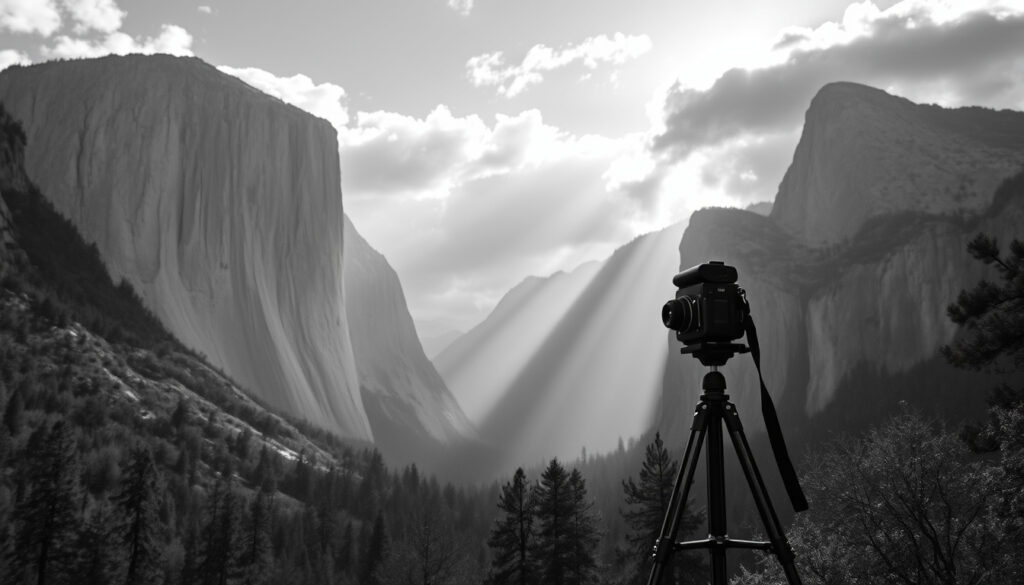
Ansel Adams – Complete Guide to His Life, Photos, and Legacy
Ansel Easton Adams (February 20, 1902 – April 22, 1984) was an American photographer, author, teacher, and environmentalist best known for technically exacting black-and-white landscapes of the American West, especially Yosemite and the Sierra Nevada.
His photographs transformed the American wilderness into a defining subject of fine-art photography. From wall-sized prints of national parks to the Zone System that shaped photographic education, Adams’s influence runs deep across the medium. This guide offers a fact-based overview of his life, his most celebrated works, the print market, and the legacy questions that still interest collectors and admirers.
Understanding Adams means looking beyond a list of famous titles. It requires examining the connection between his technical precision, his environmental advocacy, and the practical questions about authenticity and value that continue to shape how his work is bought and sold.
Who Was Ansel Adams?
- Full Name: Ansel Easton Adams
- Born / Died: February 20, 1902 – April 22, 1984
- Occupation: Photographer and environmentalist
- Known For: Black-and-white landscape photographs of the American West, including Moonrise, Hernandez, New Mexico
- Official Legacy: The Ansel Adams Gallery / The Ansel Adams Trust
- Ansel Adams is best known for large-format black-and-white landscape photography, especially of the American West and Yosemite.
- Moonrise, Hernandez, New Mexico (1941) is widely cited as one of his most iconic images.
- Adams was not just a photographer; he was an environmental advocate closely associated with the Sierra Club and national parks.
- Authentic Ansel Adams prints are managed through official channels such as The Ansel Adams Gallery/Trust, not generic poster sellers.
- Net worth figures are estimates; no official public record provides a definitive number.
| Fact | Detail |
|---|---|
| Full Name | Ansel Easton Adams |
| Born | February 20, 1902, San Francisco, California, U.S. |
| Died | April 22, 1984, age 82 |
| Nationality | American |
| Known For | Black-and-white landscape photography, environmentalism, the Zone System |
| Iconic Work | Moonrise, Hernandez, New Mexico (1941) |
| Official Estate | Managed by The Ansel Adams Trust / represented commercially by The Ansel Adams Gallery |
Born in San Francisco to Charles Hitchcock Adams and Olive Bray, Adams made a childhood visit to Yosemite in 1916 that profoundly shaped his life and artistic direction. He initially pursued music and became an accomplished pianist, but photography increasingly dominated his career. His 1927 photograph Monolith, the Face of Half Dome marked an early breakthrough in his mature style.
The Sierra Club published Adams’s photographs and writing, helping establish his public reputation. During the 1930s and 1940s he worked as a photographer, writer, teacher, and consultant, producing gallery prints, books, technical manuals, commissioned work, and photographs for government and conservation organizations.
With Fred Archer, Adams developed the Zone System, a method for controlling exposure, negative development, and printing so photographers could translate a previsualized scene into a precisely controlled final image. In 1975 he co-founded the Center for Creative Photography at the University of Arizona. He received the Presidential Medal of Freedom from President Jimmy Carter and was also presented with the 1980 Hasselblad Award.
What Are Ansel Adams’ Most Famous Photographs?
Adams’s best-known images include:
- Moonrise, Hernandez, New Mexico (1941)
- Monolith, the Face of Half Dome (1927)
- Clearing Winter Storm, Yosemite National Park
- The Tetons and the Snake River
- Moon and Half Dome
- El Capitan, Winter Sunrise
- Bridalveil Fall
- Jeffrey Pine
- Aspens, New Mexico
- Sand Dunes, Sunrise, Death Valley National Monument
- Mount Williamson, Sierra Nevada, from Manzanar, California
What is Ansel Adams’ most iconic image?
Moonrise, Hernandez, New Mexico is Adams’s signature photograph and one of the most important photographs in the history of the medium. Adams made it on November 1, 1941, near Hernandez, New Mexico, while working on a U.S. Department of the Interior project to photograph public lands for mural-sized displays. The image shows a small village and cemetery beneath snow-covered mountains, with the rising moon and white crosses illuminated against a darkening sky.
Adams later said he had difficulty locating the exposure meter and instead used his knowledge of the moon’s luminance to make the exposure. Because the original negative was underexposed by his standards, he repeatedly reinterpreted the image in the darkroom, changing contrast, tonal values, burning, dodging, and printing techniques over several decades. He produced more than 1,369 known prints, making it his most extensively printed image.
A 1948 print sold for $71,500 in 1971 and later sold for $609,600 at Sotheby’s in 2006. A 2021 sale of a large Moonrise print was widely reported at approximately $4.3 million, making it the most valuable known Adams photograph and one of the highest-priced twentieth-century photographs.
Which national parks did Ansel Adams photograph?
Adams photographed Yosemite, the Sierra Nevada, the Grand Canyon, and other wilderness areas. His images supported campaigns to protect these landscapes and helped make the American wilderness an important subject in fine-art photography and popular visual culture.
How did Ansel Adams approach black-and-white landscape photography?
His photographs are recognized for dramatic compositions, deep blacks, luminous highlights, sharp detail, and a strong sense of scale. Adams used large-format cameras and, with Fred Archer, developed the Zone System to control exposure and development with precision.
The photograph’s importance lies not only in the scene itself but also in Adams’s evolving interpretation of it. It demonstrates his belief that a negative was a starting point and that the final print was the principal artistic object.
Ansel Adams Prints: What Buyers Need to Know
Adams regarded the print, rather than the negative, as the finished work. He often reprinted earlier negatives throughout his life, meaning that two authentic prints of the same image can differ substantially in tonal balance, size, paper, date, and visual effect.
Where can I buy authentic Ansel Adams prints?
Authentic Adams prints are available through official channels such as The Ansel Adams Gallery in Yosemite and The Ansel Adams Trust. His images have been exhibited by major museums and distributed through galleries worldwide, including the Smithsonian Institution, the de Young Museum, and the Ansel Adams Gallery. Adams made prints personally for much of his career, while later authorized prints were produced through his studio and family institutions.
Are Ansel Adams works photographs or paintings?
Ansel Adams was a photographer, not a painter. His body of work is photographic. The phrase “Ansel Adams paintings” usually refers to reproductions, posters, or digitally mastered images of his photographs — not original paintings.
What should collectors know about Ansel Adams print pricing?
Print value depends on authenticity, date, size, provenance, condition, paper, signature, edition history, and whether Adams himself printed or supervised the work. Works such as Moonrise, The Tetons and the Snake River, Clearing Winter Storm, and Monolith, the Face of Half Dome generally command the strongest market interest. Adams’s popularity has also produced a large market for authorized posters, books, reproductions, and digitally mastered images; these should not be confused with original gelatin silver prints.
Since Adams often reprinted earlier negatives, two authentic prints of the same image can differ greatly. Date, paper, size, and tonal balance all help determine a specific print’s market value and character.
What Was Ansel Adams’ Net Worth?
A reliable, independently documented figure for Adams’s personal net worth at the time of his death is not available. Public estimates should therefore be treated cautiously. His financial position improved significantly through print sales, particularly during the 1970s, when demand for his work gave him greater independence from commercial assignments.
Auction prices for individual photographs represent the value of specific artworks — not Adams’s personal net worth — and cannot be used directly to calculate his estate.
How did Ansel Adams earn money from photography?
During the 1930s and 1940s, Adams worked as a photographer, writer, teacher, and consultant. His income came from gallery prints, books, technical manuals, commissioned work, and photographs for government and conservation organizations.
How much are Ansel Adams prints worth today?
Prices vary widely by edition, provenance, condition, and demand. A 1948 print of Moonrise sold for $71,500 in 1971 and later sold for $609,600 at Sotheby’s in 2006. A 2021 sale of a large Moonrise print was widely reported at approximately $4.3 million.
Who manages Ansel Adams’ legacy and intellectual property?
The Ansel Adams Gallery and The Ansel Adams Trust manage and represent his official legacy. The Trust continues to shape his public image through exhibitions, books, and digital platforms. Adams also co-founded the Center for Creative Photography at the University of Arizona in 1975, now a major research and museum institution devoted to photographic history.
No official public record provides a definitive net worth for Adams at the time of his death. Auction prices for individual prints should not be confused with his personal wealth or the total value of his estate.
How Did Ansel Adams’ Career Develop Over Time?
- 1902: Ansel Easton Adams born on February 20 in San Francisco, California.
- 1916: First visited Yosemite National Park, a formative experience for his career.
- 1919: Joined the Sierra Club, beginning his lifelong connection with conservation.
- 1927: Published his first portfolio, Parmelian Prints of the High Sierras.
- 1932: Co-founded Group f/64, promoting sharp-focus “straight photography.”
- 1941: Made Moonrise, Hernandez, New Mexico, later one of his best-known images.
- 1940s–1950s: Developed and taught the Zone System through technical books and workshops.
- 1980: Awarded the Presidential Medal of Freedom.
- 1984: Died on April 22 at age 82.
What Is Known and What Remains Uncertain About Ansel Adams?
| Established Information | Information That Remains Unclear |
|---|---|
| Ansel Adams was born on February 20, 1902, and died on April 22, 1984. | Ansel Adams’ net worth is not published in official records; figures online are estimates. |
| He was an American landscape photographer and environmentalist. | Limited-edition print values fluctuate based on provenance, condition, edition, and auction demand. |
| He is best known for black-and-white photographs of the American West, especially Yosemite. | The exact “most famous photo” is subjective; Moonrise, Hernandez is commonly cited but not an official universal designation. |
| Moonrise, Hernandez, New Mexico is one of his most iconic works. | Quotes circulating online may be paraphrased or misattributed and should be verified against primary sources. |
| The Ansel Adams Gallery and The Ansel Adams Trust manage and represent his official legacy. | |
| He did not create paintings; his body of work is photographic. |
Why Does Ansel Adams’ Work Still Matter?
Adams worked during the rise of modern American landscape photography and helped define “straight photography” through Group f/64. His images supported national parks and Sierra Club conservation campaigns, turning landscape photography into a tool for public education and political advocacy. With Nancy Newhall, Adams created influential books and exhibitions, including This Is the American Earth (1960), which helped broaden public support for environmental protection.
His photographs were even included on the Voyager Golden Record materials selected by NASA and Carl Sagan to represent Earth and human experience to potential extraterrestrial observers. Adams’s influence extends beyond photography into broader visual culture, much as certain creative figures define entire aesthetic fields in other industries — similar to the way the Christian Dior – Complete Guide to the Fashion House traces one creator’s lasting impact on fashion.
The commercial context also matters. The Ansel Adams Gallery provides a direct official channel for prints, making provenance and authenticity central to collector trust. The Ansel Adams Trust continues to shape his public image through exhibitions, books, and digital platforms.
What Are the Most Famous Ansel Adams Quotes?
Frequently attributed Adams quotations include:
“A great photograph is one that fully expresses what one feels, in the deepest sense, about what is being photographed.”
“When words become unclear, I shall focus with photographs. When images become inadequate, I shall be content with silence.”
This quotation appears in biographical profiles of Adams, including Biography.com.
“There are no rules for good photographs, there are only good photographs.”
What did Ansel Adams say about photography?
Adams’s most commonly cited quotes emphasize photography as a deeply personal and expressive act rather than a mechanical recording process. Phrases such as “a great photograph is one that fully expresses what one feels” reflect his view that emotional depth matters as much as technical precision.
What quotes reflect Ansel Adams’ environmentalism?
Adams expressed his environmentalism primarily through images, exhibitions, and Sierra Club publications rather than through a compact set of memorable sayings. Many nature-related quotes attributed to him online lack verified primary sources and should be checked against his published writings, including The Negative and Examples: The Making of 40 Photographs.
Which Ansel Adams quotes are commonly misattributed?
Quotes circulating online may be paraphrased or misattributed. The quotation about words becoming unclear and focusing with photographs appears in multiple sources but is frequently altered in wording. As with many famous artists, readers should verify quotes against primary published material.
What Is the Lasting Legacy of Ansel Adams?
Adams’s legacy rests on three pillars: his mastery of black-and-white landscape photography, his role in the American conservation movement, and his influence on photographic technique through the Zone System. The Ansel Adams Gallery and The Ansel Adams Trust continue to manage his archive and guide his public presence, while his pictures remain among the most recognizable and widely reproduced photographs ever made. For those exploring how technical skill develops across visual art forms, the Face Painting – Step-by-Step Guide for Beginners offers a look at how practice and method build creative confidence in another medium.
Frequently Asked Questions
When did Ansel Adams die?
Ansel Adams died on April 22, 1984, at age 82.
When and where was Ansel Adams born?
Ansel Adams was born on February 20, 1902, in San Francisco, California, to Charles Hitchcock Adams and Olive Bray.
What are Ansel Adams paintings?
Ansel Adams was a photographer, not a painter. The term usually refers to reproductions, posters, or prints of his photographs.
What is Ansel Adams’ photography style?
Sharp-focus, black-and-white landscape photography, often using large-format cameras and the Zone System.
What did Ansel Adams contribute to environmentalism?
He used his photographs to support Yosemite, national parks, and Sierra Club conservation efforts, helping build public support for wilderness protection.
How much are Ansel Adams prints worth?
Prices vary widely depending on edition, provenance, condition, and demand. Authentication through official galleries or auction specialists is essential.
What is the Zone System?
A method developed with Fred Archer for controlling exposure, negative development, and printing so photographers can produce a precisely controlled final image.
More related posts
 Liz Hurley – Biography, Age, Son, Relationships and Career in 2025
 Ben Whishaw – Biography, Movies, and Myths Debunked
 Max Mayfield – Complete Guide to the Fan-Favorite Character
 Norman Rockwell – Biography Paintings and Lasting Influence
 Mike Ashley – Net Worth, Companies and Biography
 Salish Matter – Age, Net Worth, and Biography
 Rae Lil Black – Biography, Real Name, and Career Shift
 Andrey Rublev – 2026 Ranking, Bio, Net Worth and Next Match
