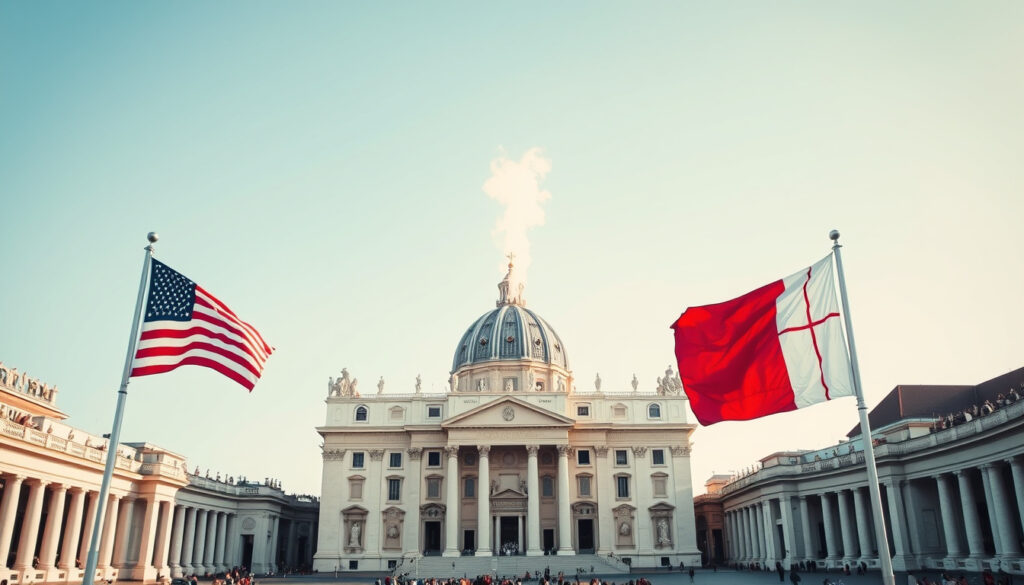
Pope Leo XIV – Biography, Election and Historic First American Pope
On May 8, 2025, the Catholic Church elected its 267th pope — and for the first time in two millennia, the man chosen to lead the world’s 1.4 billion Catholics comes from the United States. He is Pope Leo XIV, born Robert Francis Prevost, a 69-year-old Augustinian friar with deep roots in both Chicago and Peru.
His election on the fourth ballot of the conclave ended days of speculation and marked a historic shift. The new pope is not only the first American to hold the office but also the first member of the Order of Saint Augustine to sit on the Chair of Saint Peter. His background as a canon lawyer, missionary, and former Prefect of the Dicastery for Bishops gives him a distinctive profile — one that blends administrative experience with firsthand knowledge of the Global South.
Pope Leo XIV succeeds Pope Francis at a moment when the Church faces questions about its role in an age of rapid technological change, ecological crisis, and institutional reform. Early signals from his first public statements suggest continuity with his predecessor’s emphasis on mercy and missionary outreach, though his own priorities remain to be fully articulated.
Who is Pope Leo XIV?
New Pope
Elected May 2025 as 267th pope
First American
First pope from the United States
Age
69 years old (born 1955)
Order
Order of Saint Augustine (Augustinians)
Robert Francis Prevost was born on September 14, 1955, in Chicago, Illinois. He entered the Augustinian novitiate in Saint Louis in 1977, made his first profession in 1978, studied theology in Chicago, and later earned a licentiate in canon law at the Pontifical University of St. Thomas Aquinas (Angelicum) in Rome. He was ordained a priest in 1982.
His missionary work took him to Peru in the mid-1980s, where he served in the Augustinian mission of Chulucanas, Piura, and later in Trujillo in formation roles. In 2015 he was appointed Bishop of Chiclayo, Peru, and he also served as Apostolic Administrator of Callao from 2020 to 2021. He became a naturalized Peruvian citizen during his years there.
Before his election as pope, Prevost held major leadership positions in the Church. He was elected Prior General of the Order of Saint Augustine in 2001 and confirmed for a second term in 2007. Pope Francis made him a cardinal in 2023 and appointed him Prefect of the Dicastery for Bishops, a key Vatican role overseeing the selection of bishops worldwide.
Key Insights
- Pope Leo XIV is the first American pope and the first from the Americas, marking a historic shift in the papacy.
- He is a canon lawyer and missionary with deep experience in Peru, suggesting a focus on evangelization and Latin American issues.
- His chosen name “Leo” evokes previous strong popes (Leo I–XIII) and signals a continuity of tradition.
- Early signals indicate he may address modern topics like artificial intelligence, given his background and the timing of his election.
- His experience as Prefect for Bishops means he has direct insight into the global episcopate and church governance.
- He is the first Augustinian pope, bringing a spirituality centered on community, study, and service.
Snapshot Facts
| Fact | Value |
|---|---|
| Full secular name | Robert Francis Prevost |
| Papal name | Leo XIV |
| Date of birth | 1955 (age 69) |
| Place of birth | Chicago, Illinois, USA |
| Nationality | American (also naturalized Peruvian) |
| Religious order | Order of Saint Augustine (Augustinians) |
| Election date | 8 May 2025 |
| Papal inauguration | 18 May 2025 |
| Predecessor | Pope Francis |
| Notable prior role | Bishop of Chiclayo, Peru; Prefect of the Dicastery for Bishops |
Why is Pope Leo XIV a historic pope?
The most immediate historic fact is that Pope Leo XIV is the first pope born in the United States. No previous pontiff has come from the Americas at all, making his election a milestone for the Western Hemisphere’s Catholic population, which now accounts for nearly half of all Catholics worldwide.
Beyond geography, he is the first pope from the Order of Saint Augustine. The Augustinians, founded in the 13th century and following the Rule of Saint Augustine, have produced many theologians and missionaries but never before a pope. His election breaks a long pattern of popes drawn from other orders — Franciscans, Dominicans, Jesuits — and from the diocesan clergy.
His choice of the name Leo XIV also carries weight. The last pope named Leo was Leo XIII (1878–1903), known for his social encyclical Rerum Novarum and his engagement with modern political and economic questions. By reviving this name, Pope Leo XIV may be signaling a similar interest in addressing contemporary social and technological issues through a doctrinal lens.
Pope Leo XIV is not the first pope born outside Europe — that distinction belongs to Pope Francis (Argentina, 2013). But he is the first pope born in the United States and the first from North America. The U.S. is home to the third-largest Catholic population in the world, after Brazil and Mexico.
How does his election affect the Catholic Church?
His election signals a continued openness to leadership from the Global South. Pope Francis, an Argentine, already tilted the Church’s center of gravity away from Europe. Pope Leo XIV’s deep ties to Peru reinforce that trend. His background in canon law and governance suggests he may prioritize institutional reform and the strengthening of local churches, building on Francis’s vision of a synodal Church.
How does he compare to previous popes named Leo?
The name Leo has been used by thirteen popes before him, including Leo I (the Great), who defined papal primacy in the 5th century, and Leo XIII, who addressed the rights of workers and the role of the Church in modern society. Whether Pope Leo XIV will follow in the social-doctrine tradition of Leo XIII or the strong-teaching emphasis of Leo I remains to be seen, but the name itself suggests a deliberate nod to these predecessors.
What is Pope Leo XIV’s papal agenda and first encyclicals?
As of his election and early days in office, Pope Leo XIV has not yet published an encyclical or a comprehensive policy document. The content plan and available sources confirm that his first encyclical and detailed agenda have not been announced.
However, several key priorities are likely based on his biography and roles prior to the papacy. His experience as Prefect of the Dicastery for Bishops places him at the center of episcopal appointments, suggesting he will continue to shape the global episcopate with pastors who reflect a missionary and synodal approach.
He may also issue an early letter addressing the Synod on Synodality, which Pope Francis set in motion. Given his legal training, he could focus on reforming the Vatican’s administrative structures.
Will Pope Leo XIV issue an encyclical on AI?
Some media speculation has centered on the possibility that Pope Leo XIV will write an encyclical about artificial intelligence. The research notes provided indicate that no official confirmation exists, and his specific views on AI have not been publicly detailed. The Pontifical Academy for Life has already released documents on AI and ethics, and the new pope may choose to build on those, but as of now it is not known.
How does Pope Leo XIV engage with modern issues like AI?
The question of how Pope Leo XIV will address artificial intelligence and modern technology is one of the most common searches related to his election. The available facts do not include a direct statement from him on AI, either before or after the conclave. That gap reflects the early stage of his papacy — and the fact that his prior roles focused on governance and missionary work rather than public commentary on technology.
What can be said is that his training in canon law and his time in Peru, where he experienced the challenges of development and inequality firsthand, may shape his approach. The Catholic Church has been increasingly engaged with ethical questions around AI, automation, and data privacy, and Pope Leo XIV is expected to continue that engagement, even if his specific positions are not yet on record.
Established: Pope Francis established the “Rome Call for AI Ethics” and the Vatican has published guidelines on AI. Pope Leo XIV will inherit these initiatives. Unclear: Whether he will make AI a signature issue, write an encyclical on technology, or take a different direction from his predecessor.
The Order of Saint Augustine has a strong intellectual tradition, rooted in Augustine of Hippo’s writings on truth, community, and the responsible use of knowledge. Pope Leo XIV may draw on this tradition when formulating the Church’s response to technological developments.
What is the timeline of Pope Leo XIV’s life?
- 1955 — Born Robert Francis Prevost in Chicago, Illinois.
- 1977 — Enters the Order of Saint Augustine.
- 1982 — Ordained a priest.
- 1985 — Sent to Rome to study canon law at the Pontifical University of Saint Thomas Aquinas (Angelicum).
- 1988 — Sent as a missionary to Peru.
- 2014 — Appointed Bishop of Chiclayo, Peru.
- 2023 — Appointed Prefect of the Dicastery for Bishops and created Cardinal.
- 8 May 2025 — Elected Pope, takes name Leo XIV.
- 18 May 2025 — Papal inauguration Mass.
What is confirmed and what remains uncertain about Pope Leo XIV?
| Established information | Information that remains unclear |
|---|---|
| Born in Chicago, 69 years old | The content and timing of his first encyclical |
| First American pope | His specific views on artificial intelligence and technology |
| Member of the Order of Saint Augustine | Long-term policy directions (liturgy, ecumenism, social issues) |
| Served as missionary in Peru and Bishop of Chiclayo | Whether he will follow Pope Francis’s legacy on every social issue |
| Elected 8 May 2025 and inaugurated 18 May 2025 | His stance on AI is not publicly detailed |
| Pontifical name Leo XIV | Rumored AI encyclical has no official confirmation |
What does the election of Pope Leo XIV mean for the Catholic Church?
The election of an American and an Augustinian pope is a double first, reflecting the growing weight of the U.S. and Latin American churches in global Catholicism. His experience as a missionary in Peru and as Prior General of his order gives him a nuanced understanding of both grassroots faith and institutional leadership.
The choice of the name Leo XIV aligns him with strong doctrinal predecessors — Leo I, who asserted papal authority, and Leo XIII, who engaged with the modern world through social teaching. This may signal a desire for theological clarity combined with pastoral outreach. His early emphasis on Mary and his brief first address indicate a humble, Marian spirituality.
The papacy of Pope Leo XIV will unfold against the backdrop of debates about AI, climate change, clerical abuse, and the role of women in the Church. How he navigates these issues will define his legacy, but his biography suggests he is equipped with the legal, governance, and missionary tools to lead.
What are key sources and quotes about Pope Leo XIV?
“I am a son of the Church, and I place my ministry under the protection of the Blessed Virgin Mary.”
— Pope Leo XIV, first address after election, via Vatican News
“He spent many years as a missionary in Peru before being elected head of the Dicastery for Bishops.”
— Vatican News biography
Authoritative sources include the official Vatican page for Pope Leo XIV, Vatican News biography, BBC News, Wikipedia, and the Catholic Bishops’ Conference of England and Wales biography. For his order, visit the Order of Saint Augustine official site.
What is the significance of Pope Leo XIV?
Pope Leo XIV represents a new chapter for the Catholic Church. As the first American and first Augustinian pope, he brings a unique combination of canon law expertise, missionary experience in Latin America, and familiarity with Vatican governance. His election signals a Church that is both global and rooted in tradition. While many details of his papacy are still emerging, his biography and early signals point to a leader who may address modern challenges with both intellectual rigor and pastoral humility. For more on biographical profiles of notable figures, see also Simon Armitage – Biography, Poems, and Key Facts.
Frequently Asked Questions
What does “Leo XIV” mean?
Leo is a papal name used by 13 previous popes, most notably Leo the Great (Leo I) and Pope Leo XIII. Choosing it signals a connection to strong doctrinal tradition.
How does Pope Leo XIV compare to Pope Francis?
Both emphasize mercy and social justice, but Pope Leo XIV is seen as more institutionally focused and may prioritize internal church governance given his role as Prefect for Bishops.
Is Pope Leo XIV the first pope from the Americas?
Yes, he is the first pope born in the Americas and the first from the United States.
What is the Order of Saint Augustine?
A Catholic religious order founded in the 13th century, following the Rule of Saint Augustine, emphasizing community life, study, and service.
Will Pope Leo XIV change church teachings?
No, papal elections do not change core doctrines. He may emphasize different pastoral priorities but will uphold Catholic teaching.
How can I follow news about Pope Leo XIV?
Official sources: Vatican.va, Vatican News. Reliable media: BBC, Reuters, Catholic News Agency.
What is Pope Leo XIV’s date of birth?
He was born on September 14, 1955.
Is Pope Leo XIV a naturalized Peruvian citizen?
Yes, he became a naturalized Peruvian citizen during his many years of missionary service in Peru.
What was Pope Leo XIV’s role before becoming pope?
He served as Prefect of the Dicastery for Bishops and was a cardinal, after having been Bishop of Chiclayo, Peru.
Will Pope Leo XIV write an encyclical on AI?
As of now, no official confirmation exists. Some media have speculated, but his specific plans for a document on artificial intelligence have not been announced.
More related posts
 Wallpaper Shops Near Me – Guide to Stores, Prices and Tips
 Les Ferdinand – Biography, Career, and Personal Life Guide
 Rae Lil Black – Biography, Real Name, and Career Shift
 Manuel Garcia-Rulfo – Biography, Career and Personal Life Facts
 Scott Caan – Biography, Net Worth, Movies, and Family
 Alton Towers Splash Landings – Complete Family Guide 2025
 Michelle Hardwick – Age, Wife, Height and Full Biography
 Kevin Bacon – Biography, Iconic Movies, and Cultural Legacy
