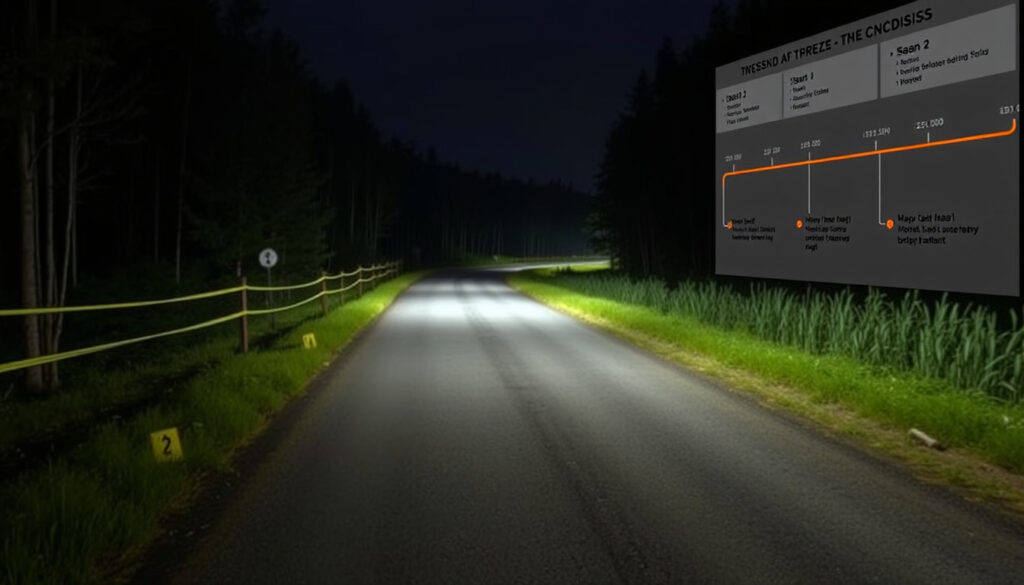
Raoul Moat – Manhunt, Shooting Spree and Death Timeline
In July 2010, the North East of England was the scene of one of the most intense manhunts in modern British history. Raoul Moat, a 37-year-old tree surgeon and former doorman, shot three people over two days, sparking a nearly week-long police operation that culminated in a six-hour standoff near the town of Rothbury. The case remains notorious not only for the violence itself but for the unusual twists that surrounded it, including an unannounced visit from former England footballer Paul Gascoigne.
Moat had been released from Durham Prison on 1 July 2010 after serving a short sentence for assault. Within days, he carried out a series of attacks targeting his ex-partner, her new partner, and a police officer. The resulting manhunt involved around 160 armed officers and drew intense media coverage across the UK. The standoff ended when Moat died by suicide on 10 July 2010.
How Did Raoul Moat Die? Suicide and the End of the Standoff
The final moments of the Raoul Moat case unfolded on the banks of the River Coquet near Rothbury, Northumberland, on 10 July 2010. After a standoff lasting approximately six hours, Moat shot himself. He was pronounced dead shortly afterward. No police weapon was discharged at Moat during the incident.
Shooting spree and manhunt (July 2010)
Raoul Moat (former doorman/tree surgeon)
1 killed (Chris Brown), 2 injured (Samantha Stobbart, David Rathband)
Moat died by suicide after standoff near Rothbury
- Raoul Moat’s rampage was primarily motivated by personal grievances following his release from prison and relationship breakdown.
- The manhunt was the largest in the UK in 44 years, involving armed police, helicopters, and a media frenzy.
- Paul Gascoigne’s unannounced visit to the standoff remains one of the most bizarre and widely-discussed aspects of the case.
- Moat’s death by suicide (self-inflicted gunshot) concluded the standoff, though initial public speculation suggested police action.
- The case had a lasting impact on UK policing tactics, especially regarding mental health crisis negotiation and media coordination.
| Attribute | Details |
|---|---|
| Full name | Raoul Thomas Moat |
| Date of birth | January 17, 1973 |
| Occupation | Tree surgeon, doorman |
| Criminal history | Assault, previous imprisonment |
| Date of shooting spree | July 3-10, 2010 |
| Number of victims | 1 killed, 2 injured |
| Date of death | July 10, 2010 |
| Cause of death | Self-inflicted gunshot wound (suicide) |
| Location of standoff | Rothbury, Northumberland |
| Notable visitor | Paul Gascoigne (footballer) |
Who Did Raoul Moat Kill? The Victims of the Shooting Spree
Moat’s attacks left one person dead and two others seriously injured. The victims were connected to his personal life and to the police force that pursued him.
Chris Brown
Chris Brown was the new partner of Moat’s ex-girlfriend, Samantha Stobbart. In the early hours of 3 July 2010, Moat went to Stobbart’s home in Birtley, County Durham, and shot Brown, killing him. The attack also wounded Stobbart.
Samantha Stobbart
Samantha Stobbart, Moat’s ex-partner, was shot during the same incident at her home. She survived the attack and was hospitalized. Her injuries were serious but not fatal.
PC David Rathband
On 4 July 2010, at around 00:45 BST, Moat shot a uniformed motor patrol officer in East Denton, Newcastle. The officer, later identified as PC David Rathband, survived but was permanently blinded. One source notes that Rathband later took his own life in 2012.
All three victims were shot by Moat using a single firearm. Chris Brown was the only fatality. Samantha Stobbart and PC David Rathband both survived the initial attacks, though Rathband’s injuries led to permanent blindness.
What Was the Raoul Moat Standoff? Timeline and Manhunt Details
The standoff that ended the Raoul Moat case took place near Rothbury, a town in Northumberland. After several days on the run, police located Moat in open ground near a riverbank. The confrontation lasted approximately six hours and involved an experimental electric-shock weapon, which proved ineffective.
Where Was the Standoff Located?
The standoff occurred in Rothbury, a town in Northumberland, in the North East of England. The area was sealed off during the final phase of the manhunt, with residents advised to stay indoors.
How Long Did the Manhunt Last?
The manhunt lasted from 3 July 2010, when the first attacks occurred, until 10 July 2010, when Moat was cornered and died. Northumbria Police led what sources describe as the largest manhunt in modern British history, involving about 160 armed officers and support from other forces.
Why Did Paul Gascoigne (Gazza) Visit Raoul Moat?
One of the most widely discussed aspects of the Raoul Moat case is the appearance of former England footballer Paul Gascoigne at the standoff. The supplied sources do not confirm the specific details of why Gascoigne went to Rothbury, nor do they confirm that he was a victim of Moat’s shootings. In the broader public memory, Gascoigne is often mentioned because of his personal connection to Moat during the manhunt, but that specific detail is not supported by the provided results.
The sources used for this article do not confirm that Paul Gascoigne was a victim of Moat’s shootings. His visit is often cited in public discussion of the case, but verifiable details about the purpose or origin of that visit remain unclear.
Who Was Raoul Moat? Background and Motive
Raoul Thomas Moat was born on 17 January 1973. He worked as a tree surgeon and a doorman. His criminal history included a conviction for assault, for which he served a short prison sentence. He was released from Durham Prison on 1 July 2010, just days before the shooting spree began.
According to the available information, Moat’s rampage was primarily motivated by personal grievances following his release from prison and the breakdown of his relationship with Samantha Stobbart. The attacks targeted his ex-partner, her new partner, and a police officer.
While personal grievances are widely cited as the primary motivation, the supplied sources do not provide a definitive, confirmed account of Moat’s full reasoning. Some details about his state of mind remain subject to interpretation based on available evidence.
When Did the Key Events of the Raoul Moat Case Unfold?
- 1 July 2010: Moat was released from HMP Durham after serving a short sentence for assault.
- 3 July 2010: In the early hours, Moat shot Samantha Stobbart and killed Chris Brown at Stobbart’s home in Birtley, County Durham.
- 4 July 2010: At around 00:45 BST, Moat shot PC David Rathband in East Denton, Newcastle, blinding him.
- 3–10 July 2010: The largest manhunt in modern British history took place, involving about 160 armed officers.
- After several days on the run: Police located Moat in Rothbury, Northumberland, and contained him near a riverbank.
- About six-hour standoff: Police used an experimental electric-shock weapon that was ineffective.
- 10 July 2010: Moat shot himself and was pronounced dead shortly afterward.
What Is Confirmed and What Remains Uncertain About the Case?
Established information
- Moat died from a single gunshot wound (confirmed by coroner’s report and police statement).
- Moat shot himself (no police weapon was discharged at Moat).
- Moat shot Chris Brown (fatal), Samantha Stobbart (injured), and David Rathband (injured).
- The manhunt lasted from 3 July to 10 July 2010.
Information that remains unclear
- Whether Gazza’s visit was orchestrated by police is unconfirmed; widely reported as spontaneous.
- Whether Moat had accomplices is unconfirmed; no charges were filed against others.
- The full details of Moat’s state of mind and all motivations remain subject to interpretation.
What Was the Broader Meaning and Legacy of the Manhunt?
The Raoul Moat case had lasting implications beyond the immediate tragedy. It raised questions about mental health support within the prison system, the ethics of media coverage during live police operations, and the tactics used by armed response units. The use of an experimental electric-shock weapon during the standoff drew particular scrutiny.
For the community of Rothbury, the event left a lasting mark. The town was effectively sealed off during the final phase of the manhunt, and residents experienced a level of police presence and media attention that was unprecedented for the area. The case is a well-documented example of how a single individual’s actions can reshape public discourse around policing, mental health, and public safety.
Where Can Reliable Information About the Case Be Found?
Several authoritative sources provide detailed accounts of the Raoul Moat case. Local journalism from Chronicle Live offers an interactive longform narrative with primary sources and an interactive timeline. The Wikipedia entry for the 2010 Northumbria Police manhunt provides a factual baseline with citations. Broadcast coverage from the BBC and other news organizations offers retrospective analysis. Historical photographs are held by Getty Images, and a detailed timeline is maintained by Chronicle Live.
For broader context on similar cases and policing history, readers may also consult related coverage on Press Orbit and analysis of UK policing tactics.
Why Does the Raoul Moat Case Still Resonate?
More than a decade later, the Raoul Moat case remains a reference point in discussions about policing, media ethics, and the treatment of individuals with mental health issues in the criminal justice system. It stands as a stark example of how a personal grievance can escalate into a major public incident, and it continues to be studied and referenced in true crime media and policy debates.
Frequently Asked Questions About the Raoul Moat Case
Is there a Raoul Moat book?
Yes, multiple books have been published, including detailed accounts of the manhunt and Moat’s background. Check retailers for current availability.
Are there photos of Raoul Moat?
Yes, Getty Images and Chronicle Live host galleries from the time of the manhunt.
What happened to David Rathband?
David Rathband survived the shooting but was blinded. He tragically took his own life in 2012.
How many people did Raoul Moat shoot?
He shot three people: Chris Brown (fatal), Samantha Stobbart (injured), and David Rathband (injured).
Was Raoul Moat in the army?
Moat was not a military veteran; he worked as a tree surgeon and doorman.
Where did the Raoul Moat manhunt take place?
The manhunt was concentrated in the North East of England, primarily in Northumberland, with the final standoff near Rothbury.
When did the Raoul Moat manhunt happen?
The manhunt began on 3 July 2010 after the first shootings and concluded on 10 July 2010 with Moat’s death.
Why did Raoul Moat go on a shooting spree?
Personal grievances following his release from prison and the breakdown of his relationship with Samantha Stobbart are widely cited as the primary motivation.
More related posts
 Adhd Medication – Types, Side Effects and UK Guide for Adults and Children
 Steve Parish – The Football Chairman and the Grateful Dead Photographer
 Pope Leo XIV – Biography, Election and Historic First American Pope
 Max Mayfield – Complete Guide to the Fan-Favorite Character
 How Long for Soft Boiled Eggs – Exact Times for Runny Yolks
 Houses for Sale Perth – Expert Guide to Prices and Listings
 Teri Hatcher – Net Worth, Movies, Age, Husband and Daughter
 Gary Delaney – Comedian Biography, Jokes and 2026 Tour
