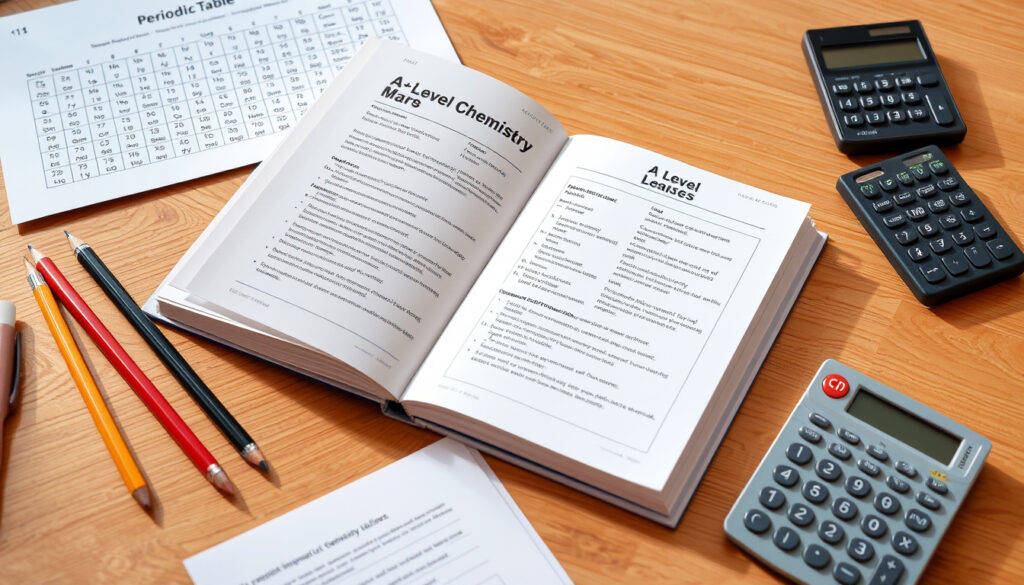
A Level Periodic Table – Complete Guide to Official Data Booklets
For students sitting A-level Chemistry in the UK, the periodic table provided in the exam is not a one-size-fits-all resource. Each major exam board publishes its own data booklet, and the differences in layout, included data, and the precision of atomic masses can be significant. Finding the correct version for your specific board is essential for exam preparation.
While all boards supply a periodic table within a data booklet or data sheet, the contents vary. Some include detailed spectroscopy tables, while others focus on physical constants. This guide breaks down what each exam board provides, where to find the official PDFs, and what you need to know about atomic mass precision.
Where to Find Official A Level Periodic Tables by Exam Board
Every major UK exam board makes its chemistry data booklet freely available online. Below is a quick overview of the key differences, followed by a detailed fact table and direct links to the official documents.
Board-Specific PDFs
Direct links to official AQA, OCR, WJEC, CCEA data booklets containing the periodic table.
What’s Included
Atomic masses (1dp or 2dp), electronic configurations, melting/boiling points, plus NMR/IR tables.
Precision Matters
AQA & OCR use 1 decimal place; Edexcel uses 2. Know the difference for exam accuracy.
Interactive Version
Online interactive periodic table (Creative Chemistry) with configs and properties for A level.
- Each UK exam board provides its own periodic table in a data booklet that must be used in the exam – never substitute a different board’s table to avoid mismatched data.
- Atomic masses on A level tables are given to 1 or 2 decimal places depending on the board; this reflects the precision required in exam calculations.
- The periodic table is only one part of the data booklet; NMR, IR, and standard electrode potential tables are also provided by most boards.
- Interactive periodic tables are useful for revision but cannot replace the official printed version during exams, which contains board-specific values.
- The AQA data booklet is the most “chemistry-data-rich” of the results shown, including IR, ¹H NMR, and ¹³C NMR chemical shift data.
- Edexcel provides a clean copy of the data booklet to students at the start of their exams, so familiarity with its layout is essential.
- CCEA’s data leaflet is available from their website, but its exact contents and currency should be confirmed directly with the board or a teacher.
| Exam Board | Periodic Table PDF | Decimal Places | Additional Data Tables |
|---|---|---|---|
| AQA | Link to PDF (PMT) | 1 decimal place | NMR, IR, selected organic molecules |
| OCR A | Link to PDF (OCR) | 1 decimal place | NMR, IR, electrode potentials |
| WJEC | Link to PDF (WJEC) | 1 decimal place | NMR, IR, electrode potentials, constants |
| CCEA | Link to PDF (CCEA) | 1 decimal place (most) | NMR, IR, electrode potentials |
| Edexcel | Link to PDF (Edexcel) | 2 decimal places | NMR, IR, electrode potentials, physical constants |
The links in the table above point directly to the official data booklets from each exam board, with AQA hosted on the trusted Physics & Maths Tutor site. For Edexcel, the exact decimal precision should be confirmed with the current Pearson Edexcel data booklet as it may not be explicitly shown in all excerpts.
What Information Does the A Level Periodic Table Include?
The A level periodic table is far more than just a list of elements. It typically includes atomic number, symbol, and relative atomic mass. The level of detail, however, expands considerably compared to GCSE versions.
Additional Data in the Data Booklet
Most exam boards embed the periodic table within a larger data booklet that provides reference material for the entire exam. For AQA, the periodic table appears on page 2, followed by IR absorption data, ¹H and ¹³C NMR chemical shift data, and selected organic molecules. The OCR data sheet similarly includes IR and NMR reference data, while the WJEC booklet adds constants such as the Avogadro constant, molar gas constant, and molar gas volume. Edexcel’s booklet provides physical constants and a periodic table, with a clean copy supplied in the exam. CCEA’s data leaflet includes a periodic table alongside standard reference data.
Differences from the GCSE Periodic Table
GCSE periodic tables are simplified. Atomic masses are typically rounded to whole numbers, and there is no inclusion of electronic configurations, melting points, or boiling points. A level tables often present masses to one or two decimal places and may include electronic configurations in separate tables. The additional spectroscopy data found in A level booklets has no equivalent in GCSE resources.
If you are revising for AQA, you should know the periodic table plus spectroscopy and selected organic molecules content in the booklet, because AQA relies on the booklet for more than just atomic masses. For OCR, practice using the full data sheet quickly, especially the periodic table and IR/NMR reference data.
Does the A Level Periodic Table Have Atomic Masses to 1 Decimal Place or More?
The precision of atomic masses on A level periodic tables is a common source of confusion. Different exam boards have adopted different conventions, and using the wrong value can affect calculation results.
One Decimal Place: AQA, OCR, WJEC, and CCEA
The OCR periodic table extract clearly shows atomic masses rounded to one decimal place. Examples visible in the OCR data sheet include hydrogen as 1.0, carbon as 12.0, nitrogen as 14.0, oxygen as 16.0, and chlorine as 35.5. AQA also uses one decimal place, with the periodic table on page 2 provided for “atomic masses or a quick refresher on elements,” though the exact rounding style is not detailed in the same way in the available excerpts. WJEC and CCEA similarly present masses to one decimal place for most elements.
Two Decimal Places: Edexcel
Edexcel’s GCE data booklet (9CH0) appears to use two decimal places for atomic masses, a departure from the other boards. The provided excerpt does not display the atomic-mass formatting in enough detail to verify rounding from the snippet alone, so students should confirm the current format by checking the official PDF. This difference in precision is critical because exam calculations may be marked according to the values specified in the official booklet.
Using the wrong precision for atomic masses can lead to incorrect answers in calculations. Always use the exact data booklet provided by your exam board. Interactive periodic tables may use values from different sources, so cross-check with official board data before relying on them for exam preparation.
Can I Use an Interactive A Level Periodic Table for Revision?
Interactive periodic tables are valuable supplementary tools for understanding trends and memorising element properties. The Creative Chemistry interactive periodic table, created by chemistry teacher Nigel Saunders, is designed specifically for A level students. It includes electronic configurations, melting points, and boiling points, making it a helpful revision aid.
However, official data booklets are static PDFs. Exam boards require students to use the exact values from the official booklet during exams. An interactive table cannot replace the printed version. The strongest “interactive revision guide” result in the provided material is Up Learn, which explains what is on each page of the OCR and AQA data booklets. Save My Exams also offers an AQA-specific data-sheet guide that notes AQA provides separate AS and A Level versions. No official interactive revision guides from Edexcel, WJEC, or CCEA were confirmed in the available search results.
Timeline of A Level Periodic Table Updates
A level periodic tables are updated when exam board specifications change. Key specification introductions include AQA’s 7405 and OCR A’s H432, both introduced in 2015. The CCEA data leaflet available online is dated 2019 and may have been superseded. Students are advised to check their exam year’s specific specification to ensure they have the most current version. There is no major timeline of changes; the key point is to verify the document matches the current exam series.
Established Information and Unconfirmed Details
| Established Information | Information That Remains Unclear |
|---|---|
| AQA and OCR A level periodic tables give atomic masses to 1 decimal place. | Edexcel’s exact decimal precision: confirm with the current Pearson Edexcel data booklet (not in provided SERP). |
| The official AQA data booklet is available as PDF via PMT and directly from AQA. | Whether CCEA’s 2019 data leaflet is still the current version – students should verify with their teacher. |
| WJEC and CCEA provide their data booklets on their official websites. | Some interactive periodic tables may use values from different sources; always cross-check with official board data. |
Why These Differences Matter
Students often search for “A level periodic table” to find the correct version for their exam. The diversity of exam boards means that a single periodic table does not fit all. Knowing which board you are taking is essential. The number of decimal places on atomic masses can affect calculation answers; using the wrong precision may lose marks. Therefore, it is critical to use the exact data booklet provided by your exam board. The top search results show that official PDFs are the most authoritative sources. Interactive tables serve as supplementary learning tools but are not approved for exam use.
Key Sources and Official Quotes
“This Data Booklet is provided with AQA A-level Chemistry question papers. A-level CHEMISTRY. 7405.”
AQA Data Booklet (via PMT)
“Interactive periodic table suitable for A Level chemistry students. It includes electronic configurations, melting points and boiling points.”
Creative Chemistry
“GCE AS/A LEVEL CHEMISTRY Data Booklet”
WJEC
Finding the Right Table for Your Exam
The most important step is identifying your exam board and downloading the correct data booklet. AQA and OCR students have clear PDFs with one-decimal-place atomic masses. Edexcel students should verify the precision used in their current booklet. WJEC and CCEA students can access official PDFs from their board websites. If you are still unsure which periodic table to use, ask your chemistry teacher for the exact data booklet for your exam board and year. For revision, try the Creative Chemistry Interactive Periodic Table to familiarise yourself with trends, but always practice with the official PDF you will use in the exam. Check the exam board’s official website for any updated versions of the data booklet before your exam. For more educational reference content, you may also find our article on What Is an Invoice – Definition, Examples, vs Receipt useful for broader learning strategies.
Frequently Asked Questions
What is the difference between A level and GCSE periodic tables?
A level periodic tables include additional data such as electronic configurations, more precise atomic masses (often to 1 or 2 decimal places), and may include melting/boiling points. GCSE tables are simplified and round atomic masses to whole numbers.
Can I get a free PDF of the A level periodic table for any exam board?
Yes. Official PDFs are freely available from each exam board’s website or through trusted educational sites like Physics & Maths Tutor (for AQA). Links are provided in this guide.
Does the A level periodic table include electronic configurations?
Not all exam boards include them on the periodic table itself; some provide a separate table. For example, the Creative Chemistry interactive table includes configurations. The AQA and OCR data booklets do not show configurations on the periodic table but may include them elsewhere.
Why do some periodic tables show atomic masses to 1 decimal place and others to 2?
It depends on the exam board’s specification. AQA and OCR A use 1 decimal place for most elements. Edexcel (IAL/GCE) uses 2 decimal places. Always use the precision specified by your board to ensure correct answers.
Are the data booklets printable?
Yes, the official PDFs from all exam boards are designed to be printed. Students often print them for revision and to simulate exam conditions.
What other data is in the A level data booklet besides the periodic table?
Most booklets include IR absorption data, ¹H and ¹³C NMR chemical shift data, standard electrode potentials, and physical constants like the Avogadro constant and molar gas volume. AQA’s booklet also includes selected organic molecules.
Is the Edexcel periodic table the same as the AQA one?
No. While both contain a periodic table, Edexcel uses 2 decimal places for atomic masses, while AQA uses 1 decimal place. The additional data tables also differ between the boards.
Does CCEA provide an online periodic table for A level?
Yes, CCEA provides a data leaflet in PDF format, available from their official website. However, the version found online is dated 2019, so students should confirm with their school if a newer version exists.
More related posts
 Can Dogs Eat Nuts – The Complete Safety Guide for Pet Owners
 Alec Guinness – Biography, movies and 2026 tribute
 Justin Berfield – Biography, Career and Net Worth
 Youtube Video Download 4K – Best Free Tools and Safe Methods
 Matthew Goode – Biography, Movies, Wife, Age, Height & Facts
 Ben Whishaw – Biography, Movies, and Myths Debunked
 Jimmy Carr – Biography, Net Worth, Netflix Specials and Tour 2025
 How to Share Location on WhatsApp – Android iOS Web Guide
