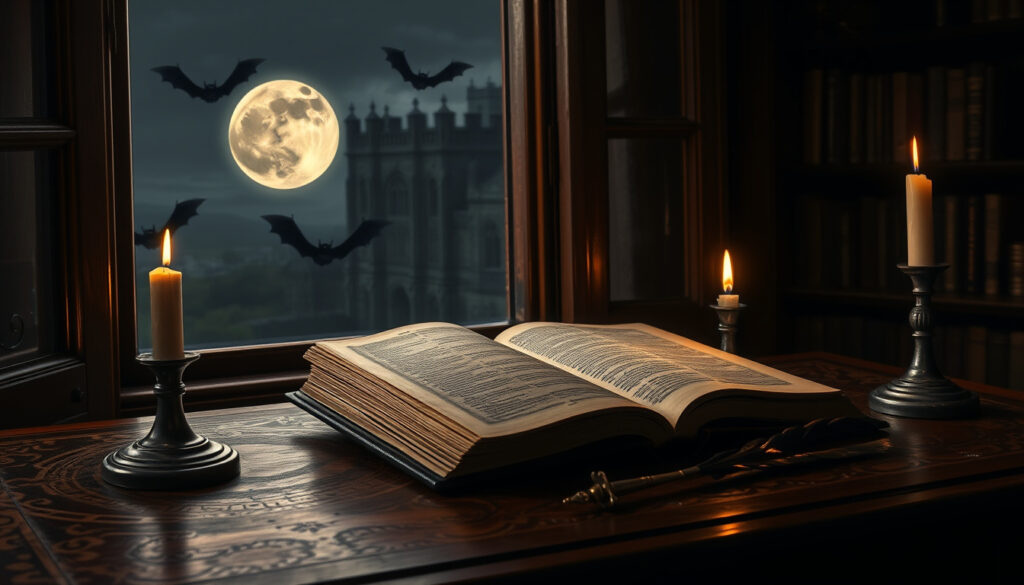
Bram Stoker – Biography, Dracula, Death and Lasting Legacy
Bram Stoker was an Irish writer best known for the Gothic horror novel Dracula (1897). He died in London on 20 April 1912 at the age of 64, and in the decades since, Dracula has become one of the most widely adapted horror stories ever written. Britannica identifies the novel as his best-known work.
Stoker’s life unfolded between Dublin, where he was born and educated, and London, where he built a career in journalism and theatre. He studied at Trinity College Dublin and worked as a civil servant while writing journalism and drama criticism. Through the actor Sir Henry Irving, he became closely associated with the stage, as History.co.uk records.
Stoker married Florence Balcombe on 4 December 1878, and the couple had one son, Noel. Biography.com consistently identifies Florence as his wife, and she remains a central figure in accounts of his personal life.
Who Was Bram Stoker?
The essentials of Stoker’s life are well established across biographical sources.
Abraham “Bram” Stoker
8 November 1847, Clontarf, County Dublin, Ireland
20 April 1912, London, England
Gothic novel Dracula (1897)
- Stoker worked as the business manager for the actor Henry Irving, a role that influenced his theatrical style.
- He drew inspiration for Dracula from Whitby’s atmosphere, Vlad the Impaler, and sleep research.
- His death certificate lists “locomotor ataxia,” but many biographers suggest syphilis as the underlying cause.
- Stoker wrote 12 novels, numerous short stories, and was a prolific theatre reviewer.
- He was an Irish author from Dublin who studied at Trinity College Dublin and worked as a civil servant.
- He is often described as “the father of vampire fiction.”
| Category | Detail |
|---|---|
| Full name | Abraham “Bram” Stoker |
| Born | 8 November 1847, Clontarf, County Dublin, Ireland |
| Died | 20 April 1912, London, England |
| Nationality | Irish |
| Education | Trinity College Dublin |
| Occupation | Author, civil servant, journalist, theatre manager |
| Spouse | Florence Balcombe (married 4 December 1878) |
| Children | One son, Noel (born 1879) |
| Best known for | Dracula (1897) |
| Reported total books | 18 (per History.co.uk) |
The most contested detail in his biography is the cause of his death.
How Did Bram Stoker Die?
The reported cause of Stoker’s death is not fully settled across sources. One source says he died of exhaustion, while others report stroke complications, syphilis, or locomotor ataxia on the death certificate, a term often interpreted as a reference to syphilis.
What Did the Death Certificate Record?
Accounts citing Wikipedia and Biography.com state that the death certificate lists “locomotor ataxia,” a condition frequently interpreted as a manifestation of tertiary syphilis. The most commonly accepted reading in biographical accounts is that this was the official cause recorded at the time.
Did Bram Stoker Die of Syphilis?
The syphilis connection rests on the locomotor ataxia entry, since the condition is historically associated with syphilitic myelopathy. Some historians argue that Stoker may have died from syphilis or from complications of a stroke, but the medical records are inconclusive. StudySmarter treats the cause as unresolved.
Why Does the Debate Persist?
The most cautious reading of the available sources is that the exact cause of Stoker’s death remains debated in biographical accounts. Exhaustion, stroke complications, and syphilis all appear in the literature, but no definitive proof has been established.
The death certificate lists locomotor ataxia, a term often interpreted as a reference to syphilis, but the medical records are inconclusive. Sources also mention exhaustion and stroke complications.
What Inspired Bram Stoker to Write Dracula?
Stoker began work on the story that became Dracula around 1890, first using the working title The Un-Dead, according to the Bram Stoker Estate.
What Is the Connection Between Bram Stoker and Whitby?
The Whitby connection is a well-known part of the novel’s origin story. The Bram Stoker Estate says he found the name “Dracula” in the Whitby library while on vacation, and that this influenced the novel’s development. Whitby is therefore strongly associated with the novel’s composition and inspiration, though sources in this set do not fully document every element of the connection.
Was Dracula Based on a Single Historical Figure?
Popular discussions sometimes link Dracula to Vlad the Impaler, and Stoker’s influences are said to include Vlad the Impaler and sleep research alongside Whitby’s atmosphere. Travel and landscape inspirations also matter, including coastal settings such as Cruden Bay noted in later retellings on Spanish Wikipedia. No single historical figure is confirmed as the direct model in the sources.
What Other Influences Shaped the Novel?
Because the available sources do not provide a single authoritative statement naming one historical person as the direct model for Dracula, it is most accurate to say that Dracula was shaped by multiple literary, historical, and geographical influences rather than one confirmed real-life vampire figure.
Stoker’s influences included Whitby, Vlad the Impaler, sleep research, and his broader interest in Gothic horror and theatre. Together these shaped Dracula rather than any single real-life model.
What Are Bram Stoker’s Most Famous Works and Adaptations?
What Books Did Bram Stoker Write?
Beyond Dracula, sources mention several other titles. Under the Sunset (1881) is described as his first fiction book, while Biography.com identifies The Primrose Path (1875) as his first novel. Dracula’s Guest was published posthumously long after Dracula, and The Mystery of the Sea and Famous Impostors also appear in accounts of his work. These titles are listed on IMDb’s biography page for Stoker.
What Is Bram Stoker’s Dracula About?
Dracula (1897) is a milestone work in Gothic and vampire literature. Written during the late Victorian period, the novel uses an epistolary structure and Gothic tropes that made it an instant success. Stoker’s background in theatre gave him a keen sense of dramatic pacing, which can be seen in the novel’s scenes.
What Movies Are Based on Bram Stoker’s Dracula?
Stoker died before Dracula became a major worldwide phenomenon, but the novel later inspired numerous film and literary adaptations in the 20th century. The 1992 film Bram Stoker’s Dracula remains one of the best-known versions. In 1992, director Francis Ford Coppola released Bram Stoker’s Dracula, one of the most prominent cinematic adaptations of the novel.
Who Is Van Helsing in Dracula?
Van Helsing is one of the most important characters associated with Dracula, but the sources available here do not provide a detailed biography of the character or an explanation of his origins. What can be said confidently is that Van Helsing belongs to the novel’s enduring cast and is part of its lasting influence on vampire fiction. Wikipedia describes Dracula and its antagonist as milestones in Gothic and vampire literature.
Stoker’s publications include The Primrose Path, Under the Sunset, The Mystery of the Sea, Famous Impostors, and the posthumously published Dracula’s Guest. One source counts 18 books in total.
What Is the Timeline of Bram Stoker’s Life?
The main dates of Stoker’s life are consistent across biographical references.
- – Bram Stoker is born in Dublin, Ireland.
- – Graduates from Trinity College Dublin with a degree in mathematics.
- – Marries Florence Balcombe and becomes manager of the Lyceum Theatre.
- – Publishes Dracula.
- – Dies in London at the age of 64.
These dates draw on the biographical summaries of History.co.uk, the Bram Stoker Estate, and Britannica.
What Is Known and What Remains Unclear About Stoker’s Death?
The cause of Bram Stoker’s death is one of the more contested details in his biography. The table below separates what is established from what remains a matter of interpretation.
| Established Information | Information That Remains Unclear |
|---|---|
| The official record lists locomotor ataxia as the cause of death, a condition often interpreted as a manifestation of tertiary syphilis. | Some historians argue that Stoker may have died from syphilis or from complications of a stroke. |
| Stoker died in London on 20 April 1912 at the age of 64. | His medical records are inconclusive, and no definitive proof has been established. |
What Historical Context Shaped Dracula?
Dracula (1897) was written during the late Victorian period, a time of anxiety about immigration, sexuality, and science. The novel’s epistolary structure and Gothic tropes made it an instant success.
Stoker’s background in theatre gave him a keen sense of dramatic pacing, which can be seen in Dracula’s scenes. His lesser-known works, such as The Lair of the White Worm, also explore themes of ancient evil and supernatural horror.
The Gothic tradition that Stoker helped shape extended into 20th-century cinema and fiction. Directors such as Alfred Hitchcock carried that influence into film.
Which Sources Document Bram Stoker’s Life and Work?
Biographical information about Stoker draws on a range of recognised references. Britannica provides an authoritative overview of his life and career, while History.co.uk and Biography.com offer summaries covering his family and theatrical work. The Bram Stoker Estate documents the novel’s origins, and Wikipedia and IMDb contribute broader reference material.
“I am long and lank and thin; I am pale as a ghost; I am sensitive as a mimosa.”
Bram Stoker, as cited by Wikipedia
“Dracula is a story of Good versus Evil, of the power of love and friendship, and of the triumph of modern science over superstition.”
Common literary analysis, cited by Britannica
“Stoker’s creation of Count Dracula has become the archetype of the vampire in popular culture.”
Bram Stoker Estate
Why Does Bram Stoker’s Legacy Endure?
Bram Stoker’s legacy rests on the creation of Count Dracula and the template he helped establish for the vampire genre. Though he died before Dracula became a worldwide phenomenon, the novel inspired numerous film and literary adaptations and remains a milestone of Gothic horror. He is often called “the father of vampire fiction,” and his influence continues to shape the genre.
Frequently Asked Questions About Bram Stoker
How many books did Bram Stoker write?
Stoker wrote 12 novels, 3 short story collections, and several non-fiction works. One source counts 18 books in total.
Is Dracula based on a real person?
The character is largely fictional. Some popular accounts mention Vlad the Impaler, but the available sources do not confirm a single historical figure as the direct model.
What are some interesting facts about Bram Stoker?
He was an athlete at university and worked as a theatre manager before becoming famous for Dracula.
Who was Bram Stoker’s wife?
Florence Balcombe. Stoker married her on 4 December 1878, and the couple had one son, Noel, born in 1879.
When and where was Bram Stoker born?
He was born on 8 November 1847 in Clontarf, County Dublin, Ireland.
Why is Whitby associated with Dracula?
Stoker found the name “Dracula” in Whitby library while on vacation, according to the Bram Stoker Estate. Whitby is strongly tied to the novel’s composition and inspiration.
What genre did Bram Stoker write?
Stoker wrote Gothic horror and supernatural fiction, with Dracula as his defining work.
When was Dracula published?
Dracula was published in 1897. Stoker began work on the story around 1890 under the working title The Un-Dead.
Who is Van Helsing in Dracula?
Van Helsing is one of the most important characters associated with Dracula, part of the novel’s enduring cast and its lasting influence on vampire fiction.
More related posts
 Noel Edmonds – Net Worth, Wife, Children and Life Now
 Golf Clubs – Complete UK Buying Guide 2025
 Frieren Beyond Journey’s End – Episodes Seasons and Reviews
 Nell Fisher – Biography, Movies and Upcoming Roles
 Jason Momoa – Height, Wife, Net Worth and Career Facts
 Omari Hutchinson – Biography and Career Profile
 Kitchen Cupboards – Complete Guide to Types, Painting and Door Replacement
