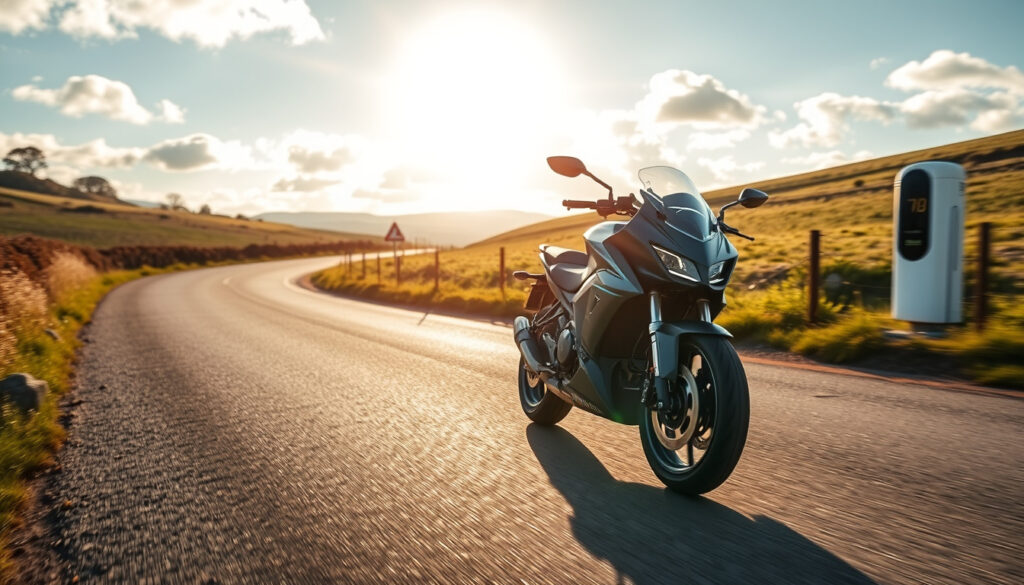
Electric Motorbikes – 2025 UK Guide to 70mph Models
The UK electric motorbike market in 2025 is no longer a niche curiosity. With the 2035 ban on new petrol motorcycles confirmed, a growing number of riders are considering electric options for their first bike. But navigating the rules around licences, power ratings, and real-world speed can be confusing. This guide cuts through the marketing claims to answer the most important question: which electric motorbikes are actually road legal in the UK, and which ones can genuinely do 70 mph without breaking the bank?
Which electric motorbikes are road legal in the UK in 2025?
The first thing to understand is that UK law classifies electric motorcycles by their continuous rated power, not by a pretend engine size. The category that matters most for new riders is the L3e-A1 class, which covers bikes with a maximum continuous power output of 11kW. This is the direct equivalent of a petrol 125cc machine.
Yes, if 11kW continuous
Varies by model: 60-75 mph
Key feature for flat dwellers
From roughly £4,000 to £13,000
Key insights for UK buyers in 2025
- Most UK buyers can legally ride an 11kW electric bike on a CBT (compulsory basic training) certificate with L-plates, provided the bike is speed-limited appropriately.
- The cheapest models that can genuinely reach 70 mph start around £5,000 to £6,000, but many budget options top out closer to 60 mph.
- Removable batteries are a major practical advantage for riders without a garage or dedicated outdoor charging point.
- Premium electric motorcycles like the LiveWire S2 Del Mar offer performance that far exceeds the 11kW class but require a full A licence.
| Make/Model | Top speed (mph) | Motor power (kW) | Battery removable | Licence required | Price (£) |
|---|---|---|---|---|---|
| Maeving RM1S | 70 | 11 | Yes | CBT / A1 | £5,995 |
| Super Soco TC Max | 60 | 4 | No | CBT / A1 | £3,995 |
| NIU NQi GT | 70 | 5 | Yes | A1 | £4,990 |
| LiveWire S2 Del Mar | 110 | 50 | No | A (full licence) | £12,990 |
The legal baseline is clear: riders aged 17 or over with a CBT certificate can ride an L3e-A1 electric motorcycle. The same road rules apply as for petrol motorcycles, including insurance, registration, and the wearing of an approved helmet. The official government guidance on licence categories can be found at gov.uk.
An important caveat is that some manufacturers advertise a high peak power output while the continuous rating is much lower. The official vehicle category on the V5C registration document is what matters, not the acceleration figures used in marketing.
What is the cheapest electric motorbike that can reach 70 mph in the UK?
If your goal is a genuine 70 mph top speed without spending over £10,000, the options narrow considerably. Many learner-legal electric bikes are designed for city use and top out between 45 and 60 mph, which is fine for urban commuting but insufficient for faster A-roads or motorway riding.
Based on available data, the Super Soco TC Max is the cheapest road-legal learner electric bike, with a price around £4,499. However, it has a claimed top speed of approximately 60 mph, which means it does not meet the 70 mph target.
A stronger match is the Vmoto Stash, described as a 125cc-equivalent bike with a top speed of around 75 mph and a price of about £6,300. This makes it the most affordable model in the available results that can genuinely sustain motorway speeds.
Other 11kW class options like the BMW CE-02 (around £8,450) and the Zero FXE 11kW (around £12,610) exist, but they come at a significantly higher price point. For a deeper look at the broader market, Motorcycle News provides a regularly updated list of the best electric motorcycles available in the UK.
A practical 2025 buyer checklist confirms that you should always verify the real top speed, not just the manufacturer’s “equivalent” claim. Independent tests and owner forums are often more reliable than spec sheets. The Zero S 11kW review, for example, notes a sharp drop in range at constant high speed, which is another factor to consider if you plan to ride at 70 mph regularly.
What is the best 125cc equivalent electric motorbike for adults?
Defining “best” depends heavily on whether you prioritise range, speed, cost, or battery convenience. For adults who need a genuine 125cc-equivalent experience, the 11kW class is the right target. The Maeving RM1S, priced at around £5,995, offers a 70 mph top speed and is notable for having removable batteries. The manufacturer’s official specs are available at maeving.com.
Is an 11kW electric motorcycle as fast as a petrol 125cc?
In terms of top speed, many 11kW electric models match or exceed a typical petrol 125cc, especially in urban acceleration from a standstill. The difference often lies in sustained high-speed cruising, where electric motors can be efficient but battery drain increases significantly. The 11kW continuous rating is the legal ceiling for the A1 class, but peak power can be higher for short bursts.
Best electric commuter motorcycle 2025 UK
For daily commuting, the combination of removable batteries and reasonable speed makes models like the NIU NQi GT (around £4,990) a strong contender. The ability to take the battery indoors for charging is a major advantage for riders who lack off-street parking. UK retailers like Urban eBikes stock several of these models and provide product spec sheets for comparison.
If you are buying for commuting, check the real-world range at the speeds you will actually ride. City stop-start traffic is where electric bikes shine; a constant 60-70 mph on a dual carriageway can reduce range by up to 40% compared to the WLTP city cycle figure.
Which electric motorbikes have removable batteries and how important is that?
Removable batteries are a practical necessity for anyone who cannot park next to a charging point. In the 11kW class, the Maeving RM1S and NIU NQi GT are the models confirmed to offer this feature within the available data. The batteries are typically designed to be carried indoors for charging, which also adds a layer of security against theft.
Charging times vary significantly. The Zero S 11kW, for example, can take anywhere from 5 to 10 hours depending on the battery configuration. This is an often-overlooked detail that directly impacts daily usability. The ability to swap a depleted battery for a charged one (if you own a spare) transforms the ownership experience, effectively eliminating the need for a long charging stop.
The importance of battery removability cannot be overstated for flat or terrace-house dwellers. However, the trade-off is that removable batteries add weight and complexity to the bike’s design, and in some cases, the battery enclosure may reduce storage space under the seat. If you are weighing up practical commuting options, our guide to UK purchasing decisions explores similar trade-offs in another market.
The available search results do not provide a complete, reliable, UK-wide comparison of the cheapest removable-battery electric bikes in 2025. If this feature is essential for you, model-specific checking with the dealer or manufacturer is highly recommended before purchase.
How do top UK electric motorbike brands compare? LiveWire, Maeving, Super Soco, and NIU
The UK market currently presents a clear split between British-designed brands, Chinese-manufactured value options, and premium American performance machines. Each targets a different rider.
LiveWire: premium performance
LiveWire, spun off from Harley-Davidson, produces motorcycles that far exceed the 11kW learner limit. The LiveWire S2 Del Mar, priced around £12,990, is a full-performance electric motorcycle requiring an A licence. It offers a top speed of 110 mph and is aimed at experienced riders. The brand configurator and price list can be found at livewire.com.
Maeving: British-built with removable batteries
Maeving has positioned itself as a premium British brand. The RM1S model is learner-legal, achieves 70 mph, and features removable batteries. The company manufactures its bikes in the UK and has focused on design and urban practicality.
Super Soco and NIU: value and volume
Super Soco and NIU are Chinese brands that offer competitive pricing. The Super Soco TC Max is the cheapest option at under £4,000, but its 60 mph top speed limits its use to city and suburban roads. The NIU NQi GT offers a 70 mph top speed for around £4,990, with removable batteries, making it a strong value proposition for the 11kW class.
The market context shows that the 2035 ban on new petrol motorcycles, combined with the expansion of Clean Air Zones (such as London’s ULEZ), is actively pushing adoption in urban areas. The ZEV mandate is also encouraging manufacturers to bring more models to the UK. For broader context on how different sectors are evolving, you may find our UK market overview useful.
Timeline: electric motorbike market evolution UK
- 2019: The UK government begins formal discussions on a Zero Emission Vehicle (ZEV) mandate for motorcycles.
- 2021: Maeving launches its first RM1 model, featuring a removable battery design.
- 2023: LiveWire formally spins off from Harley-Davidson as an independent electric motorcycle company.
- 2024: The UK government confirms that no new petrol motorcycles will be sold after 2035.
- 2025: The 11kW (125cc-equivalent) electric category becomes the dominant entry point for new riders in the UK.
- 2026: Motorcycle News anticipates the launch of at least 50 new electric models priced under £10,000.
What is certain vs. uncertain about electric motorbikes in 2025?
| Established information | Information that remains unclear |
|---|---|
| 11kW electric motorbikes are eligible for the A1 licence category or can be ridden on a CBT with L-plates. | Real-world range varies heavily with speed and terrain; WLTP figures often overstate achievable highway range. |
| The Maeving RM1S and NIU NQi GT are confirmed to have removable batteries. | Insurance groups for many electric models have not yet been consistently published by UK insurers. |
| A genuine 70 mph top speed is achievable by several models priced under £6,000. | The second-hand market for electric motorbikes remains volatile, partly due to concerns over battery degradation and replacement costs. |
What does the UK electric motorbike market look like right now?
The market is effectively splitting into two distinct segments: the sub-4kW category (roughly equivalent to a 50cc moped, which in some cases can be ridden on a car licence) and the 11kW category (125cc equivalent, requiring a CBT or A1 licence). Buyers who prioritise motorway-capable speed and removable batteries for home charging are driving the growth in the 11kW class.
The user action is simple: check your licence status before you shop. A provisional licence with a CBT certificate is sufficient for the 11kW class, but a full A licence is required for anything above that power rating. If you are considering using the bike for a daily commute, fitting a top box for battery storage is a practical alternative if the bike does not come with removable batteries.
What do the sources and experts say?
“The best electric motorcycles in 2026 list from MCN is a trusted resource for UK buyers.”
— Motorcycle News (MCN)
“Maeving’s official specs confirm the RM1S has a removable battery, which is a key differentiator in the 11kW market.”
— Maeving official website
“Urban eBikes and Horizon Micromobility provide product spec sheets and filter data for direct comparison shopping.”
— UK Retailers
What should a buyer expect in the near future?
The market is likely to see an increase in sub-£6,000 11kW models from Chinese brands such as Zeeho and NIU, with potential price reductions on existing models like the Super Soco range in 2026. New model launches typically occur between March and May, with test ride events becoming more common during the summer months.
Frequently asked questions
Are electric motorbikes cheaper to insure than petrol?
Not consistently in 2025. Insurance groups are still being established for many electric models, so premiums can vary significantly. It is worth shopping around for quotes on specific models.
Do I need a licence for a 4kW electric motorbike?
A 4kW bike is classed as an L1e-B moped (50cc equivalent). You need a CBT or full car licence (if you passed your car test before 2001) and L-plates to ride one legally.
Can I use an electric motorbike on a motorway?
Yes, but only if the bike is capable of maintaining a safe speed. A 60 mph bike is not suitable for motorway use; you need a model that can comfortably sustain 70 mph or more.
More related posts
 Wu Yize – Age, Ranking, Net Worth and World Champion 2026
 Matthew Rhys – Biography, Career, Wife, and Net Worth
 Ali Wong – Biography, Net Worth, and 2025 Tour Updates
 Jack Carroll – Age, Disability, Career, and Net Worth
 Eni Aluko – Biography, Age, Husband and Net Worth 2025
 Anya Chalotra – Age, Height, Parents, and Career Facts
 Stephen Traitors – Winner Biography, Age, Job and Partner
 My Virgin Media Login – Secure Access and Troubleshooting Guide
