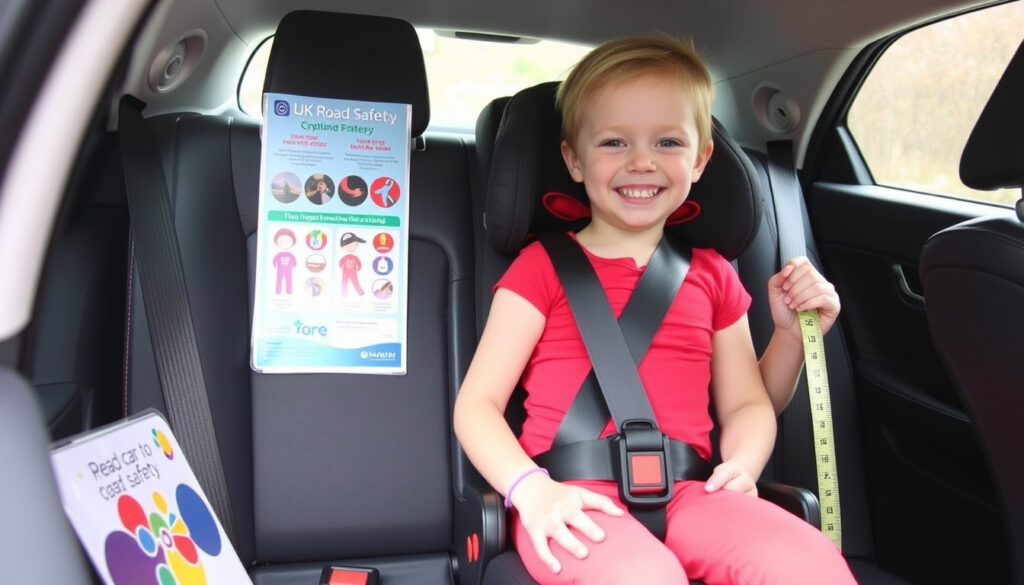
Booster Seat – UK Law, Age Guide and Buying Tips
Every parent in the UK faces the same question at some point: when is my child ready for a booster seat, and what does the law actually require? The rules can feel layered, with references to age, height, weight, and different seat types. This guide cuts through the confusion, drawing on official government sources and independent safety experts to explain exactly what you need to know about booster seats in 2025.
A booster seat is not optional for most families. UK law requires children to use an appropriate child restraint — including a booster seat — until they reach 12 years old or 135 cm tall, whichever comes first. The penalty for not following the rules can reach £500. Beyond the legal requirement, a correctly chosen and fitted booster seat is one of the most effective ways to protect a child in a collision.
What Is the Legal Age and Height for a Booster Seat in the UK?
Children must use a booster seat until 12 years or 135cm tall. Exceptions for taxis and minibuses.
Typical booster seat use starts around age 4 (15kg) and ends at 135cm or 12 years.
High-back boosters, backless cushions, and ISOFIX options each offer different safety features.
Key retailers include Argos, Halfords, and Amazon. Look for Group 2/3 certification and i-Size compliance.
Key facts at a glance
- The UK law is clear: children must use a booster seat until they are 12 years old or 135cm tall, whichever comes first.
- High-back booster seats offer better side-impact protection than backless cushions, but both are legal for children over 15kg.
- ISOFIX booster seats provide a more secure installation, reducing the risk of incorrect fitting.
- Many parents are unsure when to move from a car seat to a booster — the key is weight and height, not just age.
- Booster seats have an expiry date, usually 6 to 10 years from manufacture — always check the label before buying used.
- Backless booster cushions approved after 2017 are only legal for children at least 125 cm tall and weighing more than 22 kg.
- Older backless boosters made before the rule change may still be legal but several consumer guides recommend high-backed seats as a safer alternative.
Age, height, weight and seat type at a glance
| Age | Height | Weight | Seat Type | Legal Requirement |
|---|---|---|---|---|
| 0–15 months | Up to 83cm | Up to 13kg | Rear-facing baby seat | Mandatory |
| 15 months – 4 years | 83–105cm | 9–18kg | Forward-facing child seat (Group 1) | Mandatory |
| 4–12 years | 105–135cm | 15–36kg | Booster seat (Group 2/3) – high-back or backless | Mandatory |
| 12+ or 135cm+ | Over 135cm | Over 36kg | Adult seat belt | Seat belt required |
The official government rules are published on gov.uk – child car seats: the law. Further detail on weight groups and approval types is available from Child Car Seats UK – types of seat.
High Back vs Backless Booster Seat: Which Is Safer?
Parents shopping for a booster seat quickly encounter two main formats: the high-backed booster and the backless booster cushion. Both are legal for children who meet the required weight and height thresholds, but safety experts highlight meaningful differences between them.
What the research says about side-impact protection
High-backed booster seats include a rigid shell that extends around the child’s head and torso. This design provides structural support in a side-impact collision, reducing the risk of head or neck injury. Backless cushions, by contrast, simply raise the child so the adult seat belt sits correctly but offer little protection from side forces. According to Child Car Seats UK, high-backed boosters are widely recommended for better side-impact protection.
When a backless booster still makes sense
Backless boosters are lightweight, compact, and easy to move between vehicles. They can be a practical choice for older children who already meet the stricter minimums — at least 125 cm tall and over 22 kg for new models — and who travel in cars with good side airbag coverage. However, several consumer guides, including advice from RAC – car seat laws, note that even for older children a high-backed seat remains the safer option.
What is a booster cushion?
A booster cushion is simply another name for a backless booster seat. It is a padded base without a backrest that lifts the child so the adult three-point seat belt fits across the chest and lap correctly. Under current UK rules, newly approved booster cushions can only be used by children who are at least 125 cm tall and weigh more than 22 kg.
If your child still needs a booster, a high-backed seat is generally the better investment. It offers more side-impact protection, positions the belt more reliably, and provides head support that a backless cushion simply cannot match. Reserve backless boosters for older, larger children in occasional use scenarios such as car-sharing or holiday travel.
Do You Need an ISOFIX Booster Seat?
ISOFIX is an international standard for attaching child car seats directly to the vehicle chassis using built-in anchor points. Many newer cars come with ISOFIX fittings as standard, but the decision to choose an ISOFIX booster seat depends on your vehicle and your priorities.
How ISOFIX improves installation
The main advantage of an ISOFIX booster seat is that it removes much of the guesswork from installation. Instead of threading the adult seat belt through guides and hoping the tension is correct, the seat clicks rigidly into place. Independent safety organisations, including RoSPA – child car seats, note that incorrect installation is a common problem with belt-secured seats, and ISOFIX significantly reduces that risk.
The legal position on ISOFIX
UK law does not require an ISOFIX booster seat. Belt-secured boosters that meet the relevant safety standards are perfectly legal. The choice between ISOFIX and belt-fit is one of convenience and security, not compliance. However, if your car has ISOFIX points and you are buying a new seat, an ISOFIX-compatible model is a sensible upgrade.
Installation tips for ISOFIX boosters
Fitting an ISOFIX booster is straightforward: locate the metal anchor points at the base of your car’s rear seat, push the seat’s connectors onto them until you hear a click, and check the visual indicators (usually green) that confirm a secure connection. Always consult the vehicle handbook and the seat’s instruction manual because the exact fitting steps vary by model.
Not every car has ISOFIX points, especially models built before the mid-2000s. If your vehicle lacks ISOFIX, a belt-secured high-backed booster remains a safe and legal choice. The most important factor is that the seat fits your child’s height and weight and is installed according to the manufacturer’s instructions.
Where to Buy the Best Booster Seats: Argos, Halfords, Amazon
Once you know what type of booster seat you need, the next question is where to buy it. The three main high-street and online retailers in the UK — Argos, Halfords, and Amazon — each have different strengths.
Halfords: fitting service and advice
Halfords is one of the few retailers that offers an in-store car seat fitting service. If you are unsure about installation, a trained staff member can check that your chosen seat fits your vehicle correctly. The company stocks a broad range of Group 2/3 seats, from budget-friendly models to premium brands. Many parents value the reassurance of a professional fitting, especially for ISOFIX seats.
Argos: convenience and price
Argos offers a wide selection of booster seats across all price points, with the convenience of same-day or next-day collection in many locations. The range includes own-brand options as well as major manufacturers. Argos booster seats generally meet the same safety standards as those sold elsewhere, but the retailer does not offer a fitting service, so parents need to install the seat themselves.
For a broader look at buying guides in the same vein, our Hula Hoop Buying Guide and Toilet Roll Holder Buying Guide follow a similar research-driven format.
Amazon: reviews and range
Amazon provides access to an extensive catalogue of booster seats, including imported models that may not be available on the high street. Customer reviews and Q&A sections can help with decision-making, but buyers must verify that any imported seat complies with UK safety regulations (R44.04 or R129 i-Size). The lack of a fitting service means installation is entirely the buyer’s responsibility.
A used booster seat may look fine but could have hidden damage, missing parts, or an unknown crash history. The plastic shell can also degrade over time. Most manufacturers recommend replacing a seat six to ten years after the production date. If you buy second-hand, check the expiry label and ensure all original components are present.
How to Choose a Booster Seat for Your Child’s Age and Size
Choosing the right booster seat is a matter of matching your child’s current height and weight to the seat’s approval label, not simply picking a model by age. The following timeline shows the typical progression from birth to adult belt use.
- Birth – Rear-facing baby seat (Group 0+) required by law.
- 15 months – Minimum age to move to a forward-facing child seat (Group 1).
- 4 years (approx) – Transition to a booster seat (Group 2/3) at around 15 kg body weight.
- 12 years or 135 cm – Child can legally use an adult seat belt without a booster.
- 2025 onward – i-Size (R129) regulations are becoming more common, though seats approved under the older R44.04 standard remain legal.
The transition from a forward-facing seat to a booster depends on the child reaching the upper weight or height limit of their current seat. For most children this happens around age four, but smaller or larger children may move earlier or later. Check the seat label rather than relying on age alone. Independent advice from Which? – best booster seats can help identify models that score well on safety and ease of use.
What Do We Know for Certain About Booster Seat Safety?
Established information
- UK law: children must use a child car seat, including a booster, until 12 years or 135 cm.
- Booster seats are required for children weighing 15–36 kg unless they exceed 135 cm in height.
- High-back boosters are recommended for better side protection.
- New backless booster cushions are only legal from 125 cm and 22 kg.
Information that remains unclear
- Whether ISOFIX is safer than belt-fit — no UK law requires ISOFIX, but it reduces installation errors.
- Exact age to start a booster — it depends on weight and height, not just age; some three-year-olds may be ready.
- Backless booster safety — legal for children over 15 kg, but many experts recommend high-back for younger children.
- Expiry dates — manufacturers set them, but there is no legal requirement to replace a seat after its expiry date.
Why Are Booster Seats Important for Child Safety?
Booster seats are a critical safety device for children aged approximately 4 to 12 years. They raise the child so the adult seat belt fits correctly — across the chest and lap, not across the neck or stomach. A seat belt that sits too high can cause serious internal injuries in a crash, while one that sits too low may not restrain the child at all.
The UK law is enforced by police and carries fines of up to £500 if a child is not properly restrained. Choosing the right booster seat involves considering the child’s height and weight, the vehicle’s compatibility with different seat types, and safety features such as ISOFIX and side-impact protection.
Safety organisations commonly recommend that children remain in a child seat — whether a forward-facing seat or a booster — until they reach about 150 cm in height, even though the legal minimum is 135 cm. The extra height ensures a better seat-belt fit and offers more protection in a collision.
What Do the Official Sources Say?
Official and expert sources agree on the core legal requirements while offering additional safety guidance beyond the minimum standard.
“Children must normally use a child car seat until they’re 12 years old or 135 centimetres tall, whichever comes first.”
— gov.uk – Child car seats: the law
“High-backed booster seats offer better protection than backless booster cushions, particularly in side-impact collisions.”
— childcarseats.org.uk – Types of Seat
Further reading on the newer i-Size regulation framework is available from Child Car Seats UK – i-Size regulations.
What Is the Bottom Line for UK Parents?
The law is straightforward: keep your child in a booster seat until they turn 12 or reach 135 cm, whichever happens first. For most families, a high-backed booster is the safest and most practical choice. ISOFIX offers extra installation security but is not a legal requirement. Buy from a reputable retailer, check the approval label (R44.04 or R129 i-Size), and replace the seat after its expiry date or after any significant collision.
Can I use a booster seat in a taxi?
UK law exempts taxis and minicabs from child car seat requirements, but children under 3 must still use a child seat if available. For children aged 3–12, if no seat is available, they can travel in the back using an adult belt.
Do booster seats expire?
Yes, most booster seats have a lifespan of 6–10 years from manufacture. The plastic can degrade over time. Always check the label.
What is the weight limit for a booster seat?
Group 2/3 booster seats are designed for children weighing 15 kg to 36 kg (approximately 33 lb to 79 lb).
Can a 3-year-old use a booster seat?
Only if they weigh at least 15 kg and are tall enough for the seat belt to fit correctly. Most 3-year-olds are better suited to a Group 1 forward-facing seat.
What is the penalty for not using a booster seat?
If a child is not properly restrained, the driver can be fined up to £500 and receive penalty points on their licence.
Can a booster seat be used in the front seat?
Yes, but only if the child is correctly restrained and the front airbag is deactivated. Rear seats are safer, so front-seat use should be avoided if possible.
What does i-Size mean for booster seats?
i-Size (UN R129) is a newer regulation that uses height-based rather than weight-based sizing. i-Size seats are tested to stricter standards, including side-impact tests.
Are backless booster seats illegal?
No, but newly approved models can only be used by children over 125 cm and 22 kg. Older backless boosters may still be legal if they match their original approval.
How do I know if a booster seat fits my car?
Check the vehicle handbook for ISOFIX positions and seat-belt length. Many retailers, including Halfords, offer a fitting check before purchase.
When can my child stop using a booster seat altogether?
When they reach 12 years old or 135 cm tall, whichever comes first. Safety groups recommend staying in a child seat until about 150 cm for a better belt fit.
More related posts
 Jamie Murray – Biography, Grand Slams, Retirement and Family Life
 Julio Iglesias – Biography, Net Worth, Family & Real Madrid
 Ramona Marquez – From Outnumbered Star to Tattoo Artist in 2026
 James Brolin – Biography, Age, Family and Net Worth 2025
 Kristen Bell – Biography, Career, Family and Net Worth
 Rose McGowan – Biography, Movies, and Net Worth 2026
 Power Rangers – Complete Guide to Series, Cast and Movies
 Dr Ranj – Biography, Partner, Children and NHS Career
