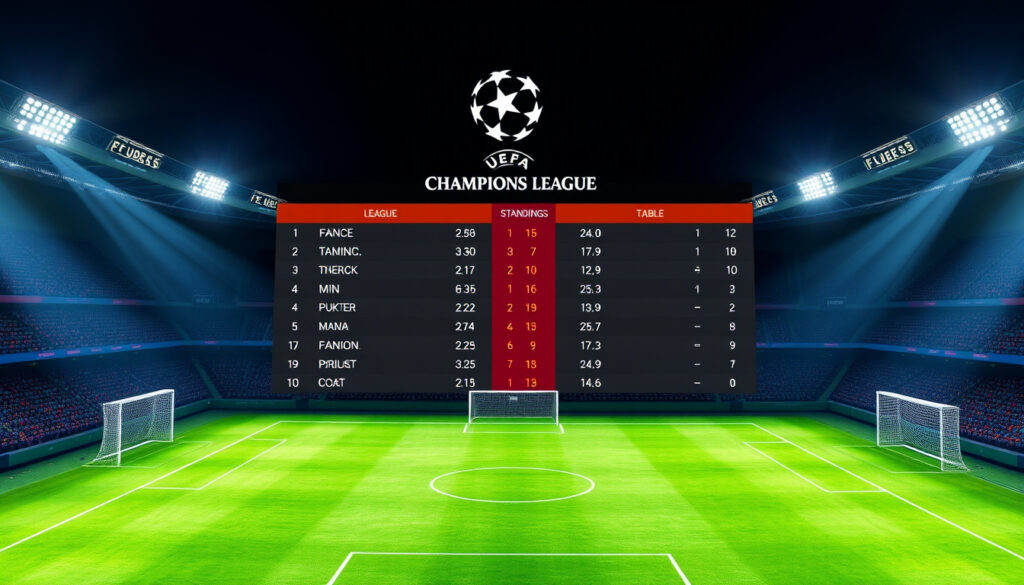
UEFA Women’s Champions League Standings – 2025/26 League Table
2025-12-18
The 2025/26 UEFA Women’s Champions League standings reflect a significant transformation in European women’s club football. A new league phase format replaced the traditional group stage, bringing 18 teams into a single competitive table where each club plays six matches. The phase concluded on 17 December 2025, with FC Barcelona and Olympique Lyonnais emerging as the dominant forces, each securing 16 points and automatic qualification for the quarter-finals.
The competition continues to capture attention across European leagues, with teams from Spain, France, England, and Germany leading the coefficient rankings. As the 25th edition of the tournament—marking the 17th year under the Women’s Champions League branding—current standings reveal both established powerhouses and emerging contenders navigating the path toward the final scheduled for 23 May 2026.
What are the current UEFA Women’s Champions League standings for 2025/26?
The league phase standings showcase the competitive landscape following the conclusion of the six-match sequence. Barcelona and Lyon share the summit with identical records, while English and German clubs occupy the positions immediately below.
Four teams lead the standings after six matches: Barcelona (16 pts, +17 GD), Lyon (16 pts, +13 GD), Chelsea (14 pts, +17 GD), and Bayern Munich (13 pts, +1 GD).
FC Barcelona
16 pts | 5W-1D-0L
Olympique Lyonnais
16 pts | 5W-1D-0L
Chelsea FC
14 pts | 4W-2D-0L
Bayern Munich
13 pts | 4W-1D-1L
Key insights from the current standings
- FC Barcelona and Olympique Lyonnais both completed the league phase unbeaten, securing direct quarter-final spots with identical 5-1-0 records.
- Chelsea FC matches Barcelona’s goal difference of +17, highlighting the English champions’ attacking strength despite playing one fewer win.
- Arsenal and Manchester United both collected 12 points but occupy different positions due to goal difference variations.
- Real Madrid’s 11 points from three wins reflect solid progress in their third consecutive season in the competition.
- The gap between seeded play-off teams (positions 3-8) and unseeded teams (positions 9-10) stands at just three points.
- SKN St. Pölten finished bottom with a single point from their six matches, recording no wins across the phase.
Full 2025/26 league phase standings
| Pos | Team | Pld | W-D-L | GF:GA | GD | Pts | Qualification |
|---|---|---|---|---|---|---|---|
| 1 | FC Barcelona | 6 | 5-1-0 | 20:3 | +17 | 16 | Quarter-finals |
| 2 | Olympique Lyonnais | 6 | 5-1-0 | 18:5 | +13 | 16 | Quarter-finals |
| 3 | Chelsea FC | 6 | 4-2-0 | 20:3 | +17 | 14 | Play-offs (seeded) |
| 4 | Bayern Munich | 6 | 4-1-1 | 14:13 | +1 | 13 | Play-offs (seeded) |
| 5 | Arsenal | 6 | 4-0-2 | 11:6 | +5 | 12 | Play-offs (seeded) |
| 6 | Manchester United | 6 | 4-0-2 | 7:9 | -2 | 12 | Play-offs (seeded) |
| 7 | Real Madrid | 6 | 3-2-1 | 13:7 | +6 | 11 | Play-offs |
| 8 | Juventus | 6 | 3-1-2 | 13:8 | +5 | 10 | Play-offs (seeded) |
| 9 | VfL Wolfsburg | 6 | 3-0-3 | 13:10 | +3 | 9 | Play-offs (unseeded) |
| 10 | Paris FC | 6 | 2-2-2 | 6:9 | -3 | 8 | Play-offs (unseeded) |
The remaining eight teams—spanning positions 11 through 18—include Atlético Madrid (7 pts), OH Leuven (6 pts), and bottom-placed SKN St. Pölten with a single point from their six fixtures. UEFA’s official standings confirm these positions following the conclusion of the league phase on 17 December 2025.
What are the UEFA Women’s Champions League quarter-final standings?
The quarter-final stage remains upcoming as the 2025/26 season progresses beyond the league phase. Two clubs—Barcelona and Lyon—have already secured their places in the quarter-finals by finishing in the top two positions of the league table. The new format guarantees direct advancement for these teams without requiring additional knockout matches.
How does qualification to quarter-finals work?
The league phase determines quarter-final qualification through a tiered system. Teams finishing in positions 3 through 12 must navigate knockout play-offs before reaching the quarter-finals. Seeding in the play-off round follows league phase performance, with higher-finishing teams facing lower-seeded opponents. The draw determines specific matchups, ensuring the competition remains unpredictable despite the structured qualification pathway.
Positions 1-2: Direct quarter-final entry | Positions 3-12: Knockout play-offs required | Positions 13-18: Competition concluded for the season
Chelsea, Bayern Munich, Arsenal, and Manchester United enter the play-offs as seeded teams based on their league phase positions. Real Madrid, Juventus, VfL Wolfsburg, and Paris FC complete the play-off field, with the latter two entering as unseeded sides. Sky Sports provides ongoing updates as these fixtures are scheduled and completed.
Quarter-finalists and title contenders
Based on current form and historical performance, Barcelona and Lyon emerge as the primary contenders for the final on 23 May 2026. The Spanish and French champions have demonstrated consistent dominance in recent seasons, with both clubs maintaining unbeaten records through the league phase. Analysts note that Chelsea and Bayern Munich represent strong challengers, particularly given their seeded positions in the play-off draw.
What were the Women’s Champions League tables for 2023/24 and 2024/25?
The previous two seasons operated under the traditional group stage format before the 2025/26 overhaul. Detailed standings from both campaigns remain limited in available sources, though key characteristics distinguish each season.
2024/25 season overview
The 2024/25 campaign served as the final edition using the group stage structure. One fragmentary reference indicates a Group A table featuring a dominant leader with a 6-0-0 record, scoring 19 goals while conceding just one, accumulating 18 points. Other teams in that group sat at 9 points each, with a bottom-placed side managing a single goal across six matches. This format transitioned immediately to the 2025/26 league phase structure following the conclusion of the previous season.
2023/24 season overview
The 2023/24 season predates the current format change, operating under the group stage format that characterized the competition since its rebranding. Search results provide minimal specific data regarding standings or detailed results from this campaign. Fox Sports standings data focuses primarily on the 2025/26 season, with historical comparisons requiring cross-referencing across multiple archived sources.
Specific standings from 2023/24 and 2024/25 remain limited in current results. The format transition to a league phase means direct comparisons require additional verification.
Who are the all-time UEFA Women’s Champions League winners?
Olympique Lyonnais stands as the competition’s most successful club, having accumulated eight titles since the tournament’s rebranding as the Women’s Champions League. The French club’s dominance spans multiple consecutive seasons, establishing an era of near-complete control over European women’s club football.
Recent winners and competition history
FC Barcelona has emerged as Lyon’s primary rival in recent years, winning multiple titles and consistently reaching the final stages. Chelsea FC represents another consistent contender, having reached advanced stages of the competition across recent seasons. 365scores maintains historical records tracing the evolution of the competition through its various format changes.
The 2025/26 edition marks the 25th iteration of the tournament overall, with this season representing the 17th year under the Women’s Champions League branding. This milestone reflects the competition’s growth since its establishment, particularly following the rebranding that brought increased visibility and investment to European women’s club football.
Notable results from the current league phase highlight Barcelona’s 7-1 victory and Real Madrid’s 6-2 win, demonstrating the attacking quality present among top-tier clubs. These performances suggest the 2025/26 season may produce compelling quarter-final and final encounters as the competition progresses toward its conclusion in May 2026.
Key dates in the 2025/26 UEFA Women’s Champions League
The competition follows a structured timeline spanning from the opening league phase matches through to the final. Understanding these milestones provides context for the standings progression and qualification implications.
- 7 October 2025: League phase commences with opening fixtures across the 18-team format
- 7 October – 17 December 2025: League phase matches occur over six matchdays
- 17 December 2025: League phase concludes; final standings confirmed
- Post-December 2025: Knockout play-off draw and fixtures begin
- Quarter-final matches: Following play-off conclusions, quarter-final fixtures determine semi-finalists
- 23 May 2026: Final scheduled to conclude the season
The compressed timeline between league phase conclusion in December and the final in May creates a concentrated knockout sequence. Fotmob provides ongoing coverage of fixture schedules as they are confirmed throughout the season.
What is certain and uncertain about the current standings?
Evaluating the reliability of information requires distinguishing between confirmed data and areas where uncertainty persists. The following assessment clarifies the evidentiary basis for current knowledge.
| Established Information | Uncertain or Pending |
|---|---|
| League phase concluded 17 December 2025 | Quarter-final matchups pending draw |
| Barcelona and Lyon at 16 points each | Specific play-off fixtures unconfirmed |
| Top 2 teams advance directly to quarter-finals | Impact of home/away draws unknown |
| Positions 3-12 enter knockout play-offs | Specific goal-scoring records subject to verification |
| Final scheduled for 23 May 2026 | 2023/24 and 2024/25 detailed standings unavailable |
Understanding the new league phase format
The 2025/26 season introduced a fundamental restructure to the competition’s format. Previously operating with multiple groups across a traditional group stage, the new format consolidates all 18 participating teams into a single league phase. Each team plays six matches—three home and three away—before standings determine subsequent qualification.
This structural change reflects broader trends in European club football, attempting to balance competitive fairness with reduced fixture congestion. The format ensures every participating team faces a comparable schedule while maintaining meaningful competition across all positions. Nations including Spain, France, England, and Germany currently lead the coefficient rankings that determine representation allocation.
The shift from group stage to league phase means teams no longer face identical opponents but rather a curated selection of opponents based on seeding and draw procedures.
Sources and references for current standings
Multiple authoritative sources confirm the league phase standings following the conclusion of matches on 17 December 2025. These include official competition records, sports data providers, and media organizations maintaining live standings tables.
“The 2025–26 UEFA Women’s Champions League introduced a new format with 18 teams in a single league phase, where each team plays 6 matches.”
— Wikipedia, 2025–26 UEFA Women’s Champions League
Cross-referencing across UEFA’s official website, Sky Sports, and data aggregators confirms consistency in reported standings, goal statistics, and qualification outcomes. Historical data from previous seasons remains less readily available, requiring consultation of archived sources for comprehensive season-by-season analysis.
UEFA Women’s Champions League standings summary
The 2025/26 UEFA Women’s Champions League standings reflect a competition in transition and growth. FC Barcelona and Olympique Lyonnais lead the league phase with identical records, establishing themselves as frontrunners for the final on 23 May 2026. The introduction of the league phase format has compressed the traditional group stage while maintaining competitive intensity across all 18 participating teams.
English clubs Chelsea, Arsenal, and Manchester United occupy solid positions in the seeded play-off zone, while German representatives Bayern Munich and VfL Wolfsburg continue their European campaigns. Real Madrid’s progression from the Spanish league system has yielded consistent Champions League participation, reflecting the broader growth of women’s football across European nations. For comprehensive coverage of standings, fixtures, and results throughout the season, readers may consult the UEFA Women’s Champions League Standings – 2025/26 League Phase Table.
Frequently asked questions
How many teams participate in the 2025/26 UEFA Women’s Champions League?
Eighteen teams compete in the league phase, each playing six matches before standings determine qualification for quarter-finals and knockout play-offs.
Which teams qualified directly for the quarter-finals?
FC Barcelona and Olympique Lyonnais secured direct quarter-final places by finishing in the top two positions of the league phase with 16 points each.
When does the 2025/26 final take place?
The final is scheduled for 23 May 2026, concluding the season following the league phase, knockout play-offs, quarter-finals, and semi-finals.
What happened to the traditional group stage format?
The 2025/26 season introduced a new league phase format, replacing the previous group stage structure. This change consolidated all teams into a single standings table rather than separate groups.
Who are the most successful clubs in Women’s Champions League history?
Olympique Lyonnais holds the record with eight titles, while FC Barcelona has emerged as the primary challenger in recent seasons with multiple victories.
How do teams qualify for knockout play-offs?
Teams finishing in positions 3 through 12 following the league phase enter seeded knockout play-offs, with higher-finishing teams receiving favorable seeding against lower-ranked opponents.
What is the current coefficient ranking for major nations?
Spain leads with 78.333, followed by France at 68.999, England at 68.166, and Germany at 59.999, influencing how many clubs each nation can send to the competition.
More related posts
 Jeffrey Dean Morgan – Biography, Wife, Age, Height & Career
 Lynn Faulds Wood – Cause of Death, Husband and Lasting Legacy
 Luxmy Gopal – BBC Journalist Career and Personal Life
 Richard Coles – Pop Star, Priest, and Bestselling Author
 Stephen Traitors – Winner Biography, Age, Job and Partner
 Amanda Redman – Biography, Career and Best-Known Roles
 Edward Hopper – Biography, Paintings, and Lasting Influence
 Rosy McEwen – Biography, Movies, and Personal Life Facts
