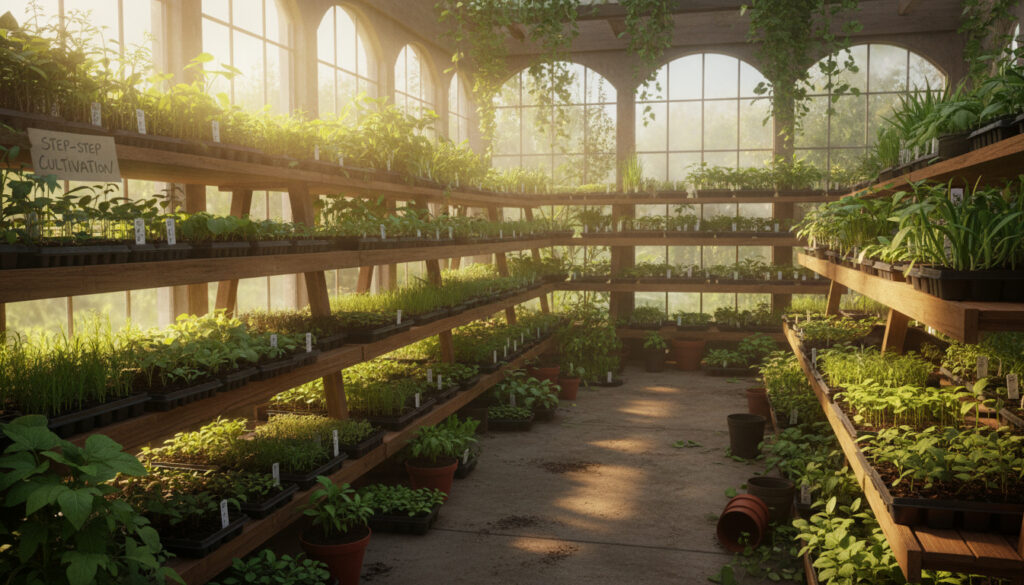
Grow a Garden Stock – Step-by-Step Guide
Matthiola incana, commonly known as stock or gillyflower, delivers tall spires of intensely fragrant blooms that have anchored cutting gardens since the 18th century. Native to Mediterranean regions, this member of the Brassicaceae family produces double and single flowers in shades of white, red, pink, cream, purple, and yellow on stems reaching 61 to 71 centimeters.
Modern gardeners value stock not merely for its Victorian elegance but for its practicality as a cool-season annual. When grown in the right conditions, stems provide cut flowers lasting five to ten days in a vase, making them a staple for formal display gardens and home arrangements alike.
Success with stock demands precise timing. Unlike heat-loving summer annuals, stock thrives when temperatures hover between 35°F and 50°F after transplanting, shutting down flower production as spring warms. Understanding this temperature sensitivity separates rewarding harvests from disappointing bolted plants.
How Do You Grow Stock Flowers?
Propagation begins with seed, as stock grows exclusively as an annual or biennial in most cultivation zones. Gardeners may start indoors five to ten weeks before the last frost or direct sow after frost danger passes, though indoor starting provides superior control over the cool conditions necessary for vernalization.
- Stock requires cool temperatures between 35°F and 50°F after transplanting to initiate blooming
- Seeds germinate in 7 to 14 days when kept at 65°F to 75°F with light exposure
- Succession planting every one to two weeks ensures continuous spring and fall harvests
- Double-flowered varieties can be identified by chilling cotyledon-stage seedlings at 4°C to 7°C for three to four days
- Flowers remain ethylene-sensitive after cutting, requiring specific post-harvest handling
- The species first entered American horticulture in 1771 when Thomas Jefferson planted it at Monticello
| Aspect | Specification |
|---|---|
| Scientific Name | Matthiola incana |
| Family | Brassicaceae |
| Germination Period | 7–14 days at 18–24°C |
| Sowing Depth | 0.6 cm (¼ inch) |
| Transplant Spacing | 15–20 cm (6–8 inches) |
| Cut Stem Length | 30–71 cm (12–28 inches) |
| Vase Life | 5–10 days |
| Optimal Growing Temperature | 2–10°C (35–50°F) |
Professional growers identify double-flowered seedlings by chilling cotyledon-stage plants at 4°C to 7°C for three to four days. Light green, oval cotyledons indicate double flowers, while dark green, round cotyledons signal single-flowered plants that should be culled.
What Soil and Conditions Are Best for Growing Stock?
Soil Structure and Fertility
Stock demands well-drained, moderately rich soil that retains consistent moisture without becoming waterlogged. Heavy clay soils predispose plants to root rot, while sandy soils may require additional organic matter to maintain the even moisture critical for this drought-sensitive species.
Light and Temperature Requirements
Full sun produces the strongest stems and most vibrant colors, though stock tolerates partial shade. The critical factor remains temperature: plants establish best when transplanted into soil where air temperatures range between 35°F and 50°F. Rising heat above this threshold triggers reproductive shutdown.
Watering Protocols
Keep soil evenly moist from germination through harvest. Water lightly immediately after sowing to avoid washing seeds deeper than the recommended 0.6 centimeter depth. Once established, avoid both drought stress—which stock cannot recover from—and oversaturation.
Nutritional Needs
High fertility supports continuous blooming. Therapy of Flowers recommends applying a balanced fertilizer every two to three weeks during the growing season to maintain the nutrient levels necessary for producing the dense, fragrant flower clusters.
Stock plants cannot recover from drought-induced stress. Once wilting occurs from water shortage, the cellular damage is irreversible and the plant will fail to produce marketable blooms.
How Do You Care for Stock Plants?
Pruning for Structure
Pinch the growing tip in spring when plants reach 10 to 15 centimeters to encourage bushier growth and additional flowering spikes. Do not pinch plants intended for single-stem production, as this removes the primary marketable shoot.
Structural Support
Install horizontal trellising, such as Hortonova netting, to prevent lodging in wind, rain, or heat. Therapy of Flowers advises that tall, heavy flower spikes benefit from physical support to maintain straight stems suitable for cutting.
Harvesting Techniques
Cut stems when one-third to one-half of the florets have opened for maximum vase life. Gardeners’ World recommends deadheading spent blooms regularly to encourage secondary flowering on branched plants.
What Are Common Problems When Growing Stock?
Pest Pressures
While specific pest documentation remains limited, stock belongs to the Brassicaceae family and may attract brassica-specific pests including aphids. Mississippi State University Extension advises monitoring undersides of leaves regularly.
Post-Harvest Physiology
Stock demonstrates extreme sensitivity to ethylene gas. Florists must treat cut stems with inhibitors such as 1-MCP or STS to prevent premature wilting. Store harvested stems at 36°F to 41°F in darkness, though prolonged cold storage diminishes fragrance.
Diagnostic Troubleshooting
Leggy stems indicate insufficient light during the seedling stage. Dense stem bases can block water uptake; recut ends underwater and trim fibrous bases before arranging. University research confirms that plants show no recovery capacity once drought stress occurs.
To extend vase life, cut the fibrous base of stems, recut ends underwater, change vase water frequently, and store at 2°C to 5°C. Avoid temperatures below 2°C for extended periods as this degrades the characteristic fragrance.
What Is the Timeline from Seed to Bloom?
- Sowing and Germination: Sow 0.6 cm deep in 128-cell plugs 5 to 10 weeks before the last frost. Maintain 18°C to 24°C for 7 to 14 days until emergence. Therapy of Flowers
- Seedling Selection: At cotyledon stage, chill seedlings at 4°C to 7°C for 3 to 4 days to identify doubles. Transplant those showing light green, oval cotyledons at the 4 to 6 true-leaf stage. Johnny’s Selected Seeds
- Field Establishment: Set out at 15 to 20 cm spacing after frost danger passes. Maintain temperatures between 2°C and 10°C for optimal flower initiation. Mississippi State University Extension
- Harvest Window: Under high tunnel production, harvest occurs approximately 12 weeks after transplanting. Field-grown spring crops mature as temperatures rise, ceasing production when heat exceeds 10°C consistently. West Coast Seeds
- Post-Production: Plants complete their lifecycle after the central stem is cut; branched plants may produce secondary blooms but generally decline rapidly in warm weather. NC State Extension
What Is Established and What Remains Uncertain?
- Stock requires vernalization temperatures (2°C to 10°C) to trigger flowering
- Chilling cotyledons reliably predicts flower doubleness
- Ethylene exposure causes rapid petal abscission
- Drought stress causes irreversible growth cessation
- Thomas Jefferson introduced the species to North America in 1771
- Specific heat thresholds that trigger complete reproductive shutdown vary by cultivar
- Comprehensive pest resistance data for modern hybrids like StoX® remains unpublished
- Optimal photoperiod requirements for different latitudes require further study
- Long-term seed viability under home storage conditions is not well documented
What Is the History and Significance of Stock?
Native to the Mediterranean basin, Eden Brothers notes that stock arrived in American gardens in 1771 when Thomas Jefferson added it to the Monticello collection. The flower became a Victorian-era staple, prized for its clove-like fragrance and architectural presence in formal borders.
Contemporary breeding has produced the StoX® series and other hybrids emphasizing double flowers and uniformity. While Are Apples Good for You explores nutritional history, stock’s cultural trajectory reflects shifting aesthetic preferences from medicinal and edible uses to purely ornamental applications in cutting gardens.
What Do Experts Recommend for Stock Cultivation?
Start seeds 5 to 10 weeks before the last frost in 128-cell plugs, and maintain high fertility with balanced fertilizer applications every two to three weeks for maximum bloom production.
— Therapy of Flowers Horticultural Guide
Plants perform as low-maintenance cool-season annuals when provided support via horizontal trellis to prevent lodging, and should be harvested when one-third to one-half of florets are open.
— Mississippi State University Extension
How Should Beginners Approach Growing Stock?
Begin with indoor sowing six to eight weeks before the final frost date, selecting a well-drained site that receives full sun but remains cool. Focus on succession planting every fortnight to extend the harvest window, and prioritize constant soil moisture to avoid the drought stress from which stock cannot recover. For inspiration on formal garden arrangements, visit RHS Garden Bridgewater Tickets to observe professional stock cultivation in display settings.
Frequently Asked Questions
Can stock be grown in containers?
Yes, stock adapts well to containers provided they offer excellent drainage and sufficient depth for the taproot. Maintain consistent moisture and provide support for tall stems.
How do I identify double-flowered varieties before they bloom?
Chill cotyledon-stage seedlings at 4°C to 7°C for three to four days. Retain seedlings with light green, oval cotyledons; remove dark green, round ones which indicate single flowers.
Why are my stock plants not flowering?
Insufficient vernalization is the primary cause. Stock requires post-transplant temperatures between 2°C and 10°C to initiate flowering. Heat above 10°C halts blooming.
How long do cut stock flowers last?
Properly handled cut stock lasts five to ten days in a vase. Cut when one-third to one-half of florets are open, and treat with ethylene inhibitors for best results.
Can I save seeds from my stock plants?
Stock cross-pollinates readily. Saved seeds may not produce plants identical to the parent, particularly for hybrid varieties. Isolation or commercial seed ensures consistency.
Are stock flowers edible?
Yes, stock flowers are edible and have been used historically to flavor liqueurs and salads, though modern ornamental varieties are typically grown for visual and aromatic qualities rather than consumption.
What causes stock stems to fall over?
Lodging results from wind, rain, or heat stress on heavy flower spikes. Install horizontal trellis netting at 30 cm height to support stems and maintain vertical growth.
When should I pinch stock seedlings?
Pinch the growing tip when seedlings reach 10 to 15 cm in spring to encourage branching. Do not pinch if growing single-stem crops for long-stem cut flowers.
More related posts
 Elif Shafak – Books, Biography and Latest Novel
 Eben Etzebeth – Height, Net Worth, Wife, Book & Retirement
 DJ Fat Tony – Biography, net worth, health and recovery
 Ella Fitzgerald – The First Lady of Song in Full
 Stools Bar – The Ultimate Buying Guide for UK Homes
 Sarah Keith-Lucas – Biography, Age, Husband and BBC Career
 Shawn Mendes
 James Bond Actors – Every 007 From Connery to Craig
