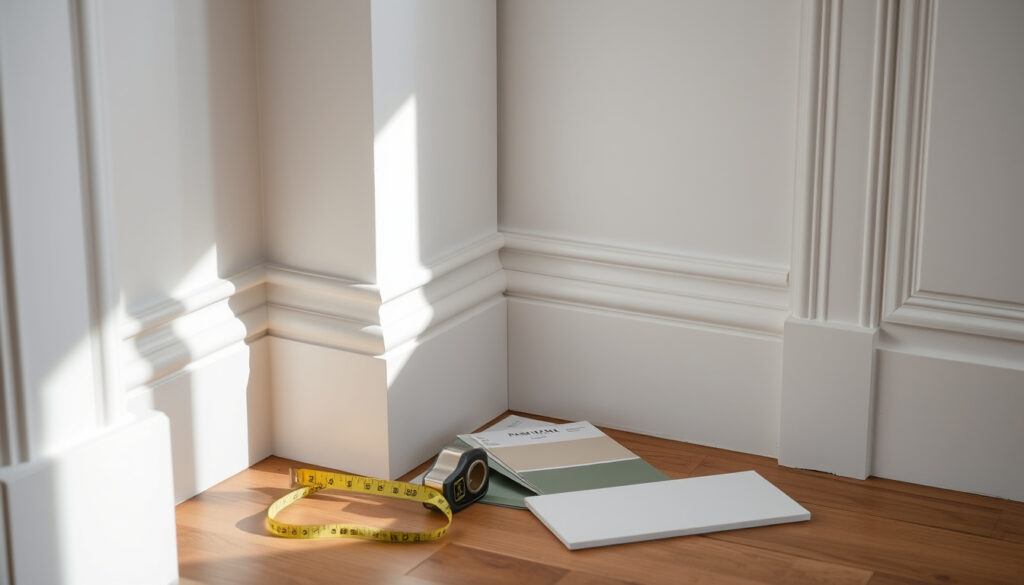
Skirting Board – Complete Buyer’s Guide for UK Homes
Choosing the right skirting board for a home in the UK involves weighing up materials, profiles, cost, and where to buy. With options ranging from budget-friendly MDF to premium solid oak, and profiles from traditional ogee to minimalist bullnose, the choices can feel overwhelming. This guide breaks down the key factors, based on current supplier offerings and industry information, to help with that decision.
Skirting boards serve both a practical and decorative purpose. They cover the joint between wall and floor, protect the base of walls from damage, and add a finishing touch to a room. In the UK, the market is dominated by MDF due to its cost-effectiveness and paintability, but solid wood, plastic, and veneer options are widely available.
Understanding the differences between materials and profiles is essential before making a purchase. This article draws on information from major UK retailers and specialist suppliers to provide a clear, factual overview.
What Is the Best Skirting Board Material for Your Home?
MDF Skirting
Cost-effective, easy to paint, and often moisture-resistant. Best for modern homes and rental properties.
Solid Wood Skirting
Premium look and durable. Requires finishing (painting or staining). Available in pine, oak, and redwood.
Plastic Skirting (uPVC)
Waterproof and low-maintenance. Ideal for bathrooms and wet areas. White finish only, typically.
Primed Skirting
Ready to paint, saving time and preparation work. Consistent white primer base for a smooth finish.
- MDF is the most popular material in the UK due to cost and paintability.
- Ogee and Torus are the two most common profiles, with Ogee being more decorative.
- Skirting board height should be proportional to room height (e.g., 100-150mm for standard rooms).
- Primed MDF boards save 1-2 days of preparation work compared to raw wood.
- Plastic skirting is growing in popularity for wet areas despite aesthetic trade-offs.
- Moisture-resistant MDF is a common trade choice for painted finishes in kitchens and bathrooms.
- Solid oak skirting can cost three to five times more than basic MDF.
| Fact | Value |
|---|---|
| Most popular material | MDF (Medium Density Fibreboard) |
| Most popular profile | Ogee |
| Average price per metre (MDF) | £3 – £8 |
| Average price per metre (Solid Oak) | £15 – £30 |
| Standard heights | 100mm, 150mm, 200mm |
| Top UK retailers | Wickes, B&Q, Screwfix, Skirting4U, Skirting World |
Where to Buy Skirting Boards in the UK: Suppliers and Prices
How much do skirting boards cost?
Material prices vary widely depending on the type and size. According to MDF Skirting World, basic MDF skirting starts at about £2.77 ex VAT per metre for a small unprimed board, rising to £4.11 ex VAT per metre for an average UK size board. Higher-end or larger profiles can reach £13.73 per metre. Wickes shows a skirting product at £6.19 per metre, while Beers Ltd lists sample prices such as £6.30, £5.62, and £17.88 depending on specification. A pine wood ogee timber skirting board on PriceRunner is listed at £14.49 for 1m.
What size skirting board do I need?
Standard heights in the UK are 100mm, 150mm, and 200mm. A general design rule is to choose a height that is 10–15% of the wall height. For period properties with high ceilings, 200mm or taller boards are common.
Key UK suppliers
Multiple suppliers across the UK offer skirting boards in various materials and profiles. Here is an overview based on currently available information:
- Metres Direct – supplies MDF, pine, and solid oak skirting, with over 65 profiles and free delivery over £299.
- Skirting 4 U – manufactures moisture-resistant MDF ogee skirting to order, with UK delivery in 2 working days express or 5 working days standard.
- Wickes – stocks MDF and plastic skirting, listing profiles such as ogee, torus, chamfered, and bullnose.
- Selco – stocks MDF, uPVC, oak veneer, softwood, and hardwood options, including ogee, torus, bullnose, lambs tongue.
- TimberMines – lists primed MDF skirting in ogee, torus, bevel, and shadow groove, plus redwood reversible profiles.
- Beers Ltd – stocks moulded timber skirting and quotes custom lengths or sizes.
- Jewson – offers torus skirting in timber and moisture-resistant MDF variants.
- Huws Gray – lists skirting boards through its UK branch network with click and collect and free delivery over £150.
For a direct comparison across major retailers, check the Screwfix skirting boards page and the B&Q skirting boards category. Prices and stock levels can differ significantly between high-street and online-only suppliers.
Skirting Board Profiles Explained: Ogee, Torus, Bullnose & More
What are the different skirting board profiles?
A profile refers to the cross-sectional shape of the board. The most common profiles in the UK are ogee, torus, and bullnose. Each creates a different visual effect.
What is the difference between ogee and torus skirting?
Ogee is a traditional, decorative S-shaped profile, often described as having a stepped or ornate appearance. Torus is a classic curved profile that works in both period and modern homes, offering a simpler rounded shape. Both are widely available from UK suppliers such as Skirting4U and Skirting World.
What is the most popular skirting board profile in the UK?
Based on the range offered by multiple suppliers, ogee and torus are the most frequently cited profiles. For a very simple modern look, bullnose – a simple rounded profile – is repeatedly highlighted as a minimalist choice.
If you want a traditional decorative look, ogee and torus are the most common choices. For a minimalist contemporary interior, bullnose or chamfered profiles work well. Suppliers like Wickes and Selco stock multiple profiles in each material category, making it easier to compare in person.
How to Measure, Cut and Fit a Skirting Board
How do I measure and fit a skirting board?
Accurate measurement is essential. Beers Ltd emphasises measuring wall lengths carefully and accounting for internal and external corners before cutting. Skirting can be fixed with adhesive, nails, or screws. Corners are typically joined with mitred or scribed joints for a flush finish. After fitting, gaps and nail holes are usually filled, sanded, and then painted, stained, or varnished. A bead of caulk can be added along the top or bottom edge to improve the finish and seal small gaps.
How do I cover existing skirting boards?
Skirting board covers are a renovation solution for covering old or damaged boards without removing them. These are typically thin MDF or plastic profiles that fit over the existing board. The practice is less common than full replacement but can save time and disruption.
For beginners, external corners and uneven walls can be challenging. Using a mitre saw for precise 45-degree cuts at external corners is recommended. For internal corners, coping or scribing the joint yields a tighter finish than a simple mitre.
What Is the Typical Timeline for Installing Skirting Boards?
- Measurement & Planning – 1–2 hours
- Material Purchase – 1 day (online) / same day (in-store)
- Cutting & Preparation – 2–4 hours per room
- Fitting & Fixing – 3–6 hours per room
- Filling & Sanding – 1–2 hours (if painting)
- Painting / Finishing – 2–3 hours plus drying time
What Is Certain and Uncertain About Skirting Board Choices?
| Established information | Information that remains unclear |
|---|---|
| MDF skirting boards are suitable for painting. | Exact pricing varies significantly by supplier, profile complexity, and material grade. |
| Solid wood skirting requires finishing (staining or painting). | The ‘best’ material depends on specific room conditions (humidity, traffic, budget). |
| Ogee and Torus are the most widely available profiles in UK retailers. | Installation difficulty varies based on wall straightness and corner complexity. |
| Skirting boards are typically fixed with adhesive and/or nails. | Long-term durability differences between premium MDF and solid wood are not consistently documented. |
What Is the Buying Context for Skirting Boards in the UK?
The UK skirting board market is dominated by MDF due to its cost-effectiveness and ease of painting. However, period properties often require solid wood to match existing joinery. The choice between ogee and torus profiles is largely aesthetic, with ogee offering a more traditional, stepped look and torus providing a simpler, rounded profile. Online suppliers like Skirting4U and Skirting World offer wider ranges than high-street retailers but lack the ability to see the product in person.
What Are UK Suppliers Saying About Their Skirting Board Products?
“We offer a wide range of skirting boards, from pine to plastic, that require minimal maintenance while beautifully completing any room.”
– Wickes product page
“We offer high quality MDF and solid oak skirting boards in a wide range of profiles, including ogee, torus, bullnose and lambs tongue.”
– Skirting4U
“Free delivery over £40, Lifetime guarantee & bulk discounts available.”
– Skirting World
What Should You Do Next When Choosing Skirting Boards?
Check your room dimensions and calculate total linear metres needed. Decide on material based on room type (MDF for living rooms, plastic for bathrooms). Choose a profile that matches your interior style. Compare prices across Wickes, B&Q, Screwfix, and specialist online suppliers. Order samples if buying online to verify colour and profile in your lighting. For detailed guidance on materials and profiles, see MDF, solid wood and uPVC skirting board materials and profiles. For step-by-step fitting advice, refer to How to measure, cut and install skirting boards.
Frequently Asked Questions
What is the difference between skirting board and baseboard?
Skirting board (UK) and baseboard (US) refer to the same product: a decorative trim fitted along the bottom of interior walls.
Can I install skirting boards myself?
Yes, with basic DIY skills, a mitre saw, adhesive, and a nail gun. However, external corners and uneven walls can be challenging for beginners.
How do I cut skirting board corners?
Internal corners are typically coped or mitred at 45 degrees. External corners use 45-degree mitre cuts. A mitre saw is recommended for accuracy.
What height skirting board should I choose?
Standard heights are 100mm-150mm for modern homes, 200mm+ for period properties or high ceilings. A general rule is 10-15% of wall height.
Do I need to prime MDF skirting before painting?
Yes, MDF is porous and requires a primer or mist coat before applying topcoat paint to achieve a smooth, durable finish.
More related posts
 Robin Van Persie – Sacked by Feyenoord After One Season
 Priyanka Chopra – Biography, Age, Family, and Net Worth
 Stefan Salvatore – Full Character Guide and Key Facts
 Saint Peter – Biography of the Apostle and First Pope
 Richard Coles – Pop Star, Priest, and Bestselling Author
 Dying Light 2 Review – The Verdict After Three Years of Patches
 Riley Reid – Complete Biography, Awards and Personal Life
 Steve Rosenberg – Biography of the BBC Russia Editor
