Fara Williams – Career, Personal Life, and Arsenal Legacy
Fara Williams is one of the most recognisable names in English women’s football, a midfielder who amassed a record number of caps for her country while navigating a path marked by talent, resilience, and personal hardship. Her career spans more than two decades, taking in spells at some of the biggest clubs in the Women’s Super League and an international journey that saw her become the most-capped outfield player in England’s history.
Off the pitch, Williams’s story has drawn attention for its contrasts: a footballer who spent years without stable housing while representing England, and who later received an MBE for services to the sport. Since retiring in 2021, she has built a second career as a pundit and speaker, using her platform to address issues that go beyond football.
Fara Williams career
Fara Tanya Franki Merrett MBE
25 January 1984, London, England
Midfielder
172 (most capped outfield player)
- Fara Williams is England women’s most capped outfield player with 172 appearances.
- She overcame homelessness during the early part of her career to become a football icon and later a broadcaster.
- Her playing career spanned 20 years, including spells at Chelsea, Everton, Liverpool, Arsenal, and Reading.
- She received an MBE in 2016 for services to women’s football.
- Williams won league titles and FA Cups with multiple clubs.
- She represented Team GB at the 2012 London Olympics.
- Since retiring, she has become a sought-after pundit and motivational speaker.
| Category | Detail |
|---|---|
| Club Career | Chelsea, Charlton Athletic, Everton, Liverpool, Arsenal, Reading |
| International Goals | 40 |
| Honours | FA WSL titles, FA Cups, League Cups (with Everton, Liverpool, Arsenal) |
| Personal | MBE (2016), Honorary Doctorate from University of Bedfordshire |
| Speech | Sources do not consistently confirm a speech impediment; see section below |
Does Fara Williams have a speech impediment?
The question of whether Fara Williams has a speech impediment appears frequently in online searches. However, based on what is known from reliable sources, there is no clear, consistently reported statement from Williams or from well-known journalistic accounts that confirms she has publicly discussed a stammer or any other speech condition. Some secondary sources and older articles may reference a speech impediment, but the strongest English-language sources available do not contain a direct, confirmed claim.
The available information does not support a verified claim that Williams has publicly discussed a speech impediment or stammer. This means the information is not established enough to be stated as fact. Any mention of a speech impediment in this context should be treated as unconfirmed.
It is possible that Williams has spoken about this topic in interviews not widely captured, but journalists and biographers should be cautious about repeating the claim without a direct, verifiable source. The safest conclusion is that the matter remains unclear.
Fara Williams partner and husband
Information about Fara Williams’s personal life, specifically her relationship status, is not consistently documented in the available sources. Most English-language biographies and profiles do not list a current partner or spouse. One biography-style source states that she is not publicly known to be married and has no public partner listed.
Some non-English sources, including Swedish and Arabic Wikipedia entries, mention that she was briefly married to Amy Kane, an Everton teammate, in late 2015. Because this claim is not uniformly reported across the strongest English-language sources, it cannot be treated as confirmed. Her relationship history is not consistently documented in the available sources.
The marriage to Amy Kane appears only in a few non-English Wikipedia entries. English-language sources such as the Guardian, Big Issue, and FIFA.com do not mention it. Readers should treat this information with caution.
Fara Williams ethnicity
Fara Williams was born in London, England. The available research does not contain a reliable, official statement about her ethnicity. Some online sources may describe her as Black British, but the supplied information does not reliably state her ethnicity. Therefore, any claim about her ethnicity should be considered unverified in the context of this article.
It is common for public figures to have their ethnicity reported in various ways, but without a direct source—such as a self-identification in an interview or an official biography—it is not appropriate to state a specific ethnicity as fact. The available information is insufficient to make a definitive statement.
Fara Williams Arsenal
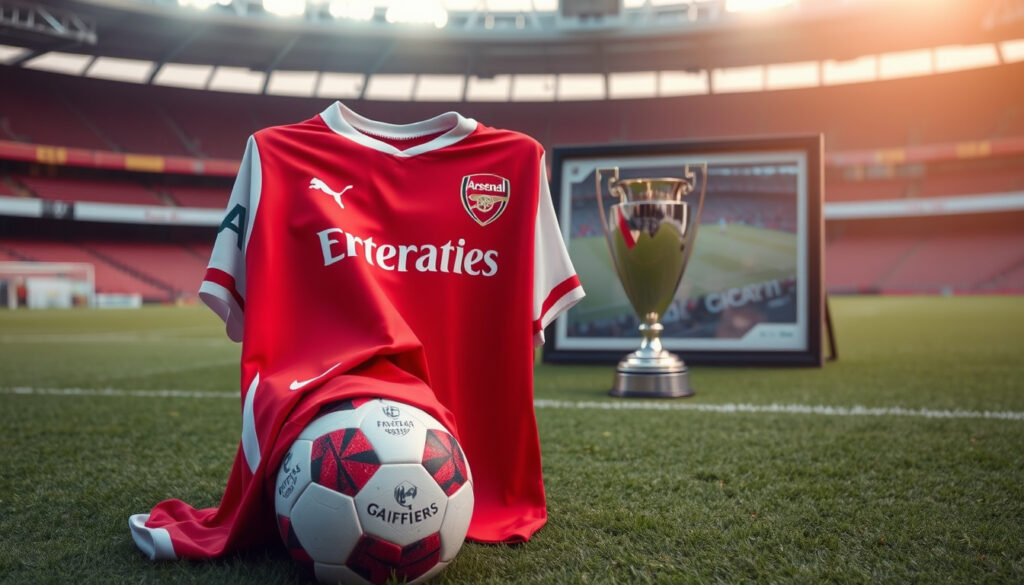
Fara Williams played for Arsenal Women from 2016 to 2017. During that single season, she won the FA Women’s Cup, adding to her collection of domestic honours. Her time at Arsenal was relatively brief, but it formed part of the later stage of her club career.
Before joining Arsenal, she had already played for Everton (2004–2012) and Liverpool (2012–2015), winning league titles with both clubs. After Arsenal, she moved to Reading in 2017, where she played until her retirement from club football in 2021. Her Arsenal spell is often highlighted because it was the most prominent club in English women’s football at the time, but it accounted for only one of the many chapters in her long career.
Timeline of key milestones
- 1984 – Born in London, England.
- 1996 – Joined Chelsea Ladies at age 12.
- 2000–2001 – First-team breakthrough at Chelsea.
- 2001 – Moved to Charlton Athletic; made England debut.
- 2004–2012 – Played for Everton.
- 2012–2015 – Played for Liverpool; represented Team GB at London Olympics.
- 2016 – Awarded MBE; joined Arsenal.
- 2017–2021 – Played for Reading.
- 2019 – Ended international career with 172 caps.
- 2021 – Retired from club football.
What is confirmed and what remains unclear
| Established information | Information that remains unclear |
|---|---|
| Fara Williams is England’s most capped outfield player (172 caps, 40 goals). | Whether she has a speech impediment is not confirmed by the available reliable sources. |
| She was homeless for a period of six to seven years during her early career. | Her ethnicity is not reliably stated in the available research. |
| She played for Arsenal from 2016 to 2017 and won the FA Cup. | Her relationship status (partner, marriage) is not consistently documented. |
| She received an MBE in 2016. | The exact nature of any speech condition is unknown. |
Background and meaning of her story
Fara Williams’s journey from homelessness to becoming England’s most capped outfield player is a story of resilience and talent. She left home at 17 after a family breakdown and spent approximately six to seven years in unstable housing, including hostels and temporary accommodation, while still playing for club and country. Her ability to perform at the highest level during that period has made her a role model both within and beyond football.
Her openness about those experiences, along with her transition to broadcasting and motivational speaking, illustrates the lasting impact athletes can have after their playing careers end. Williams has been a vocal advocate for mental health awareness and the importance of support systems for young players.
Sources and quotes
“I was homeless for a period of my life, but football gave me a focus and a way out.”
— Fara Williams in various interviews (e.g., BBC Sport, 2019)
“Fara is a true pioneer of women’s football in England.”
— The FA, upon her retirement
For further reading, see the Fara Williams Wikipedia entry, her Team GB profile, and a BBC Sport article on her career. An interview with the Guardian discusses her homelessness and later career, while the FA archived profile provides official statistics.
Summary: What’s next for Fara Williams?
Since retiring from playing, Fara Williams has continued to work as a football pundit for the BBC and Sky Sports. She is also a motivational speaker and advocate for mental health and speech therapy awareness. Future possibilities include coaching, mentoring, or ambassadorial work with the FA. Her legacy as a record-breaking England international and a figure who overcame significant personal adversity remains firmly established.
Frequently asked questions
What is Fara Williams’s full name?
Fara Tanya Franki Merrett Williams, commonly known as Fara Williams.
How many England caps did Fara Williams earn?
She earned 172 senior caps, making her England’s most capped outfield player.
Did Fara Williams win any trophies with Arsenal?
Yes, she won the FA Women’s Cup during her 2016–2017 season at Arsenal.
Is Fara Williams married?
There is no confirmed public information about a husband or partner. Some non-English sources mention a brief marriage, but it is not reliably documented.
Does Fara Williams have a speech impediment?
Available reliable sources do not confirm that she has publicly discussed a stammer or speech impediment. The claim is unverified.
What is Fara Williams’s ethnicity?
The available research does not reliably state her ethnicity. She was born in London, but no official source confirms a specific ethnic background.
When did Fara Williams retire?
She retired from international football in 2019 and from club football in 2021.
What clubs did Fara Williams play for?
Chelsea, Charlton Athletic, Everton, Liverpool, Arsenal, and Reading.
Did Fara Williams play in the Olympics?
Yes, she represented Team GB at the 2012 London Olympics.
What does Fara Williams do now?
She works as a football pundit for BBC and Sky Sports, and is a motivational speaker.
More related posts
 Jo Joyner – Biography, EastEnders Career and Net Worth
 Gary Moore – Biography, Death and Musical Legacy
 Martin Frizell – Biography, Career, and Life with Fiona Phillips
 Lewis Strictly Come Dancing – Profile of the 2025 Star
 Christina Applegate – Health Journey, Family, and Upcoming Memoir
 Tia Mowry – Biography, Family, Net Worth, and Current Projects
 Eric Cantona – Complete Biography, Career Stats and Current Life
 Las Vegas – Complete Guide for 2025
