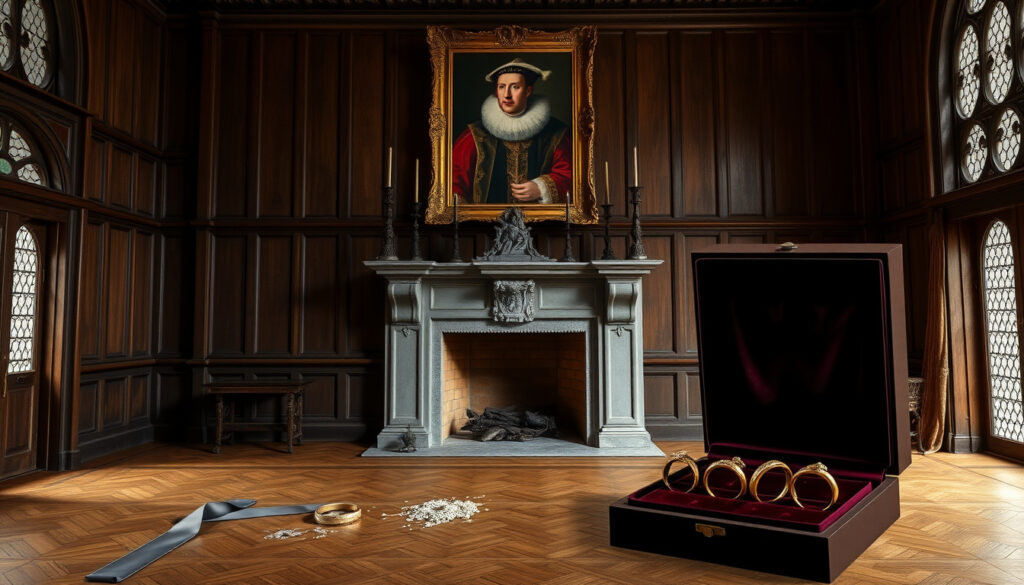
Henry Eighth – Six Wives, Break With Rome, and Lasting Legacy
Henry VIII, the second Tudor king of England, ruled from 1509 to 1547 and remains one of the most famous monarchs in British history. He is best remembered for his six marriages and for breaking with the Roman Catholic Church, events that reshaped the religious and political landscape of England. His reign ushered in the English Reformation and the establishment of the Church of England, with the crown, rather than the pope, as its supreme head.
Born on 28 June 1491 at Greenwich Palace, Henry was the third child of Henry VII and Elizabeth of York. He was not originally intended to be king—his older brother Arthur was the heir—but Arthur’s death in 1502 changed the course of succession. Henry became king at the age of 17 on 22 April 1509, following his father’s death. He was tall, athletic, and well-educated, embodying the Renaissance ideal of a princely ruler.
Over the course of his long reign, Henry VIII transformed English governance, initiated the dissolution of the monasteries, and left a contested succession that would define Tudor politics for decades. His personal life and statecraft were deeply intertwined, making both his marriages and his religious policies central to his historical reputation.
How Many Wives Did Henry VIII Have and Who Were They?
Henry VIII (Henry Tudor) — King of England, second monarch of the Tudor dynasty
Famous for six marriages, the English Reformation, and the dissolution of the monasteries
Reigned 22 April 1509 – 28 January 1547 (37+ years)
His break with Rome created the Church of England and reshaped British religion and politics
Key Insights About Henry VIII’s Reign
- Henry VIII’s desire for a male heir triggered the break with the Catholic Church, not theological reform.
- His health declined sharply after a 1536 jousting accident, likely contributing to obesity, leg ulcers, and possible diabetes.
- Only one of his six marriages produced a male heir who survived infancy: Edward VI.
- Henry VIII was the last English king to rule without a standing army; his reign expanded royal power and centralised government.
- The dissolution of the monasteries fundamentally transferred wealth and land from the Church to the Crown and nobility.
- Anne Boleyn’s execution was likely politically motivated rather than based on credible evidence of adultery.
- Henry VIII’s reign saw the union of England and Wales (Laws in Wales Acts 1535–1542).
- His death left a minor (Edward VI) on the throne, leading to a succession crisis and brief Tudor power struggle.
Snapshot Facts About Henry VIII
| Fact | Detail |
|---|---|
| Full name | Henry Tudor |
| Born | 28 June 1491, Greenwich Palace, London |
| Died | 28 January 1547, Whitehall Palace, London |
| Reign | 22 April 1509 – 28 January 1547 |
| Coronation | 24 June 1509 |
| Father | Henry VII |
| Mother | Elizabeth of York |
| Spouses | Catherine of Aragon, Anne Boleyn, Jane Seymour, Anne of Cleves, Catherine Howard, Catherine Parr |
| Legitimate children | Mary I, Elizabeth I, Edward VI |
| Burial | St George’s Chapel, Windsor Castle |
| Key break | Act of Supremacy (1534) — Supreme Head of the Church of England |
The Six Wives of Henry VIII
Henry’s wives, in order, were Catherine of Aragon, Anne Boleyn, Jane Seymour, Anne of Cleves, Catherine Howard, and Catherine Parr. The popular rhyme “Divorced, beheaded, died; divorced, beheaded, survived” summarises their fates, though it simplifies the legal and historical details.
- Catherine of Aragon was Henry’s first wife and the mother of Mary I. Their failure to produce a surviving male heir led Henry to seek an annulment, triggering the break with Rome.
- Anne Boleyn was his second wife and the mother of Elizabeth I. She was executed in 1536 on charges of adultery and treason, widely regarded by historians as politically motivated.
- Jane Seymour was his third wife and the mother of Edward VI, Henry’s only legitimate son. She died shortly after childbirth.
- Anne of Cleves was his fourth wife. The marriage was brief and ended in annulment after Henry found her unattractive and the political alliance with Cleves became less valuable.
- Catherine Howard was his fifth wife and was executed for adultery in 1542.
- Catherine Parr was his sixth and final wife, who outlived him and helped reconcile Henry with his daughters.
The term “The King’s Great Matter” was the contemporary label for Henry VIII’s campaign to annul his marriage to Catherine of Aragon. This legal and diplomatic struggle, lasting from 1527 to 1533, ultimately led to England’s separation from the Roman Catholic Church and the establishment of royal supremacy over the English church.
Why Did Henry VIII Break with the Catholic Church?
Henry VIII’s break with the Roman Catholic Church was primarily a political and dynastic move rather than a theological one. His desire to annul his marriage to Catherine of Aragon—who had failed to produce a male heir—was blocked by Pope Clement VII, partly due to pressure from the Holy Roman Emperor Charles V, Catherine’s nephew.
In response, Henry pushed through a series of legislative acts between 1529 and 1536 that gradually transferred ecclesiastical authority from the papacy to the English crown. The Act of Supremacy in 1534 formally declared Henry “Supreme Head of the Church of England,” a title that placed the monarch, not the pope, at the head of the church in England.
Historians note that Henry never intended to adopt Protestant doctrine. He remained theologically conservative throughout his reign, as shown by laws such as the Act of Six Articles (1539), which reaffirmed Catholic teachings on transubstantiation, clerical celibacy, and private masses. The English Reformation under Henry was therefore a break from papal authority, not a doctrinal revolution.
Was Henry VIII a Catholic or Protestant?
During his reign, Henry VIII maintained most Catholic doctrines while rejecting papal authority. He executed both Protestants for heresy and Catholics for treason, depending on their loyalty to his supremacy. It was only after his death, under Edward VI and then Elizabeth I, that the Church of England adopted more distinctly Protestant theology and practice.
What Caused Henry VIII’s Health Problems and How Did He Die?
Henry VIII died on 28 January 1547 at Whitehall Palace. The sources confirm his death date but do not provide a detailed medical diagnosis. Historically, his health decline is associated with multiple factors—including a severe jousting accident in 1536, obesity, leg ulcers, and possible complications from diabetes or other metabolic conditions.
It is important to note that the exact cause of his death remains uncertain. The historical record does not specify a single cause, and debates among medical historians continue.
Did Henry VIII Have Syphilis?
No consensus exists on whether Henry VIII had syphilis. Modern medical opinion generally attributes his health decline to other causes, such as complications from his 1536 jousting injury, type II diabetes, Cushing’s syndrome, or chronic leg ulcers. The theory that he suffered from syphilis is largely considered outdated by contemporary historians and medical researchers, though the debate has not been fully settled.
While Henry VIII’s later years clearly involved declining health, the precise medical conditions remain debated. No definitive diagnosis exists from contemporary sources, and later medical analyses have produced conflicting theories. Any claims about specific diseases should be treated as speculative rather than established fact.
Who Were Henry VIII’s Children and Who Succeeded Him?
Henry VIII’s drive for a male heir shaped his entire reign. He had three legitimate children who survived infancy—Mary I, Elizabeth I, and Edward VI—each of whom later became monarch. He also acknowledged an illegitimate son, Henry FitzRoy, Duke of Richmond, who died young without issue.
- Mary I (1516–1558): daughter of Catherine of Aragon. She became England’s first queen regnant and attempted to restore Catholicism during her reign.
- Elizabeth I (1533–1603): daughter of Anne Boleyn. She reigned for 45 years and oversaw the Elizabethan Religious Settlement, the defeat of the Spanish Armada, and the flourishing of English culture.
- Edward VI (1537–1553): son of Jane Seymour. He succeeded Henry at age nine and ruled under a regency, advancing Protestant reforms before his early death.
The direct consequence of Henry’s marital and religious policies was that his death left a minor on the throne, leading to the political instability of Edward’s minority, Mary’s Catholic reaction, and Elizabeth’s eventual compromise settlement. Both Catherine De Medici – Life, Children, and Legacy of the Black Queen and Duke Kent – The Longest-Serving Duke in British History offer further context on how royal succession and dynastic politics shaped European and British history.
When Did Henry VIII Rule and What Defined His Reign?
Henry VIII ruled from 22 April 1509 to 28 January 1547, a reign of nearly 38 years. His rule is defined by several major historical developments, including the English Renaissance, the English Reformation, the union of England and Wales, and the expansion of royal power.
The official royal biography notes that Henry presided over the beginnings of both the English Renaissance and the English Reformation. Encyclopaedia Britannica describes his reign as a turning point in the development of the English state and the authority of the crown. History.com emphasises that his marital problems and quest for a male heir were inseparable from the political and religious changes he set in motion. His reign also saw the execution of two of his wives and numerous political figures, including Thomas More and Thomas Cromwell.
Timeline of Key Events
- — Henry VIII born at Greenwich Palace.
- — Death of his older brother Arthur; Henry becomes heir to the throne.
- — Accession of Henry VIII on the death of Henry VII.
- — Marriage to Catherine of Aragon.
- — Birth of Princess Mary (later Mary I).
- — The ‘Great Matter’ — Henry seeks annulment of his marriage to Catherine.
- — Secret marriage to Anne Boleyn (probable date).
- — Birth of Princess Elizabeth (later Elizabeth I).
- — Act of Supremacy — Henry becomes Supreme Head of the Church of England.
- — Dissolution of the Monasteries begins; Catherine of Aragon dies; Anne Boleyn executed (19 May); Henry marries Jane Seymour (30 May).
- — Birth of Prince Edward (later Edward VI); Jane Seymour dies (24 October).
- — Marriage to Anne of Cleves; annulled July 1540.
- — Marriage to Catherine Howard; she is executed 13 February 1542.
- — Marriage to Catherine Parr (last wife).
- — Death of Henry VIII; succeeded by Edward VI.
What Is Certain and What Remains Uncertain About Henry VIII?
| Established information | Information that remains unclear |
|---|---|
| Henry VIII reigned as King of England from 1509 to 1547. | Whether Henry VIII had syphilis — modern medical opinion generally attributes his health decline to other causes, but the debate persists. |
| He had six documented marriages. | The exact cause of his obesity and leg ulcers — theories include type II diabetes, Cushing’s syndrome, or complications from a 1536 jousting injury. |
| He broke with the papacy and established the Church of England, with himself as Supreme Head. | Whether Anne Boleyn was guilty of adultery — most historians consider the charges fabricated. |
| He died on 28 January 1547 and was buried at Windsor Castle. | The extent of Henry’s ‘tyranny’ — some revisionist historians argue he was a strong monarch; others emphasise his cruelty and insecurity. |
| His three legitimate children who survived infancy — Mary, Elizabeth, and Edward — all eventually became monarchs. | Whether his personality changed after the 1536 jousting accident or was always volatile — no consensus. |
| He ordered the execution of two wives (Anne Boleyn and Catherine Howard) and many political figures, including Thomas More and Thomas Cromwell. |
How Did Henry VIII’s Reign Change England?
Henry VIII’s reign fundamentally altered English society, governance, and religion. The National Archives notes that the documents from his reign reveal how he concentrated power in the Crown through legislation. The dissolution of the monasteries (beginning in 1536) transferred vast tracts of land from the Church to the Crown and nobility, reshaping the English economy and social hierarchy for generations.
His reign also saw the formal union of England and Wales through the Laws in Wales Acts (1535–1542), which incorporated Wales into the English legal and administrative system. The English Reformation, though initially a political break, set in motion religious changes that would ultimately define the Anglican tradition and influence the balance of power between crown and church for centuries.
The succession crisis that followed his death was a direct result of his policies. Edward VI’s minority, Mary I’s Catholic restoration, and Elizabeth I’s Protestant settlement all flowed from the dynastic and religious choices Henry made during his reign. For more on how royal marriages and succession shaped European history, read Catherine De Medici – Life, Children, and Legacy of the Black Queen.
What Do Primary Sources Say About Henry VIII?
The most important primary sources for Henry VIII’s reign include the state papers known as Letters and Papers, Foreign and Domestic, Henry VIII, held at The National Archives. The Act of Supremacy (1534) and the Laws in Wales Acts (1535–1542) are key legal documents that survive in full text. Hans Holbein’s portraits of Henry and his wives, held at the National Portrait Gallery, provide visual records of the king and his court.
“I am a man of war and not of letters.”
— Henry VIII (commonly attributed, reflecting his self-image as a Renaissance warrior-king)
“Pastime with good company / I love, and shall until I die.”
— Henry VIII, ‘Pastime with Good Company’ (song, c. 1517–1520)
The term “The King’s Great Matter” was the contemporary name for Henry’s annulment case, used in state papers. Some evidence also suggests that Anne Boleyn’s reported final words—”I am come to die; I have not long to live”—reflect the political nature of her execution. The full texts of these documents are accessible through the BBC History archive and the PubMed medical review offers a specialised medical perspective on his later health.
Why Is Henry VIII Still a Significant Historical Figure?
Henry VIII remains significant because his reign permanently changed the course of English and British history. The Church of England, the union with Wales, the redistribution of monastic wealth, and the expansion of royal authority all outlasted the Tudor dynasty. His children—Mary, Elizabeth, and Edward—each left their own mark, but they governed within the framework Henry established.
He is also one of the most visually recognisable monarchs in history, thanks to Hans Holbein’s iconic portraits. The combination of personal drama—six marriages, two executions of wives, a contested succession—with major political and religious transformation ensures that his reign continues to attract scholarly attention and popular interest alike.
To learn about another British royal figure whose long tenure shaped the monarchy, see Duke Kent – The Longest-Serving Duke in British History.
Frequently Asked Questions About Henry VIII
Was Henry VIII ever excommunicated?
Yes. Pope Clement VII excommunicated Henry VIII in 1533 after Henry married Anne Boleyn; Pope Paul III later renewed the excommunication in 1538.
How tall was Henry VIII?
In his prime, Henry VIII was unusually tall for the era — around 6 feet 2 inches — but he became obese later in life.
Who was Henry VIII’s mother?
Henry VIII’s mother was Elizabeth of York, daughter of Edward IV, and his father was Henry VII.
Did Henry VIII have a jousting accident?
Yes. In January 1536, Henry suffered a severe jousting accident that left him unconscious for two hours and may have contributed to his later health decline.
How many legitimate children did Henry VIII have?
Three legitimate children survived infancy: Mary I, Elizabeth I, and Edward VI. He also acknowledged an illegitimate son, Henry FitzRoy, Duke of Richmond.
What language did Henry VIII speak?
Henry VIII was fluent in English, French, and Latin, and also had some Spanish and Italian.
More related posts
 Marcus Fakana – Killed in crash months after Dubai jail release
 Les Ferdinand – Biography, Career, and Personal Life Guide
 Terence Stamp – Dies at 87, Life, Movies and Legacy
 Are Apples Good for You – Nutrition, Benefits and Daily Limits
 Sean Connery – Biography, James Bond Films, and Legacy
 Sophia Myles – Biography, Age, Doctor Who Roles and Relationship History
 David Mitchell – Biography, Career, Wife, Books and Net Worth
 Jackson Pollock – Biography, Art Style and Record Prices
