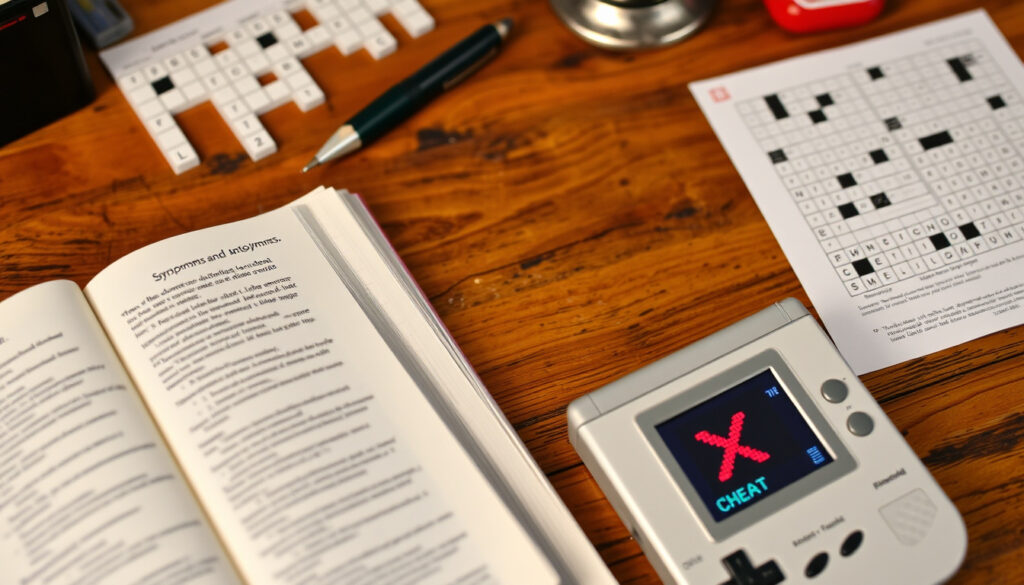
Cheating Word – Synonyms, Antonyms and Game Cheat Tools
Cheating Word: Synonyms, Antonyms, and Word Game Cheat Tools
The word “cheating” carries a heavy weight, but its exact meaning shifts dramatically depending on the context. Whether it is a broken promise in a relationship, a stolen answer on an exam, or a fraudulent business deal, the vocabulary used to describe these acts varies widely. Understanding these distinctions is essential for clear communication, whether you are writing an academic paper, navigating a legal document, or discussing personal matters.
This guide breaks down the synonyms, antonyms, and specific terminology for cheating across relationships, academics, and business. It also explores the world of word game tools, which have created a separate high-volume search category for the term “cheating” itself.
What are the synonyms for cheating in a relationship?
When discussing romantic relationships, the language of cheating is distinct and often carries strong emotional weight. Dictionaries and thesauruses consistently link the concept of cheating directly to infidelity and unfaithfulness. According to Merriam-Webster and Cambridge dictionaries, the most common synonyms in this context are specific to broken trust and sexual or emotional betrayal.
Infidelity, adultery, unfaithfulness, betrayal, two-timing, disloyalty, faithlessness, treachery, an affair.
Plagiarism, copying, cribbing, falsifying, academic dishonesty, academic fraud, fudging.
Fraud, embezzlement, deception, misrepresentation, sharp practice, defrauding, swindling, fleecing, bilking.
Honesty, integrity, fidelity, faithfulness, loyalty, fairness, truthfulness, good faith, probity, devotion.
Key Insights About Cheating Synonyms
- Cheating has hundreds of synonyms and antonyms, but the correct word depends heavily on the specific context (relationship, academic, business, or general).
- The most searched antonyms for cheating are honesty, fairness, fidelity, and integrity.
- Word game cheating tools (word unscramblers, word finders) represent a separate high-volume search category that is not typically covered by traditional thesaurus sites.
- Users often seek a single “professional” word for cheating in relationships, which is typically “infidelity” or “adultery.”
- Academic cheating synonyms are often more formal and specific (e.g., “academic dishonesty,” “plagiarism”) than general synonyms for dishonesty.
Quick Reference Table: Cheating by Context
| Context | Common Synonyms | Common Antonyms |
|---|---|---|
| Relationship | Infidelity, Adultery, Unfaithfulness, Betrayal | Fidelity, Faithfulness, Loyalty |
| Academic | Plagiarism, Copying, Cheating, Fraud | Honesty, Originality, Integrity |
| Business | Fraud, Embezzlement, Deception, Swindling | Honesty, Transparency, Fairness |
| General | Deceit, Trickery, Dishonesty | Honesty, Truthfulness, Sincerity |
What are the synonyms for cheating in academics and exams?
Academic cheating has its own specific vocabulary that distinguishes it from other forms of dishonesty. The terms used in schools and universities often carry formal institutional weight, reflecting policies that can lead to serious consequences.
What is another word for cheating in an exam?
In formal academic settings, the preferred term is often “academic dishonesty” or “academic misconduct,” which covers a wide range of behaviors. For exam-specific situations, thesaurus sources list “copying,” “cribbing,” “falsifying,” and “fudging” as direct synonyms. Cambridge Dictionary also includes “cheating on a test” as a standard phrase, while Merriam-Webster lists “plagiarize” and “crib” among related verb forms.
In academic settings, the preferred term is often “academic dishonesty” or “academic misconduct”, which covers plagiarism, unauthorized collaboration, and exam cheating. These terms are used in official school policies and honor codes.
What is another word for cheating in school?
Beyond exams, “plagiarism” is the most significant and widely recognized form of cheating in schools. Other related terms from thesauruses include “misstating” facts and “falsifying” data or sources. The general concept of “cheating in school” can also be referred to as “academic fraud,” emphasizing the seriousness of the offense within an educational context.
What are the synonyms for cheating in business?
Business and commercial contexts use a distinct set of terms for cheating that often carry specific legal and financial implications. Unlike relationship or general cheating, business cheating is frequently defined by statutes and regulations.
What is another word for cheating in business?
According to Merriam-Webster and Cambridge thesauruses, business-related synonyms include “defrauding,” “misrepresentation,” “sharp practice,” “shady dealing,” and “crookedness.” Additional terms from thesaurus sources are “overcharging,” “fleecing,” “bilking,” and “ripping off.” The word “fraud” itself is a broad legal term that covers many types of business cheating, while “embezzlement” refers specifically to the theft of funds by a person entrusted with them.
Unlike relationship or academic cheating, business cheating often involves specific legal definitions. “Fraud” and “embezzlement” are criminal offenses with precise legal meanings that can result in fines, penalties, and imprisonment.
What are the antonyms of cheating?
The antonyms of cheating are just as context-dependent as its synonyms. Understanding the direct opposite of cheating in a given situation helps clarify the meaning of the original term.
What are the antonyms of cheating?
The main antonyms across all senses of cheating are “honesty,” “integrity,” “fairness,” “good faith,” “truthfulness,” and “loyalty,” according to Cambridge Dictionary, Power Thesaurus, and Thesaurus.com. In a relationship context, the strongest antonyms are “fidelity,” “faithfulness,” and “devotion.” In business, “good faith” and “probity” are commonly used. For general dishonesty, “honesty” and “truthfulness” are the most direct opposites.
What are the synonyms and antonyms of cheated?
The past tense “cheated” shares a similar antonym set. For example, “cheated” in a business context is antonymous with “dealt fairly,” while in a relationship it is antonymous with “was faithful.” The synonyms for “cheated” as a verb include “swindled,” “defrauded,” “tricked,” “bilked,” “fleeced,” “duped,” “hoodwinked,” “deceived,” and “conned,” as documented by Merriam-Webster and Cambridge dictionaries.
Selecting the correct antonym depends entirely on the context. “Loyalty” opposes infidelity, while “integrity” is the direct opposite of general dishonesty. Using the wrong antonym can confuse the meaning of your statement.
How has the meaning of the word cheating evolved over time?
The word “cheat” has a long history, originating from the Old English word “ceat,” which referred to taking possession of something. Over centuries, its meaning expanded from a specific legal or property-related act to a broad moral and ethical concept that covers everything from business fraud to romantic infidelity.
- Old English Period: The word “ceat” emerged, primarily meaning “to take possession of” or “to seize.”
- Middle English Transition: The term evolved to imply deceit or trickery in a more general sense, often associated with forfeiting or losing something through dishonesty.
- Modern Usage: Today, “cheating” encompasses a wide range of dishonest behaviors, from infidelity in relationships to fraud in business and plagiarism in academics.
How does the meaning of cheating change depending on the context?
While the core idea of “cheating” involves breaking rules for unfair advantage, its specific synonyms and implications vary dramatically by context. Understanding these nuances is crucial for choosing the right word and communicating effectively.
| Established Information | Information That Remains Unclear |
|---|---|
| Infidelity is a synonym specific to relationships. | Whether using a word unscrambler is “cheating” depends on the game’s community rules and personal perspective. |
| Fraud is a legal term with specific definitions in business. | The line between “sharp practice” and outright fraud can be subjective and context-dependent. |
| Plagiarism is a well-defined academic offense in most institutions. | Intent plays a role in academic dishonesty, making some cases of collaboration or citation unclear. |
Why is understanding the context of cheating so important?
Users search for synonyms of cheating for a variety of practical reasons. Some are writing academic papers and need formal terminology like “academic dishonesty.” Others are navigating legal documents and require precise terms like “fraud” or “misrepresentation.” Relationship discussions often call for careful language, where “infidelity” may be more appropriate than “cheating.” The difference between formal and informal synonyms is also significant: “adultery” is a formal legal and religious term, while “cheating” is the common, informal word. Word game cheating tools have exploded in popularity due to games like Words with Friends and Wordle, creating a separate category of search intent where users want quick lookups to find valid words.
Where do authoritative definitions and synonyms for cheating come from?
Standard dictionaries and thesauruses provide the most widely accepted definitions and synonyms for cheating. These sources are regularly updated to reflect modern usage and are considered authoritative for both academic and professional writing.
“Cheating: to violate the rules of a game or the standards of a group, or to be sexually unfaithful.”
— Merriam-Webster Thesaurus
“Cheating: the act of doing something dishonest or illegal in order to get an advantage.”
— Cambridge Dictionary Thesaurus
Other valuable resources include Thesaurus.com, which provides strong and fair synonyms along with example sentences, and WordHippo, which categorizes synonyms by part of speech and context. Word Associations offers a linguistic perspective on how words related to cheating are connected in the mind. For a broader view of related terms, RhymeZone also provides synonym lists for creative writing.
What are the key takeaways about the word cheating?
The word “cheating” is not a single concept but a family of related ideas that each require their own vocabulary. Whether you are discussing infidelity, plagiarism, fraud, or using a word game cheat tool, selecting the precise term ensures clarity and accuracy. For a more detailed exploration of this topic, see our Complete Guide to Cheating Synonyms. For those interested in the gaming side, we also recommend reviewing Word Game Cheat Tools: Best Practices.
Frequently Asked Questions About Cheating Word
What is a word cheat for Words with Friends?
A word cheat for Words with Friends is a tool (often called a word finder or unscrambler) that generates valid words from given letters to help you play more strategically.
How to use a word unscrambler?
Enter your letters into the tool, and it will return all possible words. Useful for Scrabble, Words with Friends, and Wordle.
What is the best word finder for Wordle?
Many free tools exist; popular ones include Wordle Solver, 5 Letter Word Finder, and the official Wordle help page.
What is a 5 letter word finder?
A tool that specifically lists 5-letter words. Used for Wordle and other word games that require 5-letter guesses.
What is the word today in Wordle?
Wordle’s daily word changes. You can find it on the official Wordle site or through spoiler-free word lists.
Is using a word cheat in games considered cheating?
It depends on the game’s rules. Some players view it as a learning tool, while others consider it unsportsmanlike.
More related posts
 Sheryl Crow – Never Married, Net Worth, and Top Hits
 Jenny Saville Artist – Biography, Paintings, 2025 Exhibition
 Stefan Salvatore – Full Character Guide and Key Facts
 Sadie Soverall – Age, Height, Ethnicity, and Biography
 Kevin Rowland – Biography, Family, and 2025 Net Worth Insights
 Mohammed Bin Salman – Age, Net Worth, Wife and More
 Stephen Hawking – His Life, Theories and Key Books
 David Ornstein – Biography, Career and Latest Transfer News
